Fasteners operating in high-temperature environments face extreme mechanical and chemical stress. Elevated temperatures can reduce tensile strength, accelerate oxidation, increase thermal expansion, and eventually lead to joint failure if incorrect materials are selected.
For industrial systems such as furnaces, boilers, exhaust assemblies, power plants, refineries, and heat-processing equipment, selecting reliable High-Temperature Stainless Steel Fasteners is essential for operational safety and long-term performance.
This guide explains how heat affects stainless steel fasteners, compares suitable stainless steel grades, identifies common failure modes, and provides practical engineering guidance for selecting fasteners for extreme heat applications.
Why High Temperatures Affect Fastener Performance
Standard fasteners can rapidly lose strength and corrosion resistance when exposed to continuous high heat. As temperatures rise, fasteners undergo changes in their metallurgical structure that directly impact joint integrity. Common effects include:
- Reduced Tensile Strength: Thermal exposure diminishes the load-bearing capacity of the material.
- Thermal Expansion and Preload Loss: Differential expansion can cause fasteners to loosen or lose their initial clamping force.
- Oxidation and Scaling: High heat accelerates chemical reactions with oxygen, reducing the effective cross-sectional area of the bolt.
- Creep Deformation: Under long-term stress and heat, materials can slowly deform permanently.
- Thermal Fatigue: Repeated heating and cooling cycles create cyclic stresses that can lead to premature cracking.
Best Stainless Steel Grades for High Heat Applications
Choosing the right material requires matching the operating temperature to the alloy’s metallurgical limits.
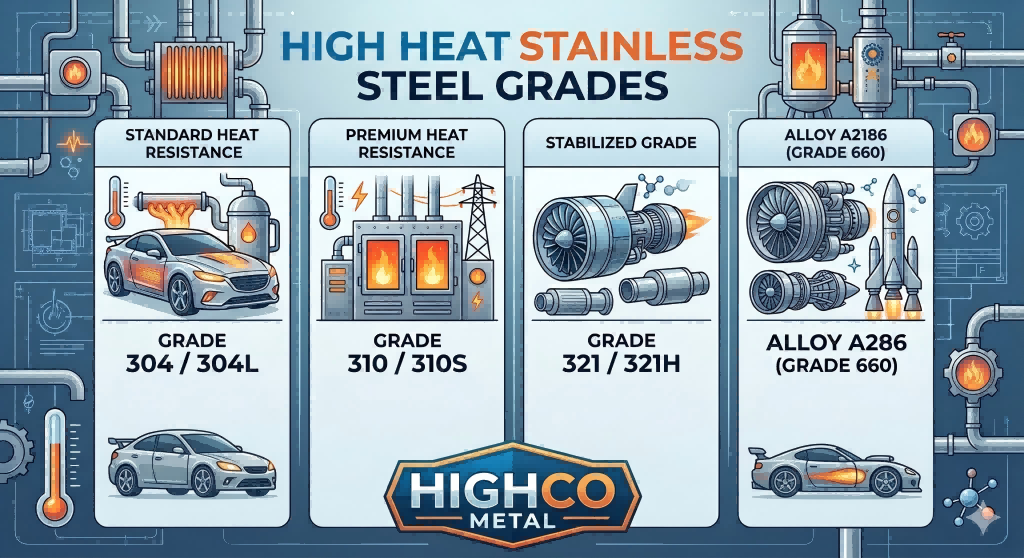
Standard Austenitic Grades (Up to 425°C / 800°F)
Grades like 304 and 316 are reliable up to 425°C. Beyond this, yield strength drops, and the material becomes vulnerable to carbide precipitation. For service up to 538°C (1000°F), low-carbon “L” versions or stabilized grades are necessary.
Premium Heat-Resistant Grades (Up to 1150°C / 2100°F)
For severe thermal exposure, specialized Heat-Resistant Stainless Steel Screws and heat resistant stainless steel bolts are mandatory:
- Grade 309 (S30900): Offers excellent oxidation resistance up to 980°C (1800°F).
- Grade 310 (S31000): The industry standard for extreme scaling resistance; it can withstand continuous temperatures up to 1035°C (1900°F) and intermittent service up to 1150°C (2100°F).
High-Strength Superalloys
When both extreme heat and high mechanical strength are required, high temperature stainless steel bolts made from precipitation-hardened superalloys like Alloy A286 (Grade 660) are the premier choice. Designed for continuous use up to 700°C (1300°F), these offer exceptional creep resistance and yield strength.
Choosing Stainless Steel Fasteners for Extreme Heat
Understanding choosing stainless steel fasteners for extreme heat is essential for ensuring safety and long-term reliability.
1. Evaluate Operating Temperature
Determine:
- Maximum continuous temperature
- Intermittent temperature peaks
- Thermal cycling frequency
Fastener materials should always be selected with an adequate safety margin above expected operating temperatures.
2. Consider Corrosive Exposure
High-temperature environments frequently involve exposure to:
- Moisture
- Chlorides
- Industrial chemicals
- Combustion gases
Combined heat and chemical exposure can significantly accelerate oxidation and corrosion.
3. Analyze Mechanical Loads
Industrial fastening systems may experience:
- Dynamic vibration
- Pressure fluctuations
- Expansion and contraction cycles
- Sustained preload requirements
Proper preload retention becomes critical in high-temperature applications.
4. Account for Thermal Expansion
Different materials expand at different rates during heating.
Mismatch between:
- Fasteners
- Structural components
- Mounting substrates
can create excessive stress and lead to joint loosening or fatigue failure.
Common Applications for High-Temperature Stainless Steel Fasteners
Industrial Furnaces
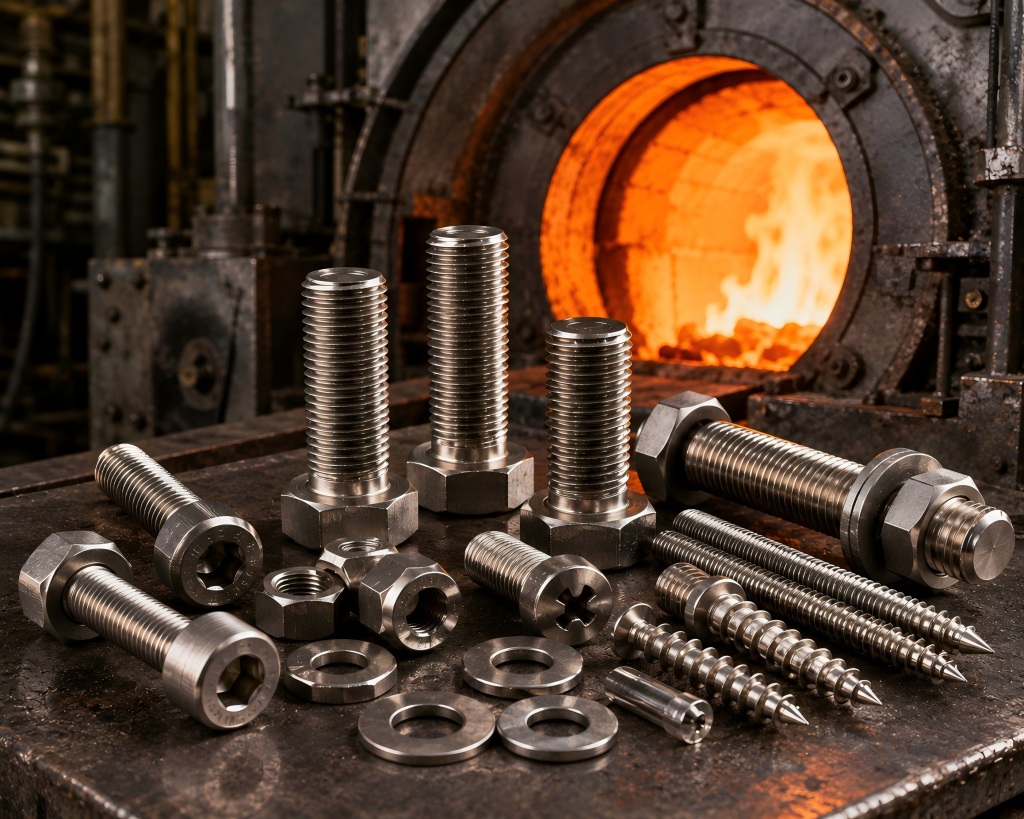
Furnace systems require heat resistant stainless steel bolts capable of resisting oxidation and thermal fatigue under prolonged heat exposure.
Boilers and Heat Exchangers
Fasteners in boilers must maintain clamp force despite continuous thermal cycling and pressure variation.
Exhaust Systems
Automotive and industrial exhaust systems experience repeated expansion and contraction.
Heat-Resistant Stainless Steel Screws help maintain secure assemblies despite vibration and temperature fluctuations.
Power Plants and Refineries
Power generation and refining facilities expose fasteners to:
- Extreme heat
- Steam pressure
- Corrosive chemicals
- Continuous thermal stress
These demanding environments require durable high heat industrial fasteners with excellent creep and oxidation resistance.
High Temperature Fastener Failure Modes and Prevention
Understanding high temperature fastener failure modes and prevention is essential for improving industrial reliability and minimizing maintenance costs.
1. Oxidation and Scaling
Continuous heat exposure can cause oxide layer buildup and surface degradation.
Prevention
- Use oxidation-resistant grades such as 310 stainless steel
- Apply suitable protective treatments when necessary
2. Loss of Clamp Load
Thermal expansion and stress relaxation may reduce preload over time.
Prevention
- Use accurate torque calculations
- Consider preload-retention systems or locking mechanisms
3. Creep Deformation
Long-term heat exposure under load may permanently deform fasteners.
Prevention
- Select creep-resistant stainless steel grades
- Avoid operating beyond recommended temperature limits
4. Thermal Fatigue
Repeated heating and cooling cycles generate cyclic stress that may crack fasteners.
Prevention
- Use stabilized grades such as 321 stainless steel
- Reduce unnecessary thermal cycling where possible
Heat-Resistant Stainless Steel Screws vs Standard Fasteners
Compared with standard carbon steel hardware, Heat-Resistant Stainless Steel Screws provide superior performance in elevated-temperature environments.
|
Feature |
Standard Fasteners |
High-Temperature Stainless Steel Fasteners |
|
Corrosion Resistance |
Moderate |
Excellent |
|
Oxidation Resistance |
Limited |
High |
|
Heat Resistance |
Lower |
Superior |
|
Service Life |
Shorter |
Longer |
|
Industrial Reliability |
Lower |
Higher |
Although stainless steel fasteners typically have a higher initial cost, their longer service life often reduces maintenance and replacement expenses.
Best Practices for High-Temperature Fastener Installation
To maximize reliability in extreme heat environments:
- Use calibrated torque tools
- Avoid mixing incompatible metals
- Apply anti-seize compounds where appropriate
- Inspect fasteners regularly for oxidation or loosening
- Ensure proper thread engagement length
- Follow manufacturer torque specifications
Correct installation practices significantly improve fastener lifespan and joint stability.
Conclusion
Using the correct High-Temperature Stainless Steel Fasteners is essential for maintaining structural integrity, operational safety, and long-term reliability in extreme heat applications.
From industrial furnaces and boilers to refineries and exhaust systems, selecting the appropriate stainless steel grade helps prevent oxidation, preload loss, thermal fatigue, and creep deformation.
By understanding material performance, environmental conditions, and failure prevention strategies, engineers and industrial buyers can confidently select reliable fastening solutions for demanding high-temperature environments.