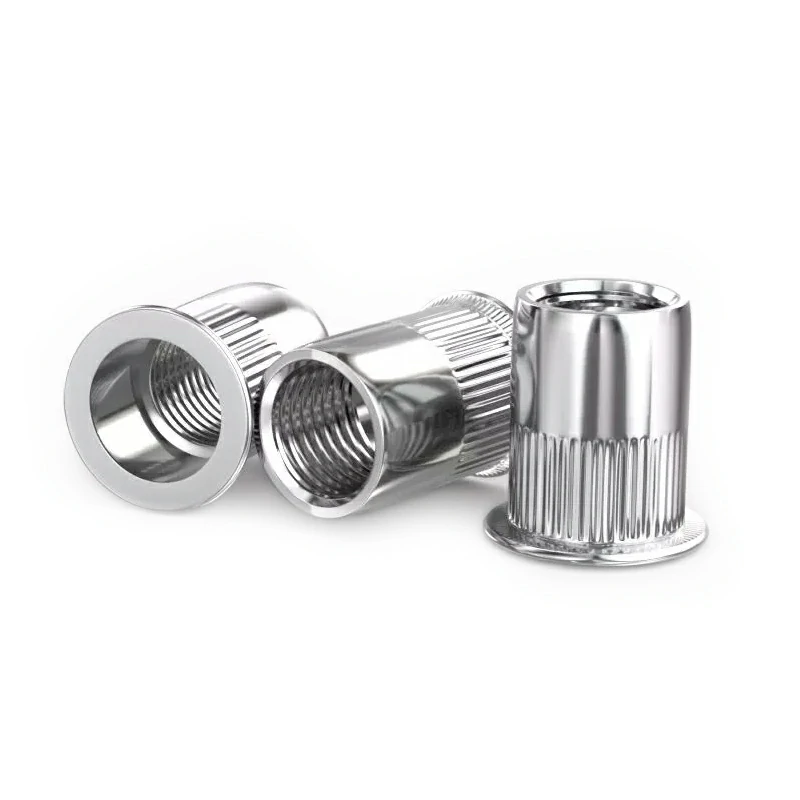
The Stainless Steel Rivet Nut (also known as a threaded insert) is a specialized fastener designed to provide permanent, load-bearing threads in thin or brittle materials where a tapped thread is not possible. By combining the function of a Blind Rivet with a high-strength internal thread, these components allow for the easy attachment of secondary parts using standard bolts.
Installed using a dedicated setting tool, the rivet nut expands and locks securely into the base material, forming a permanent anchor with reusable threads. This makes it an ideal alternative to traditional Blind Rivet fastening when disassembly or maintenance is required.
At Tianqi Fasteners, our rivet nuts are manufactured from premium 304 or 316 stainless steel to ensure maximum resistance to rust and chemical oxidation. This makes them ideal for applications in sheet metal, tubing, and plastic housings across the automotive, aerospace, and electronics industries. Whether you are working with aluminum panels or structural steel, our rivet nuts provide a secure, vibration-resistant anchor point that can be installed from a single side of the workpiece.
Manufactured from high-grade stainless steel, these rivet nuts are inherently resistant to moisture and harsh environments. They maintain structural integrity without the need for additional plating or coatings.
Similar to a standard Blind Rivet, these nuts can be installed entirely from one side of the material. This is critical for enclosed structures, such as hollow tubing or box sections, where the backside is inaccessible.
Once expanded, the rivet nut provides a deep, precision-machined internal thread. This allows for repeated assembly and disassembly of components without stripping the parent material.
The Flat Head Post Rivet Nut features a low-profile flange that provides a large bearing surface. This effectively distributes the clamping load across the material while maintaining a clean, professional appearance.
Using a manual or pneumatic rivet nut tool, these fasteners can be set in seconds. This speed significantly reduces labor costs and assembly time compared to welding nuts or using traditional tapping methods.