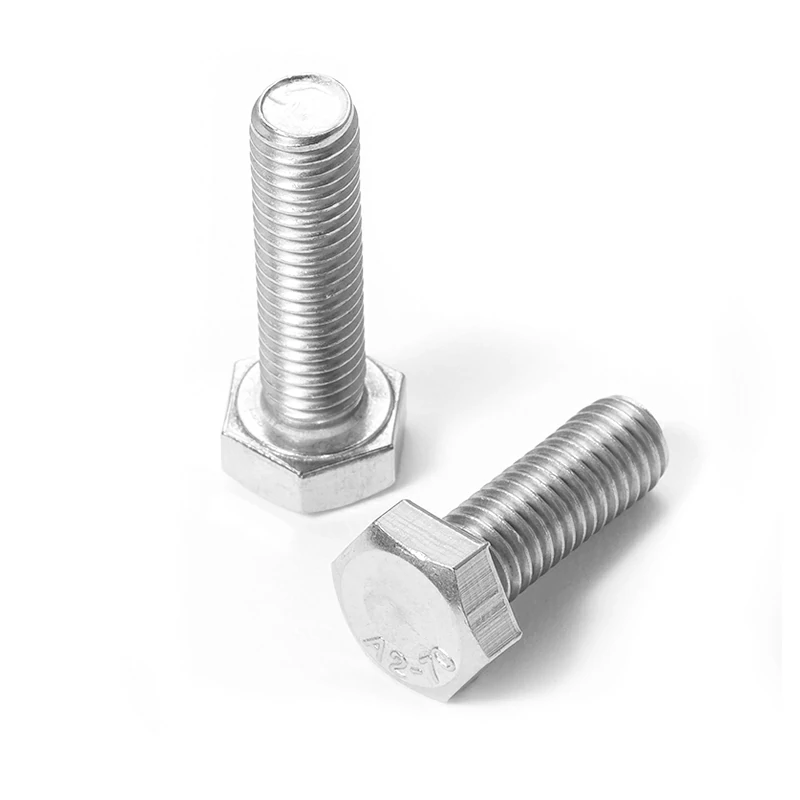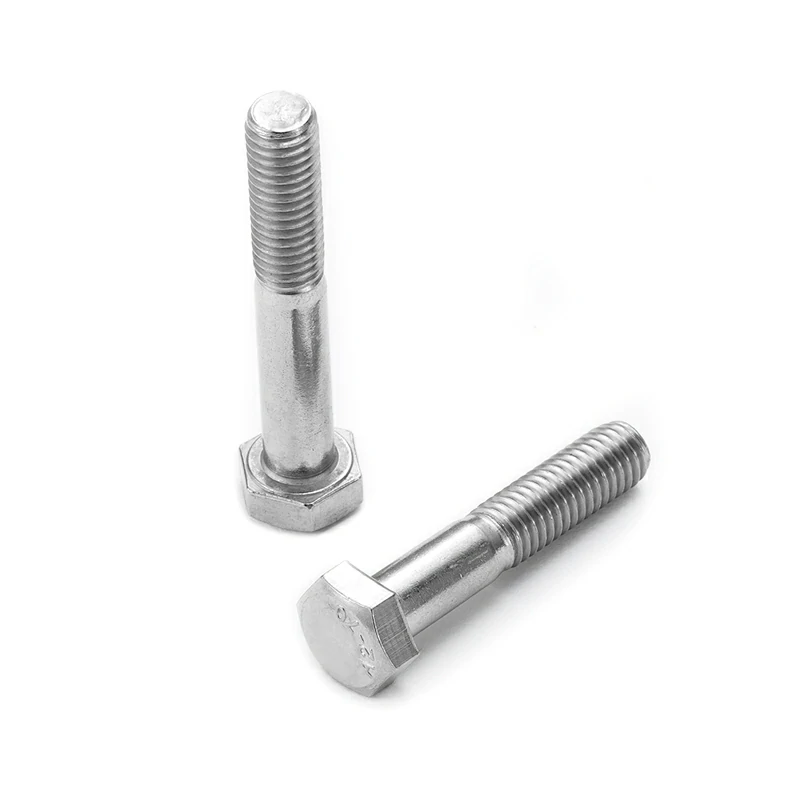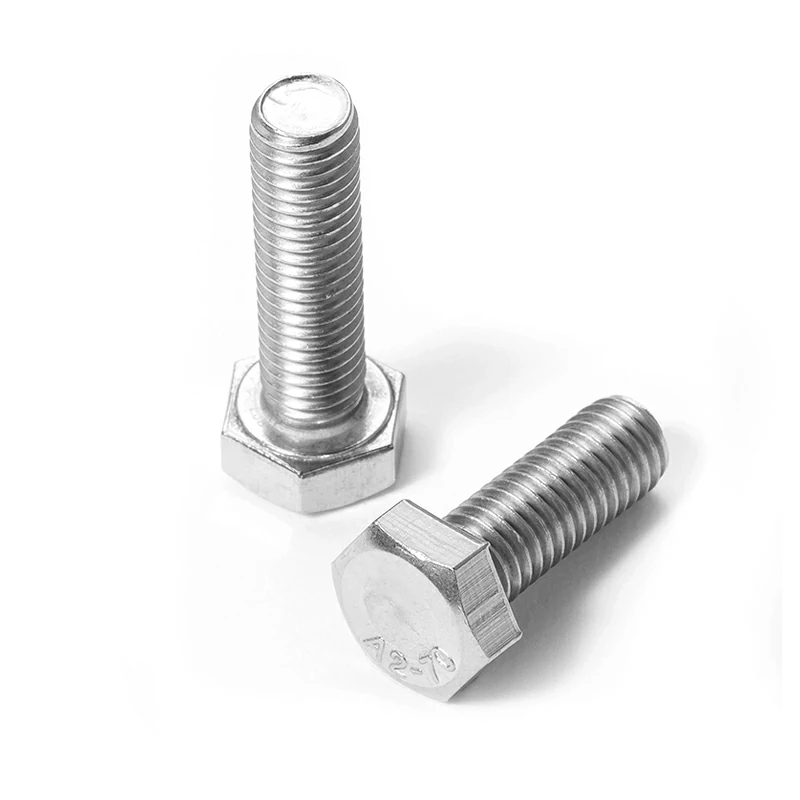
In food processing, beverage production, and pharmaceutical environments, hardware is more than just a mechanical necessity—it is a critical factor in maintaining sanitation standards. Selecting the right food grade stainless fasteners is essential for maintaining hygiene, safety, and regulatory compliance. Unlike standard hardware, hygienic fasteners are specifically engineered to minimize contamination risks, resist corrosion, and withstand the rigors of frequent cleaning cycles.
This guide explores what qualifies as “food-grade,” how to select the optimal materials, and why the design of hygienic screws and hygienic bolts is vital for food safety.
What Are Food Grade Stainless Fasteners?
Food grade stainless fasteners refer to screws, bolts, and components manufactured from alloys that meet strict hygiene and corrosion-resistance requirements for contact with food. These specialized components are designed to:
- Prevent Bacterial Growth: Eliminate areas where organic matter can be trapped.
- Resist Chemical Corrosion: Withstand moisture and aggressive cleaning agents.
- Maintain Structural Integrity: Perform reliably under frequent high-pressure washdowns.
Common applications include dairy and beverage systems, commercial kitchens, and pharmaceutical manufacturing lines.
Choosing the Right Alloy: 304 vs. 316 Stainless Steel
Not all stainless steel is suitable for every food environment. The two most widely accepted materials for food grade stainless steel fasteners are Grade 304 and Grade 316.
1. 304 Stainless Steel (A2)
- Best Use: Ideal for dry food environments or areas with limited moisture exposure.
- Properties: Offers excellent general corrosion resistance and is a standard choice for many food-safe applications.
2. 316 Stainless Steel (A4)
- Best Use: Essential for environments involving high salt content, acidic foods (like citrus or tomatoes), or heavy chemical washdowns.
- Properties: Contains molybdenum, providing superior resistance to pitting and chloride-driven corrosion.
- Application: The preferred choice for food grade stainless steel fasteners in harsh or high-moisture conditions.
Design Features of True Hygienic Fasteners
Standard hardware often contains deep recesses and sharp corners that are nearly impossible to clean. In contrast, hygienic screws and hygienic bolts are engineered to eliminate these “harborage points”.
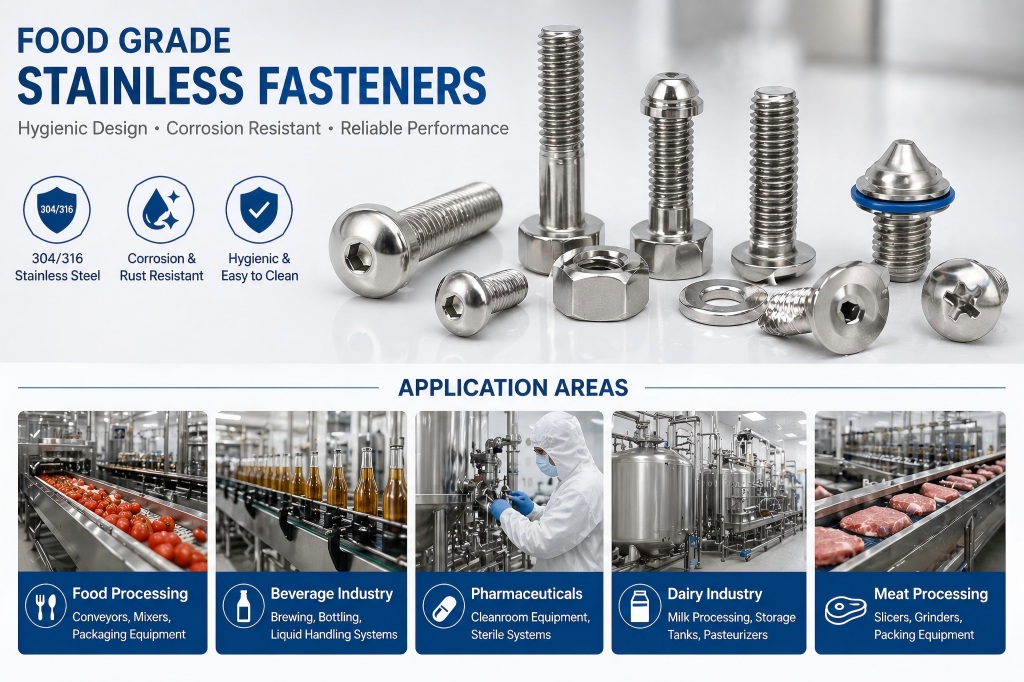
- Smooth Surface Finish: High-quality food grade stainless steel fasteners feature a polished finish (measured by Ra) to prevent micro-fissures where bacteria can hide.
- Domed or Flanged Heads: These shapes encourage liquids to run off the fastener during washdowns rather than pooling at the base.
- Sealing Elements: Many designs include integrated blue silicone gaskets that provide a 360-degree seal, preventing contaminants from entering the internal threads.
Comparison: Hygienic vs. Standard Fasteners
|
Feature |
Standard Fasteners |
Hygienic Fasteners |
|
Surface Finish |
Standard/Rough |
Polished and smooth |
|
Design |
General-purpose |
Crevice-free and easy to clean |
|
Contamination Risk |
Higher |
Minimal |
|
Compliance |
General industrial |
Food and pharma standards |
Hygienic Fastener Sizes: How to Choose
Selecting the correct hygienic fastener sizes is critical for both mechanical performance and sanitation.
Key Parameters
- Diameter: Typically M3–M12 (or larger for structural loads)
- Length: Based on material stack thickness
- Thread Type: Metric or unified standards
- Head Design: Low-profile or hygienic-specific heads
Practical Selection Guidelines
- Use smaller diameters (M3–M6) for light-duty assemblies
- Use larger diameters (M8–M12+) for load-bearing or structural joints
- Ensure compatibility with existing equipment standards
- Prioritize hygienic head designs in washdown zones
To meet regulatory expectations, food grade stainless fasteners should align with recognized hygiene and safety frameworks:
- FDA: Material safety for food contact
- EHEDG: Hygienic equipment design and cleanability
- NSF: Certification for food equipment components
These standards support audit readiness and operational compliance.
When Standard Fasteners Are Not Enough
Even corrosion-resistant fasteners may fail in high-hygiene environments if design is overlooked.
Avoid standard fasteners when:
- Equipment requires full washdown sanitation
- Surfaces must be completely crevice-free
- Systems operate under strict hygiene audits
- Exposure to aggressive cleaning chemicals is frequent
In these cases, always use purpose-built hygienic fasteners.
Industry Use Cases
- Food Processing Equipment: Conveyors, mixers, and packaging systems requiring frequent cleaning
- Beverage Production: Brewing and bottling systems exposed to moisture and chemicals
- Pharmaceutical Applications: Cleanroom environments requiring strict contamination control
- Dairy & Meat Processing: High-moisture environments with rigorous sanitation protocols
Best Practices for Installation
Proper installation is essential to maintain hygiene and performance:
- Apply correct torque to prevent thread damage
- Use food-safe lubricants to reduce galling
- Inspect fasteners regularly for wear or contamination
- Replace damaged components immediately
Conclusion:
Prioritizing SanitationChoosing the right food grade stainless fasteners ensures a hygienic, durable, and compliant production environment. While 304 and 316 alloys provide the necessary base for food safety, the specific design and finish of the hardware are what truly prevent bacterial buildup and contamination. For any high-hygiene zone, always prioritize certified hygienic fasteners engineered for maximum contamination control.