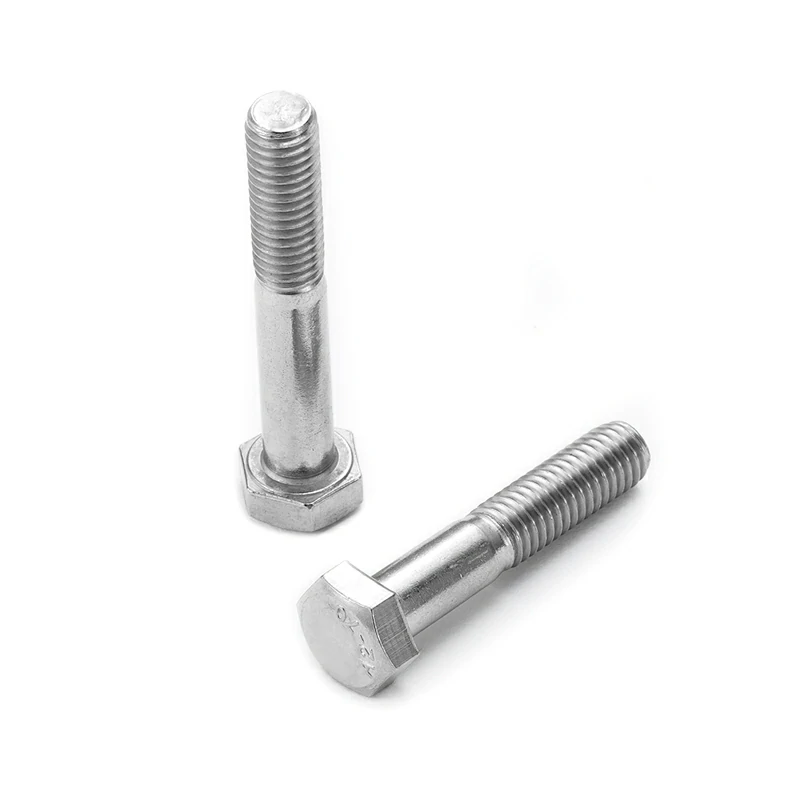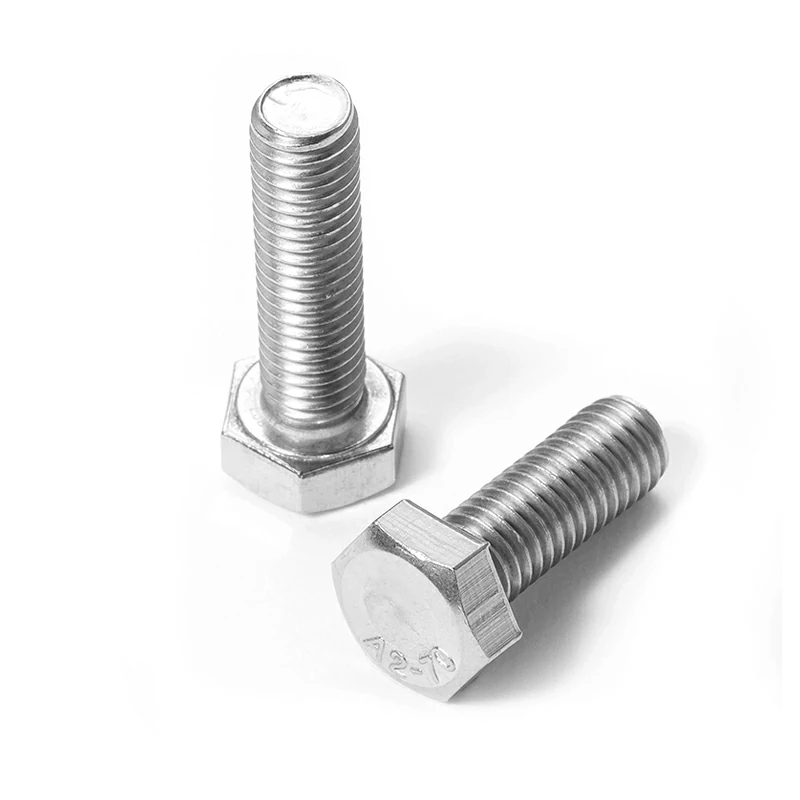
When specifying high-performance hardware, stainless steel fastener passivation is a critical factor that directly impacts corrosion resistance and service life. Although stainless steel naturally resists rust, contamination during manufacturing can weaken its protective surface. The passivation process fasteners undergo removes these contaminants and restores the material’s full corrosion-resistant capability.
This guide explains what passivation is, how it works, and why it is essential for stainless steel fasteners in demanding environments.
What Is a Passivated Fastener?
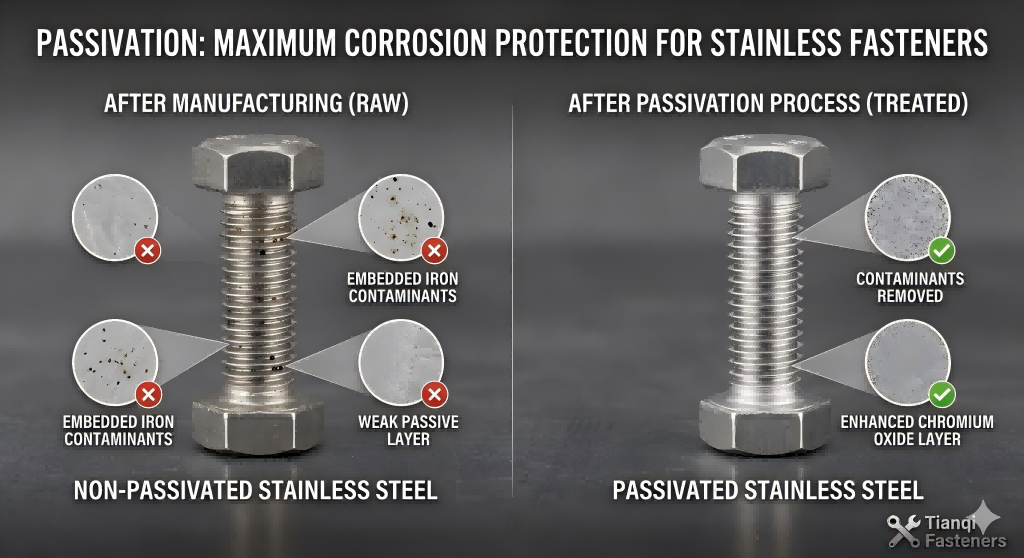
A stainless steel fastener passivated is one that has undergone a chemical treatment to remove free iron and surface contaminants. This process enhances the natural chromium oxide layer that protects stainless steel from corrosion.
Key Results:
- Cleaner, contamination-free surface
- Stronger and more uniform passive layer
- Improved resistance to rust and pitting
In simple terms, what is a passivated fastener? It is a fastener optimized to deliver maximum corrosion resistance and long-term reliability.
Why Passivation Is Necessary
During manufacturing processes such as machining, threading, or forming, microscopic iron particles and contaminants can become embedded in the surface
Without passivation, these contaminants can:
- Rust and stain the surface
- Initiate corrosion
- Reduce overall durability
Key Functions of Passivation:
- Removes Free Iron: Eliminates contamination from tooling
- Strengthens Passive Film: Promotes formation of a dense chromium oxide layer
- Prevents Pitting Corrosion: Ensures uniform surface protection
This is why stainless steel fastener bolts often require passivation for critical applications.
The Passivation Process for Fasteners
The passivation process for fasteners involves several controlled steps to ensure the surface is chemically clean and optimized for environmental exposure.
- Cleaning: The stainless steel fastener bolts are thoroughly degreased and cleaned to remove oils, coolants, and shop debris.
- Acid Immersion: The fasteners are submerged in a chemical bath, usually containing nitric acid or citric acid.
- Contaminant Removal: The acid dissolves “free iron” and other foreign particles that may have been embedded in the surface by cutting tools during manufacturing.
- Rinsing and Drying: The hardware is thoroughly rinsed to eliminate chemical residues and then dried.
- Re-Oxidization: Once the surface is clean, exposure to oxygen allows the chromium in the steel to form a uniform, thickened chromium oxide layer.
This rigorous process results in stainless steel fastener passivated products ready for demanding industrial applications.
Are Stainless Steel Fasteners Passivated?
A common question is: Are stainless steel fasteners passivated by default?
- Many high-quality fasteners are passivated during production
- Some require additional treatment depending on application
- Verification is essential for critical or corrosive environments
Always confirm passivation status with your supplier.
Benefits of Passivated Stainless Steel Fasteners
Using passivated stainless steel screws and bolts offers clear performance advantages:
- Maximum Corrosion Resistance: Ensures the alloy performs to its full potential, especially in marine and industrial environments.
- Extended Service Life: Reduces risk of rust, failure, and premature replacement.
- Improved Appearance: Prevents “tea staining” and surface discoloration.
- Lower Maintenance Costs: Less frequent inspection and replacement required.
These benefits make passivation essential for high-performance applications.
Standards for Stainless Steel Fastener Passivation
To ensure consistency and quality, stainless steel fastener Passivation follows recognized industry standards, including ASTM A967, ASTM A380, and AMS 2700. These standards define the testing, chemical treatments, and acceptance criteria for the process.
Applications of Passivated Fasteners
Stainless steel fastener passivated products are widely used in:
- Marine and offshore structures
- Food processing and medical equipment
- Chemical and industrial plants
- Construction and infrastructure projects
In these environments, corrosion resistance is critical to safety and durability.
When Should You Use Passivated Fasteners?
Passivation is strongly recommended when:
- Fasteners are exposed to moisture, salt, or chemicals
- High corrosion resistance is required
- Hygiene and cleanliness are critical
- Long-term reliability is essential
For demanding applications, passivated fasteners provide a clear performance advantage.
Conclusion
Stainless steel fastener passivation is a vital post-production process that ensures optimal corrosion resistance and long-term performance. By removing surface contaminants and strengthening the protective oxide layer, passivation allows stainless steel fasteners to perform as intended—even in harsh environments.
For engineers, contractors, and manufacturers, choosing stainless steel fastener passivated products is a reliable way to improve durability, reduce maintenance, and ensure consistent performance.
At Tianqi Fasteners, we provide high-performance hardware designed to withstand the toughest environments. Our stainless steel fastener passivated products are engineered for longevity, ensuring your projects remain secure and rust-free for years to reach.