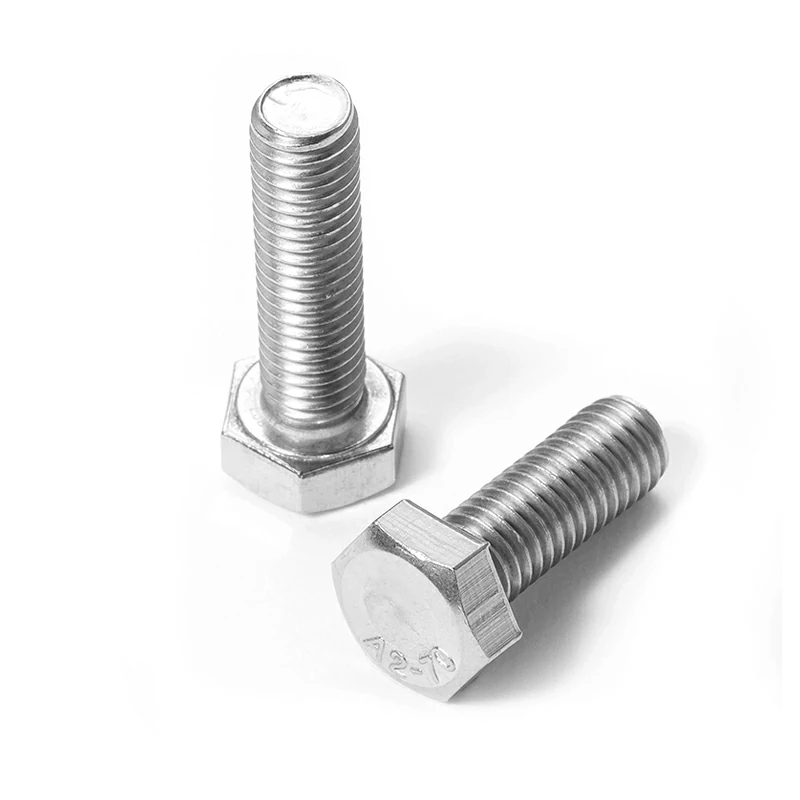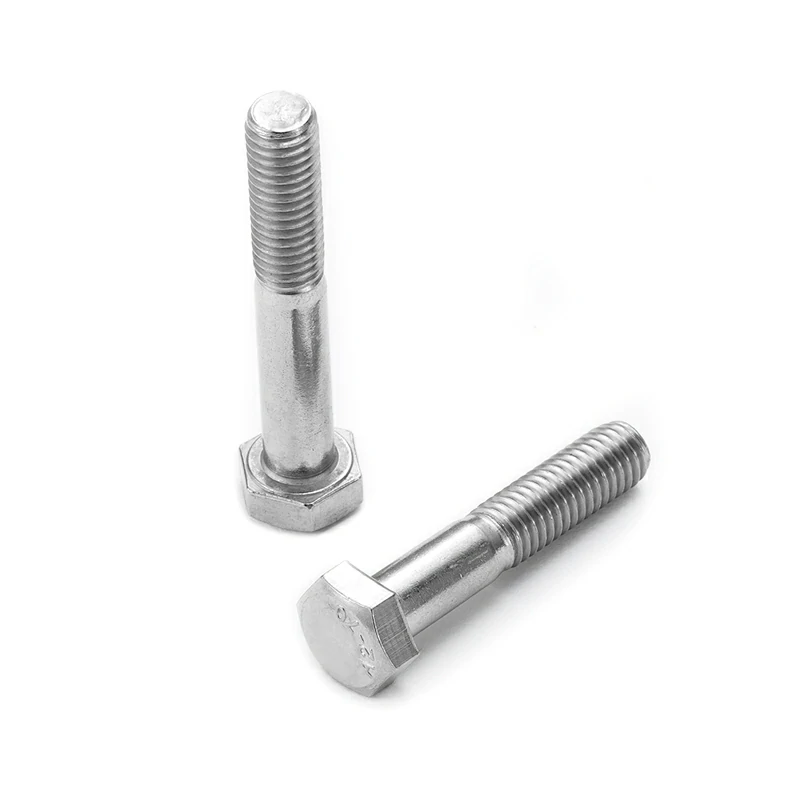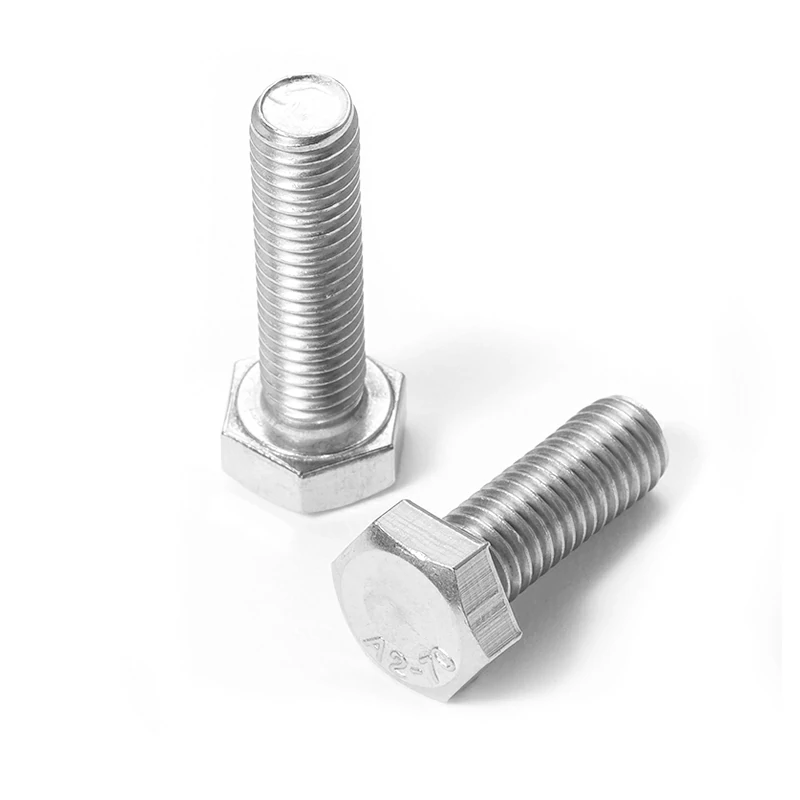
Selecting the correct fastener is critical for ensuring structural integrity, long-term durability, and cost efficiency in any project. While the terms are often used interchangeably in casual conversation, the technical distinction between Stainless Steel Screws vs Bolts is significant, directly affecting the strength and reliability of an assembly.
For engineers, procurement officers, and contractors, understanding the screw vs bolt difference is essential for making informed commercial decisions. This guide explores the mechanical roles of each and identifies the specific scenarios where one outperforms the other.
Defining the Core Screw vs Bolt Difference
The primary way to differentiate these two fasteners is by how they function within an assembly and their requirement for a mating thread.
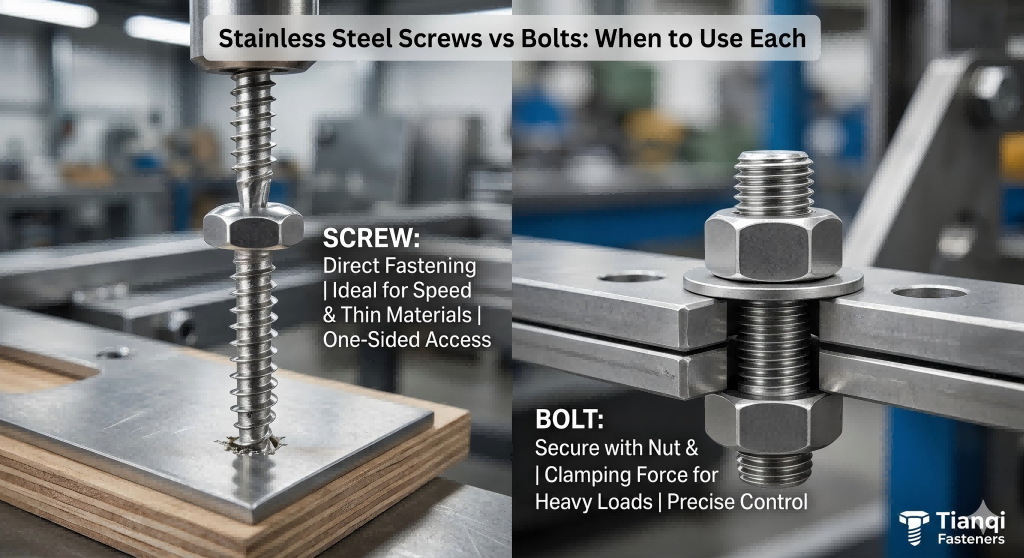
- What is a Bolt? A bolt is designed to pass through unthreaded holes in two or more components. It is secured by applying torque to a corresponding nut and often utilizes washers to distribute the load. Bolts rely primarily on tensile (clamping) force to hold a joint together and require a pre-drilled hole.
- What is a Screw? A screw is a fastener that creates its own internal thread in softer materials like wood or plastic, or is threaded into a pre-tapped hole in metal. It secures components by integrating directly with the material of the base object. Screws are typically threaded along most or all of the shaft and are installed by turning them directly into the material.
Key Comparison at a Glance
| Feature | Screws | Bolts |
| Installation | Directly into material | Requires a nut |
| Strength | Moderate | High |
| Disassembly | Easier | More secure (requires tools) |
| Application | Light to medium duty | Medium to heavy duty |
| Precision | Lower clamping control | High clamping accuracy |
Performance Analysis: What is better, bolts or screws?
When deciding what is better, bolts or screws, the answer depends entirely on the mechanical demands of the specific joint.
Why Bolts Often Provide Superior Strength
For heavy-duty structural applications, bolts are almost always the preferred choice. Because they utilize a nut on the reverse side, bolts are significantly better at handling superior tensile loads (forces pulling the joint apart) and shear loads (lateral forces sliding components across each other). A standard bolt provides a consistent, measurable clamping force, which is essential for safety in machinery, automotive chassis, and construction.
Why Screws Offer Unmatched Convenience
Screws excel in applications where rapid assembly is required or accessibility is limited to only one side of the workpiece (blind applications). Tapping and self-drilling screws eliminate the need for pre-tapping operations, significantly cutting production time. For attaching panels, securing cabinetry, or assembling electronics, the high frictional hold of a screw’s thread is highly efficient.
When to Select Stainless Steel Bolts
You should prioritize stainless steel bolts when an assembly requires maximum structural integrity. Common applications include:
- Heavy Machinery: Where fasteners must withstand immense vibration and shear forces.
- Structural Steel Construction: For framing and critical joints requiring high clamping loads.
- Automotive and Transportation: For chassis components, engine mounts, and wheels where safety retention is paramount.
- Maintenance Needs: For components requiring repeated disassembly; threads in a nut are less likely to strip than tapped threads in a soft base material.
When to Select Stainless Steel Screws
Screws are the superior choice for efficiency, moderate strength, or when the substrate is not thick enough for a nut. They are ideal for:
- Sheet Metal Assembly: Using self-tapping or self-drilling screws for rapid fastening.
- Woodworking and Cabinetry: Creating a high-friction hold that locks into wood grain.
- Electronics and Appliances: Where space is limited and accessible from only one side.
- Blind Applications: Where the back of the material, such as the inside of hollow tubing, cannot be reached.
Critical Limitations: When not to use stainless steel screws
Despite their versatility, there are specific technical scenarios when not to use stainless steel screws:
- Galling (Cold Welding) Risks: If a stainless steel screw is driven quickly into a tapped stainless steel hole, friction can cause the threads to bind and “cold weld” together. In high-torque installations without lubrication, a bolted joint with differing material grades is safer.
- High Shear Loads: Screws are less resistant to lateral (shear) forces than solid bolts that pass through the material. A standard sheet metal screw may fail under forces that a bolt handles with ease.
- Thick Materials: Using a long screw in a pre-tapped hole for thick metal is often inefficient. A bolt and nut assembly provides better clamping force over a larger area.
- High Vibration Environments: Without locking mechanisms, screws may loosen over time.
Practical Selection Tips
Use this quick guide to decide:
- Load Requirement: Light → Screws | Heavy → Bolts
- Access: One-sided → Screws | Two-sided → Bolts
- Vibration: Low → Screws | High → Bolts + locking system
- Maintenance: Frequent removal → Screws | Long-term fixing → Bolts
Common Industry Applications
- Construction: Bolts for structural joints; screws for panels
- Automotive: Bolts for chassis; screws for interior parts
- Marine: Bolts for load-bearing; screws for fittings
- Electronics: Screws dominate due to size and accessibility
Conclusion
Understanding the differences between Stainless Steel Screws vs Bolts ensures optimal performance, safety, and cost-effectiveness for your project. While screws offer convenience and flexibility, bolts provide the strength and reliability required for demanding, safety-critical applications.
Whether you need high-strength structural bolts or precision screws for electronics, Tianqi Fasteners provides a comprehensive range of 304 and 316 stainless steel solutions. Our products are engineered to meet global standards, ensuring your assemblies remain secure in any environment.