In construction and manufacturing, a project’s integrity often rests on its smallest components: the fasteners. Choosing between stainless steel vs. carbon steel fasteners is a critical decision for any engineer or contractor, as it directly impacts performance, safety, and long-term durability. While both materials serve the same primary purpose, their chemical compositions, mechanical properties, and price points vary significantly.
This educational guide provides a clear fastener material comparison, explaining how stainless steel and carbon steel fasteners differ in strength, corrosion resistance, cost, and real-world applications. By understanding these differences, you can confidently choose the right bolts, screws, nuts, and washers for your project.
Overview of Fastener Materials
Fasteners are typically manufactured from either stainless steel or carbon steel. While both materials are widely used and structurally reliable, they are designed to perform best under different environmental and mechanical conditions.
Choosing incorrectly can lead to premature corrosion, reduced load capacity, or unnecessary cost. A proper comparison of stainless steel vs carbon steel fasteners ensures optimal performance across industrial, commercial, marine, and construction applications.
Understanding Carbon Steel Fasteners
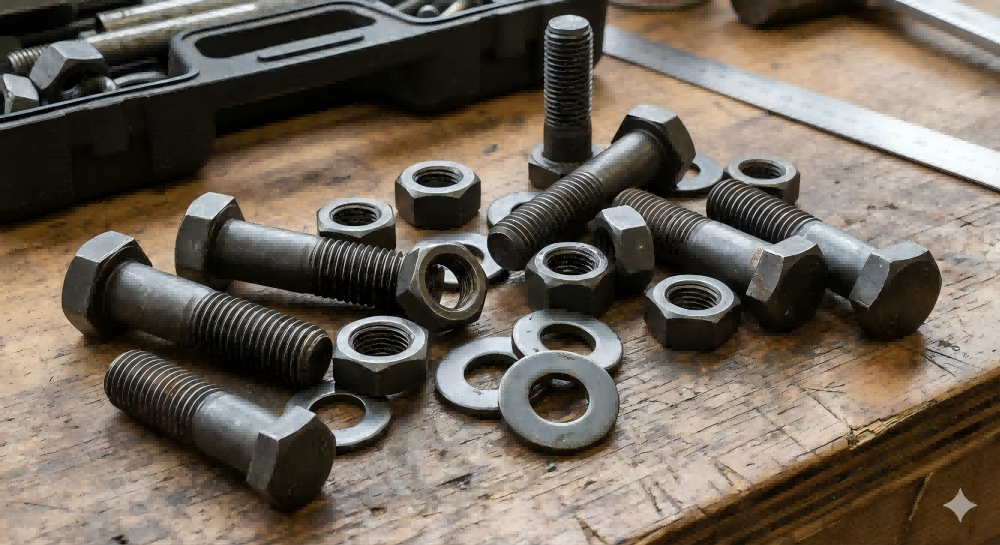
Carbon steel is an alloy consisting primarily of iron and carbon. It is the most prevalent material for industrial fasteners due to its versatility and high tensile strength.
Key Characteristics of Carbon Steel Fasteners
- High Strength Grades: Common grades include Grade 2, Grade 5, and Grade 8, with higher grades offering greater tensile strength.
- Carbon Content: Higher grades indicate a higher carbon content, which results in greater strength.
- Cost-Effective: Generally lower cost than stainless steel.
- Magnetic Properties: Most carbon steel fasteners are magnetic.
- Protective Coatings: Since carbon steel is prone to rust, these fasteners are often treated with zinc plating, black oxide, or galvanization to resist corrosion.
Typical Applications
- Structural construction and high-load applications.
- Automotive and machinery components.
- Heavy-load assemblies.
- Indoor or dry environments.
Pros: Excellent tensile strength, economical for large projects
Cons: Poor natural corrosion resistance without coatings
When comparing carbon steel bolts vs stainless steel, carbon steel often delivers superior strength but requires protection from moisture.
Understanding Stainless Steel Fasteners
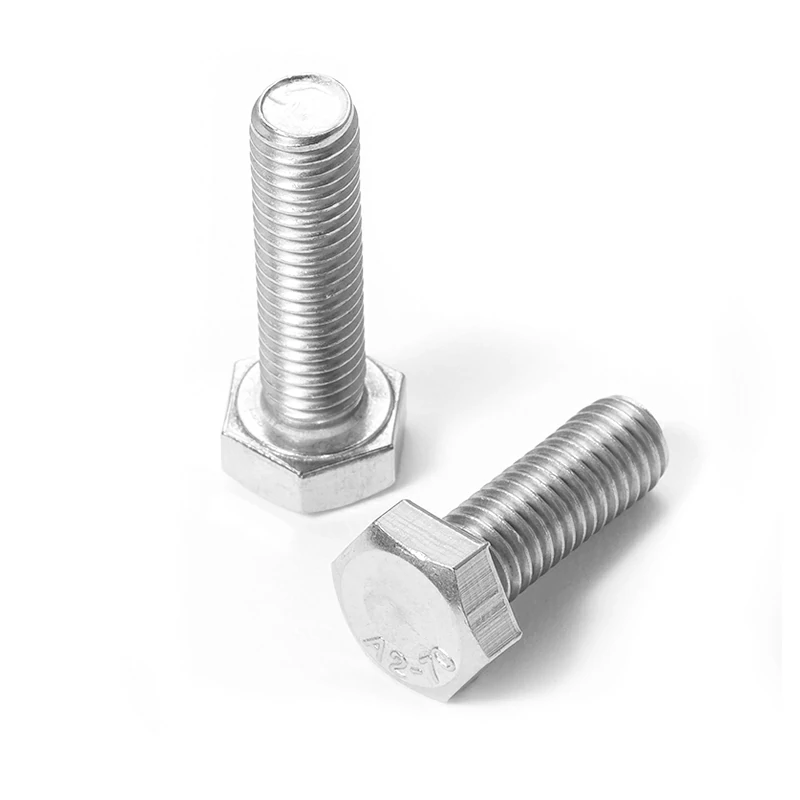
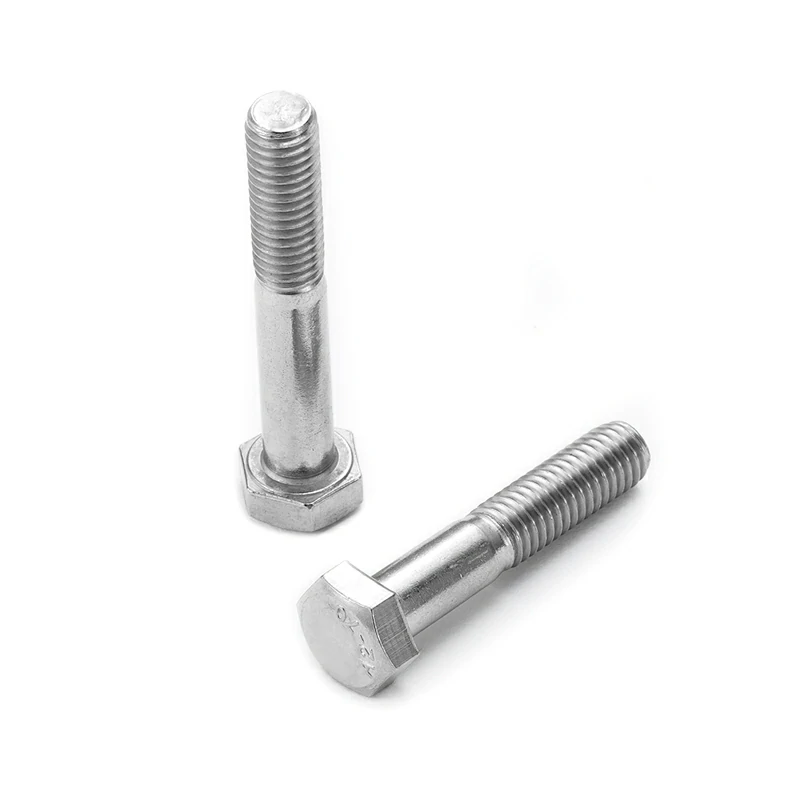
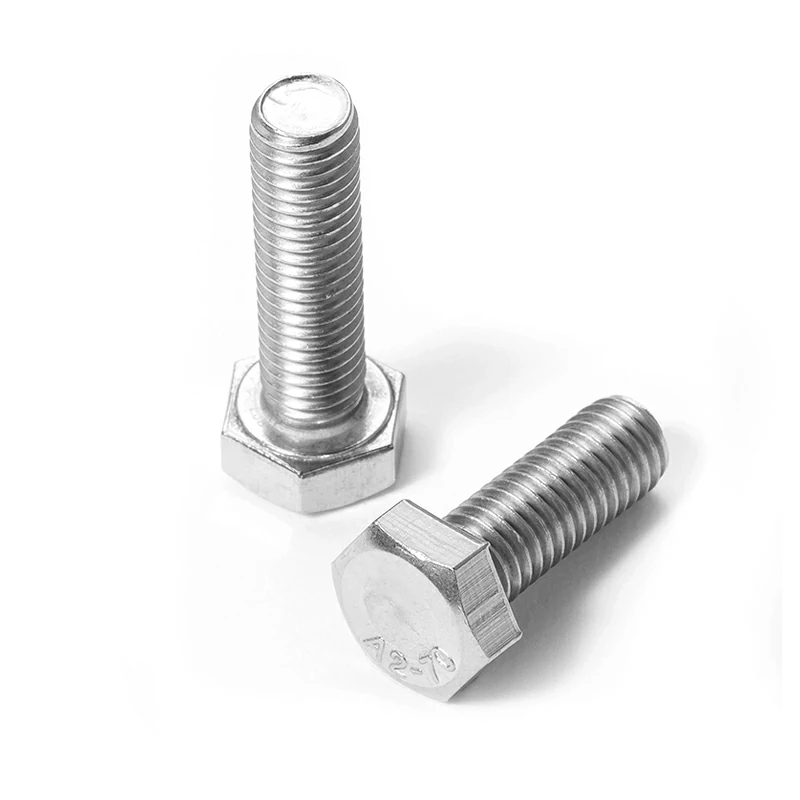
Stainless steel is an alloy containing at least 10.5% chromium. This chromium reacts with oxygen to create a “passive layer” that naturally protects the metal from rust.
Key Characteristics of Stainless Steel Fasteners
- Natural Resistance: The hallmark of stainless steel is its ability to resist moisture and acids without needing additional surface coatings.
- Common Grades:
304 – general-purpose corrosion resistance.
316 – marine grade, resistant to salt and chemicals.
316L – low carbon, improved weldability. - Aesthetics: These fasteners provide a clean, bright finish, making them ideal for visible architectural or decorative components.
Typical Applications
- Marine and offshore equipment.
- Food processing and medical industries.
- Outdoor structures and furniture.
- Architectural and decorative projects.
- Projects requiring long service life with minimal maintenance.
Pros: Long service life, low maintenance, excellent corrosion resistance.
Cons: Higher initial cost, potential thread galling if improperly installed.
For applications where rust prevention is critical, stainless steel fasteners are the preferred choice.
Fastener Material Comparison: Stainless Steel vs Carbon Steel
| Feature | Carbon Steel Fasteners | Stainless Steel Fasteners |
|---|---|---|
| Corrosion Resistance | Low (requires coating) | High (natural resistance) |
| Strength | Very high (Grade 8) | Moderate to high |
| Cost | Lower | Higher |
| Maintenance | Regular inspection | Minimal |
| Appearance | Industrial | Clean and polished |
| Best Use Environment | Dry, indoor, structural | Outdoor, marine, corrosive |
This fastener material comparison highlights why environment and application matter more than material alone.
Which Fastener Should You Choose?
The choice between carbon steel vs. stainless steel screws, nuts, and bolts depends entirely on the mechanical load and environment.
Choose Carbon Steel If:
- Strength is Paramount: You are working on heavy-duty engine components or structural frames requiring Grade 8 strength.
- Environment is Dry: For indoor use where moisture is not a concern, zinc-plated carbon steel is highly cost-effective.
- Budget is a Factor: For large-scale projects, carbon steel is significantly more affordable.
Choose Stainless Steel If:
- Exposure is Likely: In coastal areas or food processing environments, 316 stainless steel is mandatory to prevent pitting.
- Longevity is Key: If the fastener will be inaccessible for regular maintenance, the natural resistance of stainless steel is a worthy investment.
- Aesthetics Matter: High-end furniture or architectural displays benefit from the clean finish of stainless steel.
Commercial Considerations for Buyers
From a procurement standpoint, stainless steel fasteners often offer better lifecycle value despite higher upfront costs, due to reduced maintenance and replacement. Carbon steel fasteners remain a smart choice for strength-driven, budget-sensitive applications.
Understanding the differences between stainless steel vs carbon steel fasteners helps buyers build trust in their sourcing decisions and avoid costly failures.
Conclusion
There is no universal “best” option; selecting the right fastener requires balancing environment, load requirements, and maintenance expectations. Stainless steel excels in longevity and corrosion resistance, while carbon steel provides superior strength for budget-driven, high-load projects.
Need help selecting the perfect fastener for your next project?
Contact the experts at Tianqi Fasteners today for a professional consultation and high-quality solutions tailored to your specific engineering needs!