The Specification of Bolt defines the essential parameters—material, dimensions, thread type, and length—that determine a fastener’s strength, compatibility, and reliability. Engineers and manufacturers worldwide rely on standardized bolt specifications to ensure precise assembly and structural integrity. Understanding bolt standards and sizes helps prevent mismatches and failures in industrial, mechanical, and construction applications.
1. Bolt Specifications Explained
A bolt’s specification provides a universal language for identifying its key characteristics.
In most cases, the Specification of Bolt follows a metric or inch-based format, guided by standards such as DIN, ASME/ANSI, GB, and JIS.
How Bolt Specifications Are Expressed
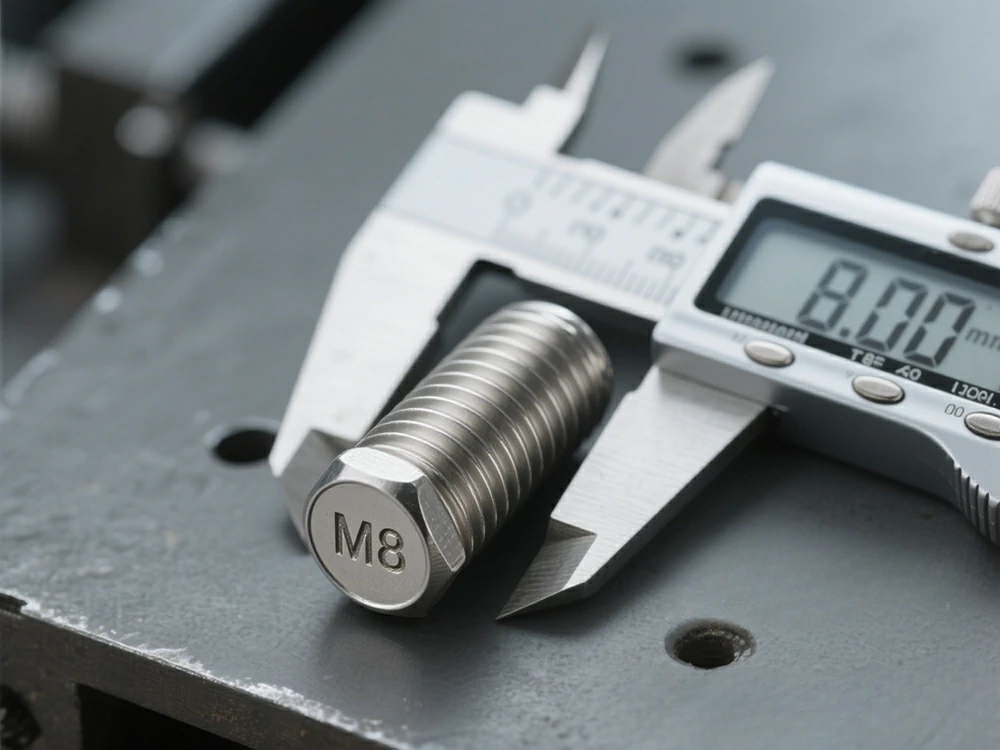
In metric systems, the bolt model starts with the prefix “M”, representing “metric thread.”
The number after “M” indicates the nominal diameter of the bolt in millimeters (mm).
Examples:
- M8 → Bolt with a diameter of 8 mm
- M10 → Bolt with a diameter of 10 mm
The bolt length is denoted by “L”, also measured in millimeters.
Example:
- L50 → A bolt with a length of 50 mm
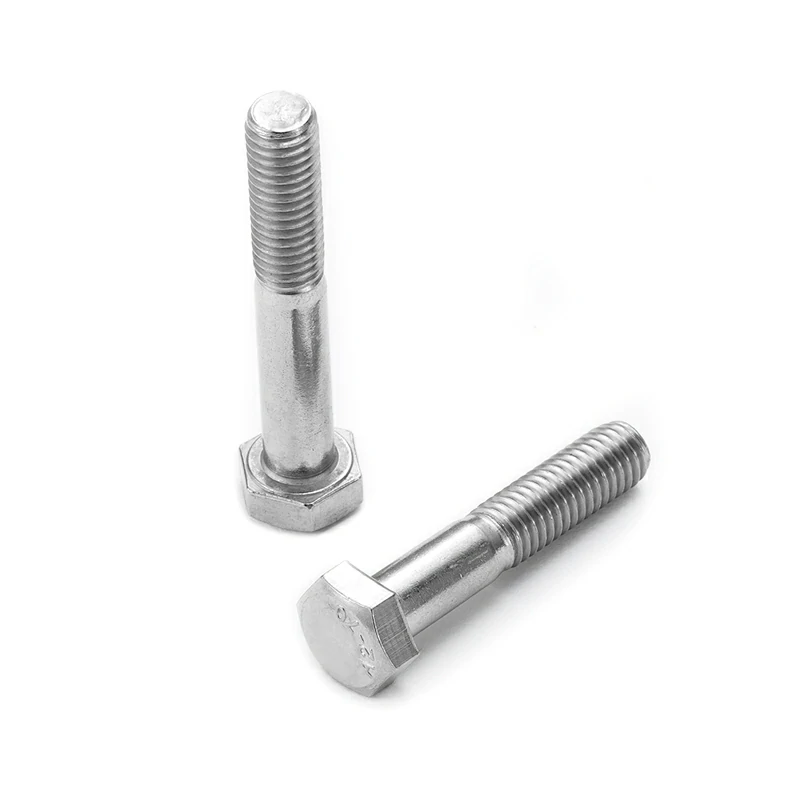
The complete specification is written as M×L (e.g., M8×50), meaning a bolt with an 8 mm diameter and 50 mm length.
2. Full Example of Bolt Specification
A detailed specification may also include the thread pitch, which defines the distance between threads.
Example:
M8×1.25×50 means:
M8 → Nominal diameter: 8 mm
1.25 → Thread pitch: 1.25 mm
50 → Bolt length: 50 mm
This level of detail ensures proper fitment, especially in precision mechanical or structural assemblies.
3. Common International Bolt Standards
Bolts are produced under recognized global standards to guarantee interchangeability and quality.
| Standard | Origin | Description |
|---|---|---|
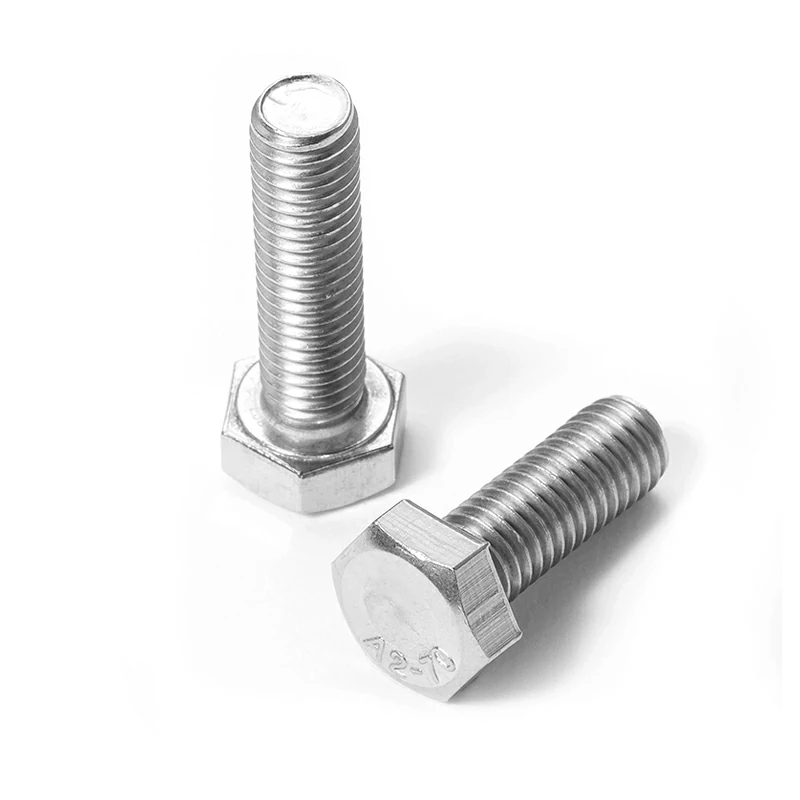
| DIN | Germany | Metric fasteners used widely in Europe (e.g., DIN 933 Hex Bolts). |
| GB | China | National bolt system, e.g., GB5782, GB5783. |
| JIS | Japan | Standardized bolts for Japanese machinery, e.g., JIS B1180. |
| ASME/ANSI | USA | Inch-based fasteners, common in U.S. engineering. |
These standards ensure that bolts meet consistent mechanical performance and dimensional accuracy worldwide.
4. Metric vs. Inch Bolt Specifications
Metric Bolts
- Expressed in millimeters (mm)
- Denoted by “M” (e.g., M10×1.5×50)
- Standardized by ISO, DIN, GB, JIS
- Commonly used in Asia and Europe
Inch Bolts
- Measured in inches (e.g., ½″×2″)
- Common in ASME/ANSI systems
- Thread pitch expressed in Threads Per Inch (TPI)
- Predominant in North America
Understanding the distinction between metric and inch bolt specifications prevents compatibility issues in international applications.
5.Common Bolt Specifications and Meanings
| Specification Example | Meaning |
|---|---|
| M6×20 | Metric bolt, 6 mm diameter, 20 mm long |
| M8×1.25×50 | Metric bolt, 8 mm diameter, 1.25 mm pitch, 50 mm long |
| ¼″×1″ UNC | Inch bolt, ¼ inch diameter, 1 inch long, Unified Coarse Thread |
| M10×1.5×60 DIN933 | Metric hex bolt, 10 mm diameter, 1.5 mm pitch, 60 mm long, DIN933 standard |
6. Why Bolt Specifications Matter
Choosing the correct Specification of Bolt ensures:
- Safety and Structural Integrity: Prevents joint failures and mismatched assemblies.
- Mechanical Accuracy: Ensures proper load-bearing capacity and torque resistance.
- Global Compatibility: Enables standardization across DIN, ASME/ANSI, GB, and JIS.
- Efficient Maintenance: Simplifies sourcing and replacement of fasteners worldwide.
Applications include:
- Structural Engineering: Load-bearing joints in bridges and buildings.
- Machinery & Automotive: Secure assemblies resistant to vibration and heat.
- Manufacturing & Industrial Equipment: Reliable fastening under dynamic stress.
7. Benefits of Standardized Bolts
Using standardized bolts provides multiple advantages:
- Guaranteed interchangeability and fit
- Consistent quality across production batches
- Simplified sourcing and replacement
- Compliance with global engineering and safety standards
At Tianqi, we manufacture and supply precision-engineered bolts that comply with international standards like DIN, ASME/ANSI, GB, and JIS.
Whether you need standard bolt sizes, custom fasteners, or bulk industrial supply, Tianqi ensures exceptional quality, precision, and reliability for your engineering needs.