Corrosion can compromise the strength, appearance, and long-term performance of industrial hardware—even when using stainless steel. While these materials are designed to resist rust, improper selection, installation, or environmental exposure can still lead to failure. If you are looking to prevent corrosion in stainless fasteners, understanding environmental triggers and technical safeguards is essential for ensuring structural integrity.
This guide provides practical solutions for selecting and maintaining hardware in demanding applications.
Why Do Stainless Fasteners Corrode?
Stainless steel relies on a chromium-rich “passive layer” to resist oxidation. However, this protective film can break down under several conditions:
- Chloride Exposure: Common in marine environments or areas using de-icing salts.
- Stagnant Moisture: High humidity or trapped water.
- Surface Contamination: Iron particles or dirt embedded during installation.
- Galvanic Reactions: Contact with dissimilar metals in the presence of an electrolyte.
- Improper Grade Selection: Using a material not suited for the specific environment.
1. Select the Correct Grade for the Environment
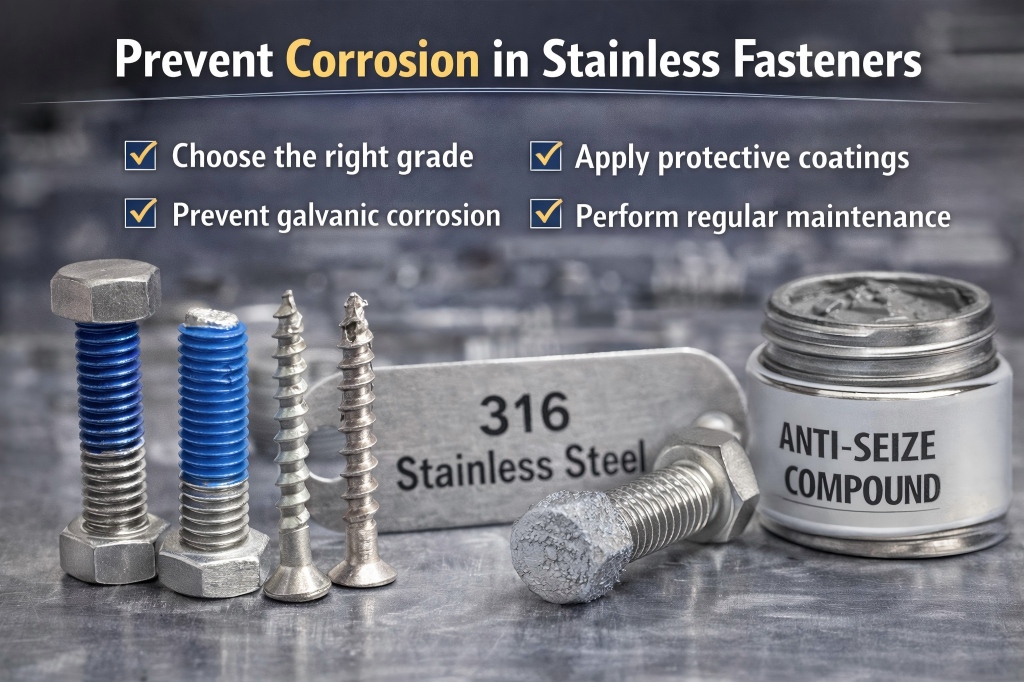
The most fundamental step to prevent corrosion in stainless fasteners is choosing the right alloy.
- Grade 304: Best for indoor use or mildly corrosive outdoor settings. While cost-effective, it may suffer from “tea staining” or pitting in high-salt areas.
- Grade 316 (Marine Grade): Contains molybdenum to significantly enhance resistance to chlorides. This is the industry standard for anti corrosion bolts in coastal or chemical applications.
- Duplex Alloys: For extreme conditions, Super Duplex 2507 offers the highest level of protection against pitting and stress corrosion cracking.
Upgrading to high-grade anti corrosion bolts or anti corrosion screws significantly extends service life in harsh environments.
2. Avoid Galvanic Corrosion
Galvanic corrosion occurs when two dissimilar metals meet in the presence of an electrolyte like moisture. The more “active” metal corrodes to protect the “noble” one.To keep your anti rust bolts intact:
- Match Metals: Whenever possible, use stainless steel bolts with matching stainless steel nuts and washers.
- Isolation: If you must join stainless fasteners to aluminum or carbon steel, use non-conductive spacers, nylon washers, or bushings to break the electrical circuit. This is a critical step for anti rust bolts in mixed-metal assemblies.
3. Apply Protective Coatings & Surface Treatments
Even anti corrosion fasteners benefit from additional protection in aggressive environments. Common industrial options include:
- PTFE (Teflon) Coatings: These reduce friction and improve overall corrosion resistance.
- Zinc Flake Coatings: Provide a durable barrier protection.
- Passivation: A chemical process using a mild oxidant (like nitric acid) to remove free iron and thicken the natural protective oxide layer.
4. Prevent Crevice Corrosion and Pitting
Corrosion often hides in tight spaces where oxygen cannot reach to maintain the metal’s protective layer. This is known as crevice corrosion.
- Seal the Gaps: Use high-quality gaskets or sealants to prevent moisture from being trapped under bolt heads or inside threads.
- Smooth Finishes: Opt for fasteners with polished or smooth surface finishes. Rough surfaces provide “pockets” where corrosive particulates can settle.
5. Use Anti-Seize and Proper Installation
Stainless steel is prone to “galling”—a cold-welding phenomenon where threads lock together during installation. This damages the protective oxide layer and leaves the metal vulnerable to rust.
- Apply Lubricant: Use a nickel-based or silver-based anti-seize compound on the threads of anti corrosion screws and bolts. This reduces friction and allows for easy removal during maintenance.
- Avoid Over-Torquing: Use calibrated tools to ensure fasteners are tightened to specification without stripping the surface. Ensure correct thread engagement to avoid micro-cracks.
6. Surface Cleaning and Maintenance
Iron particles from tools can embed in the surface of stainless steel during installation and rust, even if the bolt itself is high-quality.
- Tool Choice: Use dedicated stainless steel tools and avoid contact with grinding dust or iron debris.
- Routine Rinsing: For anti rust wood screws used in outdoor decking or marine fittings, regular rinsing with fresh water removes salt deposits and pollutants.
- Maintenance Checklist: Periodically inspect for discoloration, clean surfaces, and replace any worn or damaged hardware to extend the lifespan of your anti corrosion fasteners.
- Control Environmental Exposure: Environmental design plays a key role in corrosion prevention. Ensure proper drainage to avoid water buildup. Use sealants to block moisture entry. Avoid designs that trap water or debris. Add protective covers in exposed areas.
Conclusion
To successfully prevent corrosion in stainless fasteners, you must combine proper material selection, correct installation, and proactive maintenance. Stainless steel offers excellent corrosion resistance, but only when used correctly. By applying these best practices and choosing high-quality anti corrosion fasteners, you can ensure long-term performance, safety, and cost efficiency across any application.
Looking for reliable hardware for your next project? Contact Tianqi Fasteners today for precision-engineered anti corrosion bolts and screws designed for demanding environments.