Description
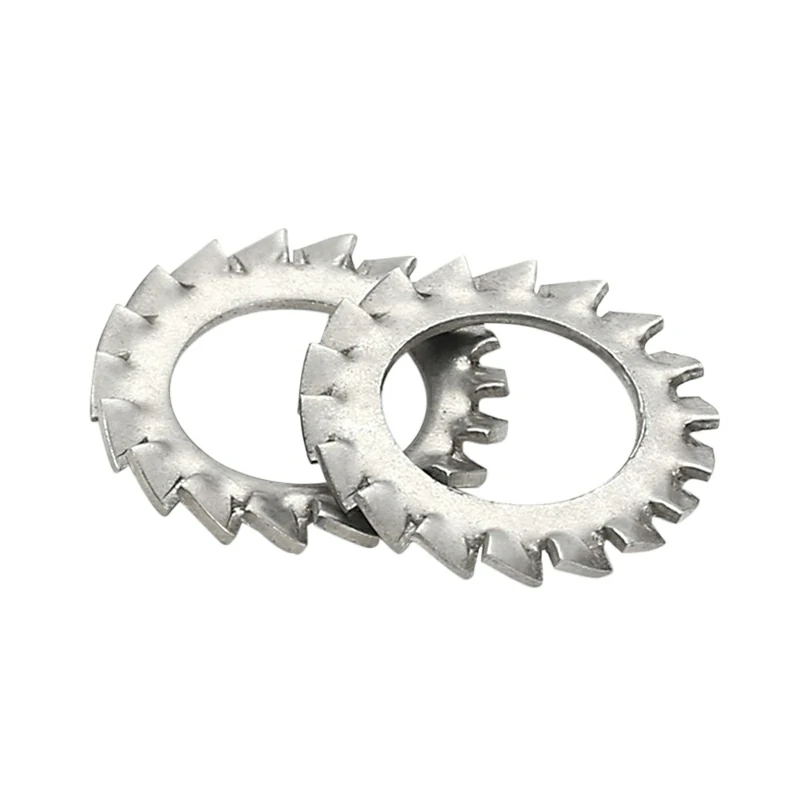
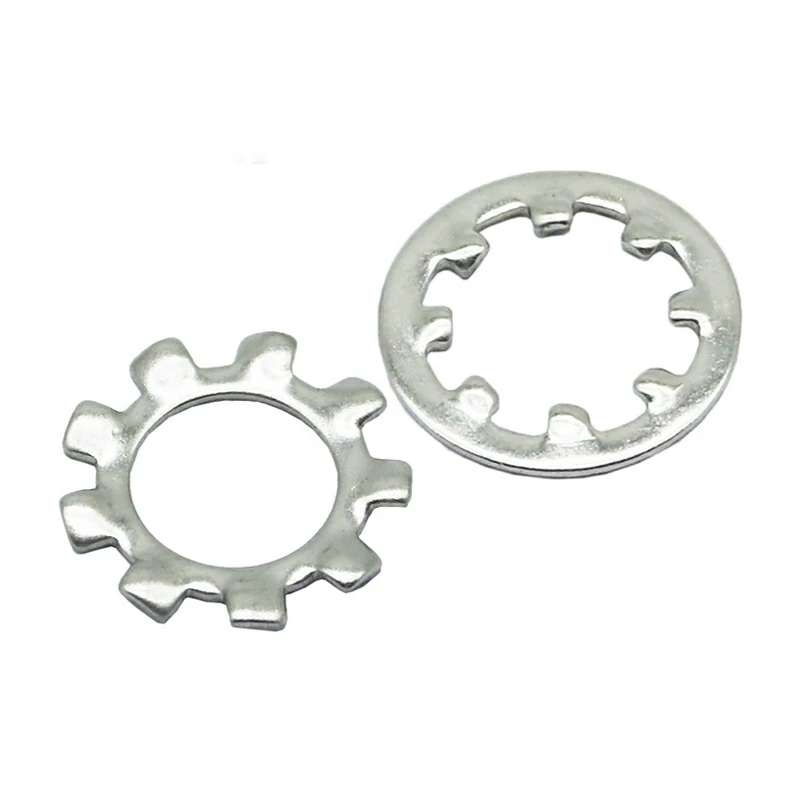
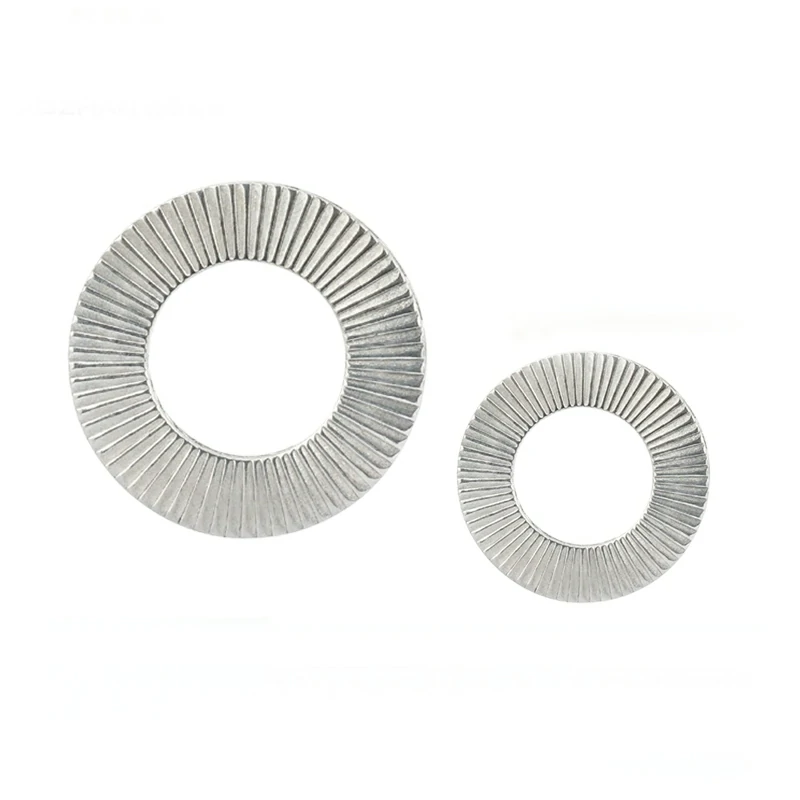
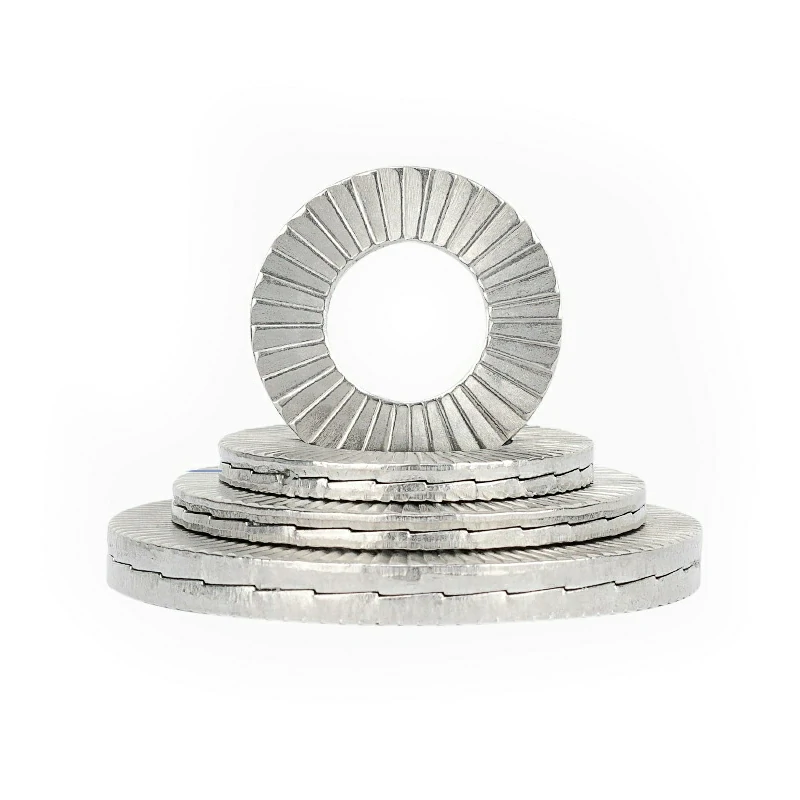
The Wedge Locking Washer manufactured according to DIN 25201 is a high-performance fastener designed to prevent bolt loosening caused by vibration, dynamic loads, or thermal expansion. This advanced locking system consists of a pair of washers with cam faces on the inside and radial serrations on the outside, forming a reliable self-locking mechanism.
When installed, the serrated outer surfaces grip the mating material while the inner wedge cams create a tension effect that actively prevents bolt rotation. Unlike conventional stainless steel washer solutions, the wedge-lock principle maintains clamping force even under extreme vibration or mechanical shock.
Manufactured from premium 304 or 316 stainless steel, these washers offer excellent corrosion resistance, high mechanical strength, and long-term durability. The 316 stainless steel version provides enhanced protection in marine, coastal, or chemically aggressive environments. Because of their reliability and safety performance, DIN25201 wedge locking washers are widely used in industries such as automotive, rail transportation, wind power, heavy machinery, and construction equipment.
Features & Benefits
- Superior Anti-Loosening Performance: Utilizes a proven wedge-locking principle. The cams on the inner surfaces create a tension-based lock that effectively prevents bolt rotation even under severe shock loads and constant vibration.
- Premium Material Options (304/316): Manufactured from high-strength stainless steel to ensure structural reliability. While 304 is ideal for general use , the 316 option includes molybdenum for enhanced performance in marine, chemical, and salt-rich environments.
- Standardized Precision Fit: Guaranteed to meet DIN 25201 specifications, providing a smooth surface and standard concentricity. This ensures a reliable fine fit and a large bearing surface for optimal interaction with bolts.
- Consistent Load Distribution: The outer surfaces feature sharp radial serrations that grip the mating surface and the underside of the bolt head. This ensures a strong frictional grip to maintain clamping force and distribute loads evenly.
Specification
|
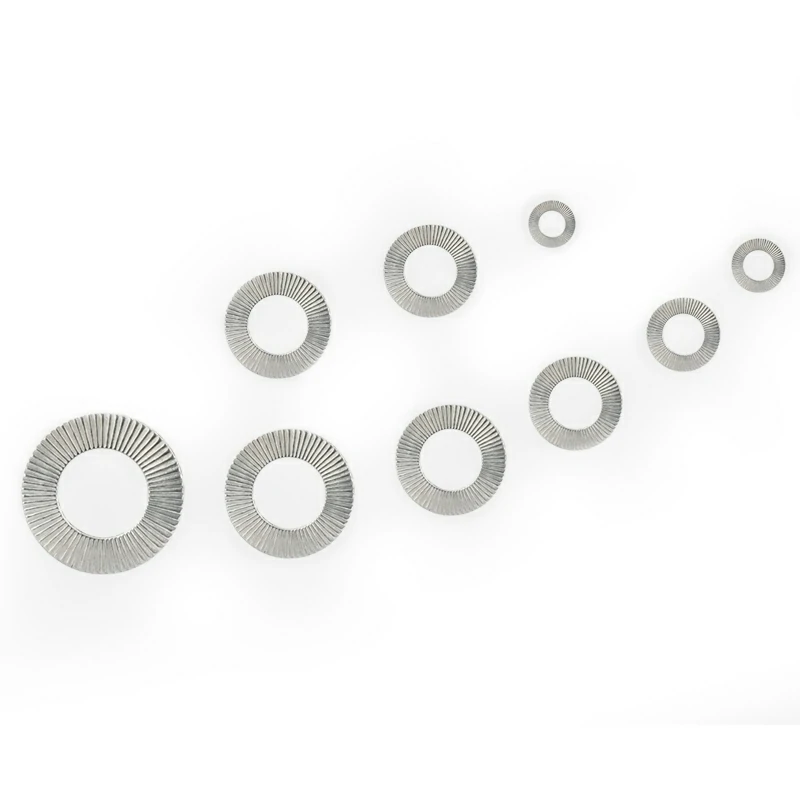
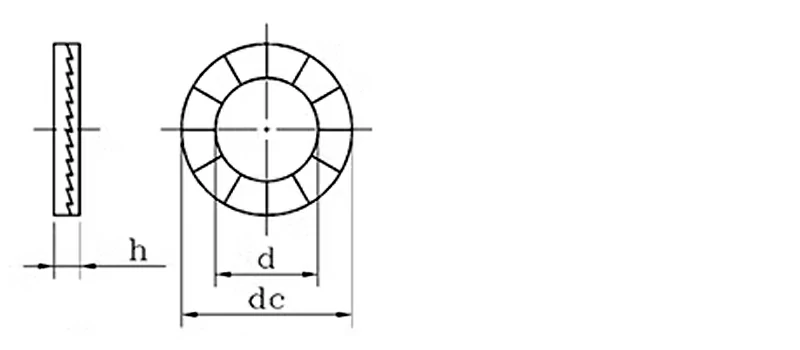
Specifications -D |
Inside Diameter -d |
Outside Diameter -dc |
Thickness -h |
|||||
|
max |
min |
nominal |
max |
min |
nominal |
max |
min |
|
|
M3 |
3.5 |
3.3 |
7 |
7.2 |
6.8 |
2.2 |
2.45 |
1.95 |
|
M3.5 |
4 |
3.8 |
7.6 |
7.8 |
7.4 |
2.2 |
2.45 |
1.95 |
|
M3.5 Plus |
4 |
3.8 |
9 |
9.2 |
8.8 |
2.2 |
2.45 |
1.95 |
|
M4 |
4.5 |
4.3 |
7.6 |
7.8 |
7.4 |
2.2 |
2.45 |
1.95 |
|
M4 Plus |
4.5 |
4.3 |
9 |
9.2 |
8.8 |
2.2 |
2.45 |
1.95 |
|
M5 |
5.5 |
5.3 |
9 |
9.2 |
8.8 |
2.2 |
2.45 |
1.95 |
|
M5 Plus |
5.5 |
5.3 |
10.8 |
11 |
10.6 |
2.2 |
2.45 |
1.95 |
|
M6 |
6.6 |
6.4 |
10.8 |
11 |
10.6 |
2 |
2.5 |
1.75 |
|
M6 Plus |
6.6 |
6.4 |
13.5 |
13.7 |
13.3 |
2 |
2.5 |
1.75 |
|
M8 |
8.8 |
8.6 |
13.5 |
13.7 |
13.3 |
2 |
2.5 |
1.75 |
|
M8 Plus |
8.8 |
8.6 |
16.6 |
16.8 |
16.4 |
2 |
2.5 |
1.75 |
|
M10 |
10.9 |
10.5 |
16.6 |
16.8 |
16.4 |
2 |
2.5 |
1.75 |
|
M10 Plus |
10.9 |
10.5 |
21 |
21.2 |
20.8 |
2 |
2.5 |
1.75 |
|
M12 |
13.2 |
12.8 |
19.5 |
19.7 |
19.3 |
2 |
2.5 |
1.75 |
|
M12 Plus |
13.2 |
12.8 |
25.4 |
25.6 |
25.2 |
3 |
3.25 |
2.75 |
|
M14 |
15.4 |
15 |
23 |
23.2 |
22.8 |
3 |
3.25 |
2.75 |
|
M14 Plus |
15.4 |
15 |
30.7 |
30.9 |
30.5 |
3.2 |
3.45 |
2.95 |
|
M16 |
17.2 |
16.8 |
25.4 |
25.6 |
25.2 |
3 |
3.25 |
2.75 |
|
M16 Plus |
17.2 |
16.8 |
30.7 |
30.9 |
30.5 |
3.2 |
3.45 |
2.95 |
FAQ:
Q1: How does a Wedge Locking Washer differ from a standard tooth lock washer?
A: Standard tooth lock washers rely on friction and surface "biting" to resist rotation. A Wedge Locking Washer uses geometry (cams) to create a mechanical lead that is greater than the thread pitch of the bolt, meaning the bolt must actually tighten further to move at all.
Q2: Are these washers reusable?
A: Yes. Because the locking mechanism is based on tension rather than the permanent deformation of a plastic insert or the scratching of a surface, DIN 25201 washers can typically be reused. However, like all fasteners, they should be inspected for wear or damage before re-installation.
Q3: Can these be used with high-strength bolts?
A: Absolutely. These washers are specifically designed to handle high-vibration and high-load environments, making them a preferred solution for heavy machinery, rail infrastructure, and solar panel mounting systems.
Q4:How does a wedge locking washer work?
A: The washer pair features cam faces on the inside and serrations on the outside. When the bolt attempts to loosen, the cam angle creates tension that increases clamping force, preventing rotation.
Q5: Where should wedge locking washers be installed?
A: They are installed as a washer pair under the bolt head or nut to ensure proper locking performance.