Description
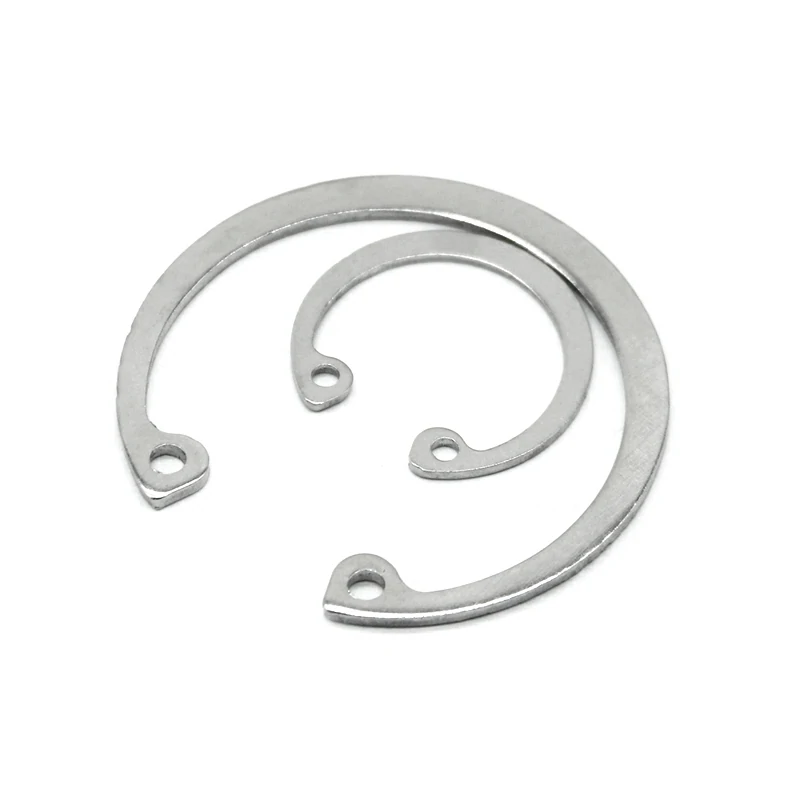
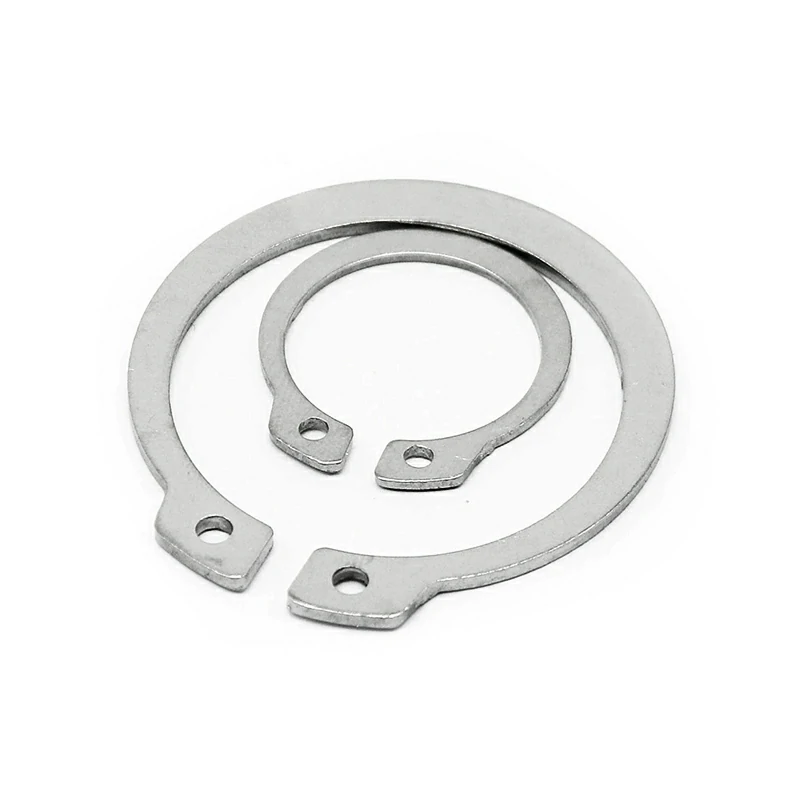
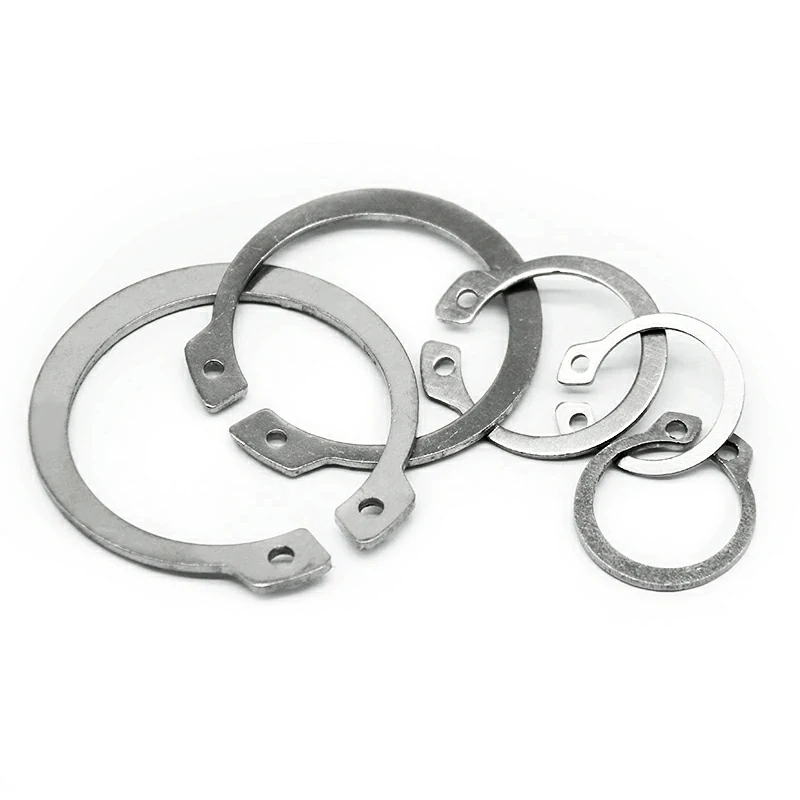
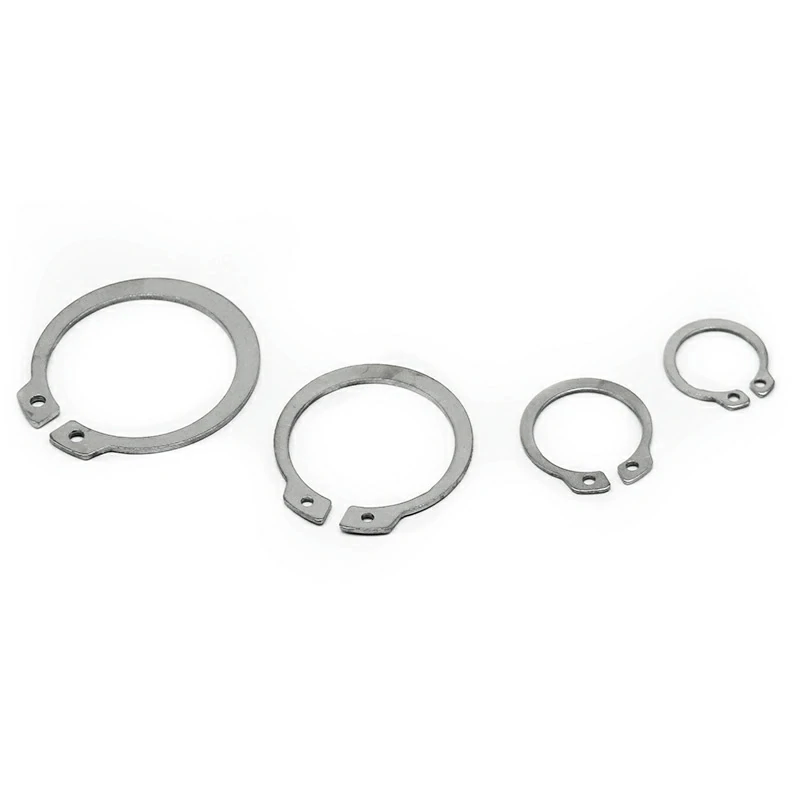
The External Snap Ring manufactured to GB894.1 standard is a precision mechanical fastener designed to provide secure axial retention for components mounted on a shaft. Installed into a machined groove on the outer diameter of a shaft, this semi-flexible ring forms a rigid shoulder that prevents parts such as bearings, gears, pulleys, or bushings from moving along the shaft axis.
Constructed from premium 304 stainless steel, the snap ring offers excellent corrosion resistance, wear resistance, and long-term durability. Its spring-like structure allows the ring to expand during installation and return to its original shape once seated in the groove, creating a reliable locking function.
Featuring standardized clamp holes, the External Snap Ring can be quickly installed or removed using circlip pliers, reducing assembly time and simplifying maintenance operations. Due to its strength, dimensional stability, and resistance to environmental corrosion, it is widely used in machinery, automotive assemblies, and industrial equipment.
Features & Benefits
- Superior Axial Retention: Provides a reliable mechanical stop that ensures components remain precisely positioned. This prevents unwanted axial movement under centrifugal forces or operational vibrations.
- Exceptional Corrosion Resistance: Forged from 304 stainless steel, which contains chromium that forms a passive, self-healing oxide layer. This protects the metal from rust and oxidation in humid or challenging environments.
- Standardized GB894.1 Design: Featuring precise clamp holes (lugs) at the ends, these rings are optimized for quick, tool-assisted installation. The standardized dimensions ensure compatibility with industrial circlip pliers, reducing assembly time and slippage risk.
- High Strength & Wear Resistance: The robust thickness and high hardness of the material prevent permanent deformation. Unlike coated fasteners, stainless steel maintains its structural integrity even if the surface is scratched during installation.
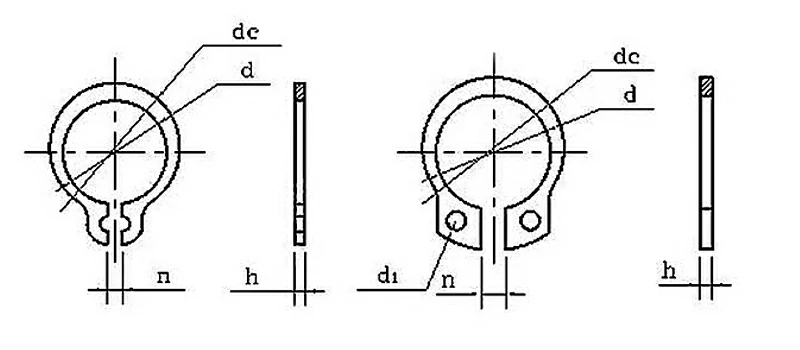
Specification
|
Specification -do |
Inside diameter -d |
Outside diameter -D |
Thickness |
Specification -do |
Inside diameter -d |
Outside diameter -D |
Thickness |
|
Φ3 |
2.7 |
3.9 |
0.4 |
Φ34 |
31.5 |
38 |
1.8 |
|
Φ4 |
3.7 |
5 |
Φ35 |
32.2 |
39 |
||
|
Φ5 |
4.7 |
6.4 |
0.5 |
Φ36 |
33.2 |
40 |
|
|
Φ6 |
5.6 |
7.6 |
Φ37 |
34.2 |
41 |
||
|
Φ7 |
6.5 |
8.48 |
Φ38 |
35.2 |
42.7 |
||
|
Φ8 |
7.4 |
9.38 |
0.7 |
Φ38 |
35.2 |
44 |
|
|
Φ9 |
8.4 |
10.56 |
Φ40 |
36.5 |
46 |
||
|
Φ10 |
9.3 |
11.5 |
1 |
Φ42 |
38.5 |
49 |
|
|
Φ11 |
10.2 |
12.5 |
Φ45 |
42.5 |
49 |
||
|
Φ12 |
11 |
13.6 |
Φ47 |
43.5 |
51 |
||
|
Φ13 |
11.9 |
14.7 |
Φ48 |
44.5 |
52 |
||
|
Φ14 |
12.9 |
15.7 |
Φ50 |
45.8 |
54 |
2 |
|
|
Φ15 |
13.8 |
16.8 |
Φ52 |
47.5 |
56 |
||
|
Φ16 |
14.7 |
18.2 |
Φ55 |
50.8 |
59 |
||
|
Φ17 |
15.7 |
19.4 |
Φ58 |
53.8 |
63 |
||
|
Φ18 |
16.5 |
20.2 |
Φ60 |
55.8 |
65 |
||
|
Φ19 |
17.5 |
21.2 |
Φ62 |
57.8 |
67 |
||
|
Φ20 |
18.5 |
22.5 |
Φ65 |
60.8 |
70 |
2.5 |
|
|
Φ21 |
19.5 |
23.5 |
Φ68 |
63.5 |
73 |
||
|
Φ22 |
20.5 |
24.5 |
Φ70 |
65.5 |
75 |
||
|
Φ23 |
20.5 |
24.5 |
1.2 |
Φ72 |
70 |
77 |
|
|
Φ24 |
22.2 |
27.2 |
Φ75 |
73.5 |
80 |
||
|
Φ25 |
23.2 |
28.2 |
Φ78 |
73.5 |
83 |
||
|
Φ26 |
24.2 |
29.2 |
Φ80 |
74.5 |
85 |
||
|
Φ27 |
25.2 |
30.2 |
Φ85 |
79.5 |
90 |
||
|
Φ28 |
25.9 |
31.3 |
Φ90 |
84.5 |
96 |
||
|
Φ30 |
27.9 |
33.5 |
Φ95 |
89.5 |
103.3 |
||
|
Φ32 |
29.6 |
35.5 |
Φ100 |
94.5 |
108.5 |
FAQ:
Q1: What is the difference between an External Snap Ring (GB894.1) and an Internal Snap Ring (GB893.1)?
A: An External Snap Ring (GB894.1) is designed to fit over a shaft and snap into an outer groove. In contrast, an Internal Snap Ring (GB893.1) fits inside a bore or housing. You can distinguish them by their "ears" or lugs: external rings have lugs pointing outward for plier access, while internal rings have lugs pointing inward.
Q2: Can these snap rings be used in outdoor machinery?
A: Yes. 304 grade is considered the standard for general outdoor use as it provides excellent resistance to oxidation in most non-marine exterior settings. For environments with high salt spray or chemical exposure, 316-grade stainless steel may be recommended.
Q3: How do I maintain these fasteners to ensure a long service life?
A: To maximize lifespan, you should rinse the components periodically if used in high-humidity areas and avoid using carbon steel tools during installation to prevent cross-contamination that could lead to surface rust.
Q4: Can I use a standard tooth lock washer instead of a snap ring?
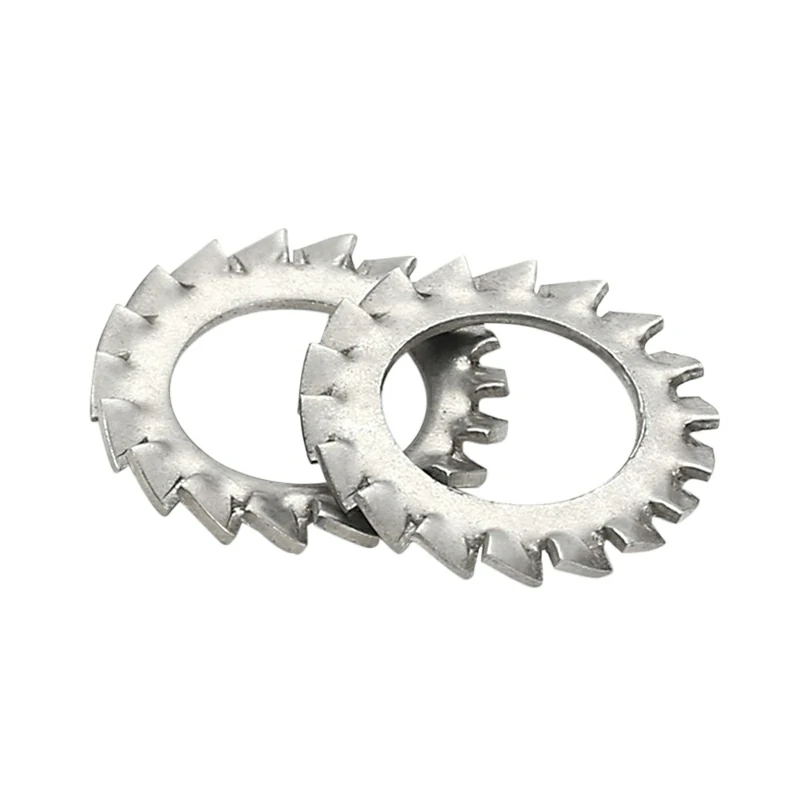
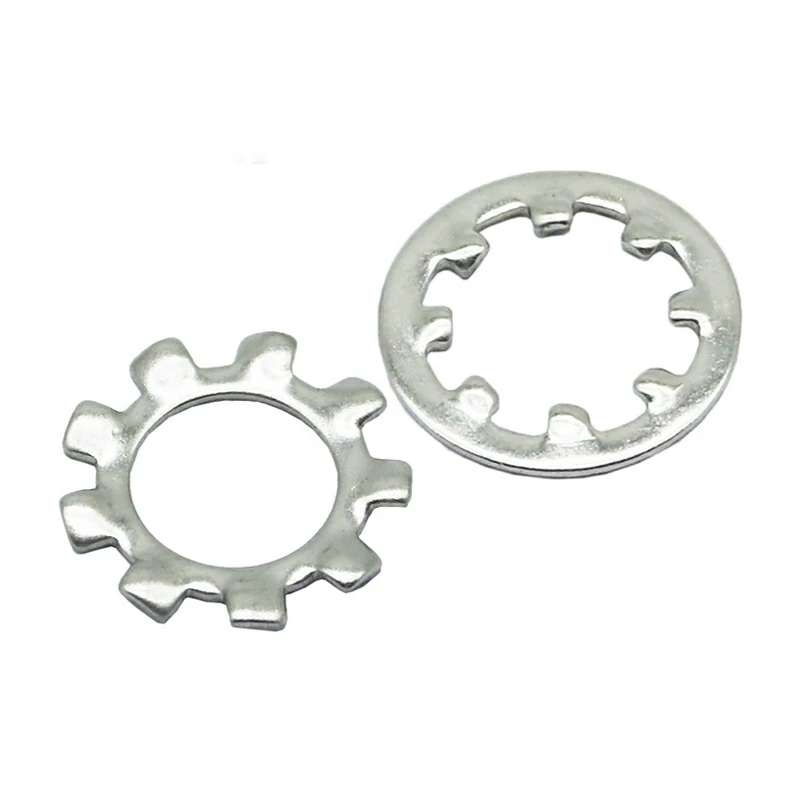
A: While tooth lock washers provide excellent anti-vibration locking for bolted joints, they do not provide the axial positioning required for shafts. A snap ring is specifically designed to sit in a groove to prevent parts from sliding off a shaft.
Q5: How is an External Snap Ring installed?
A: Installation is performed using circlip (snap ring) pliers, which expand the ring so it can be placed into the shaft groove.