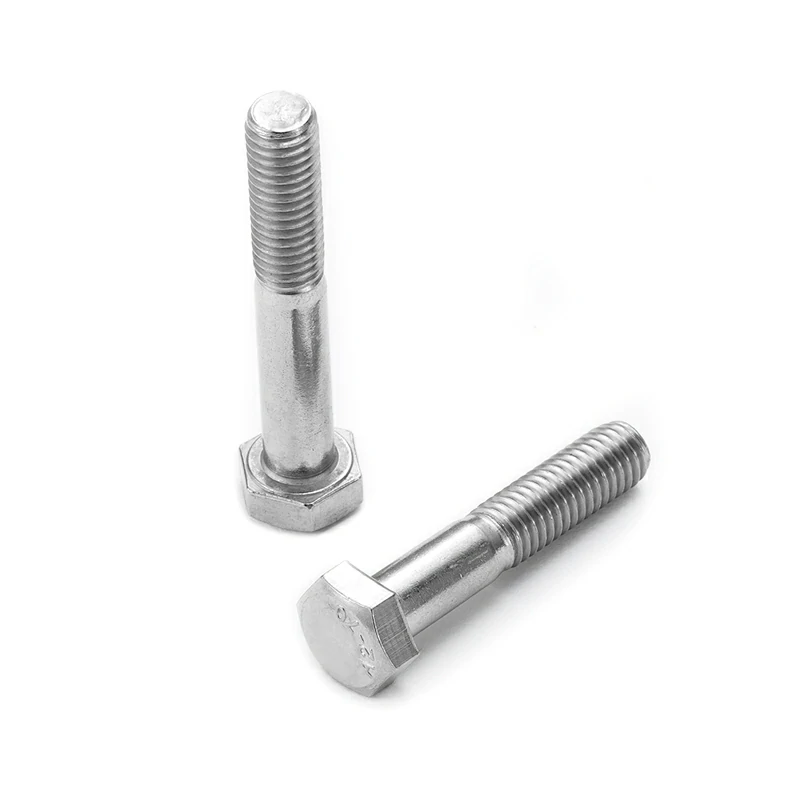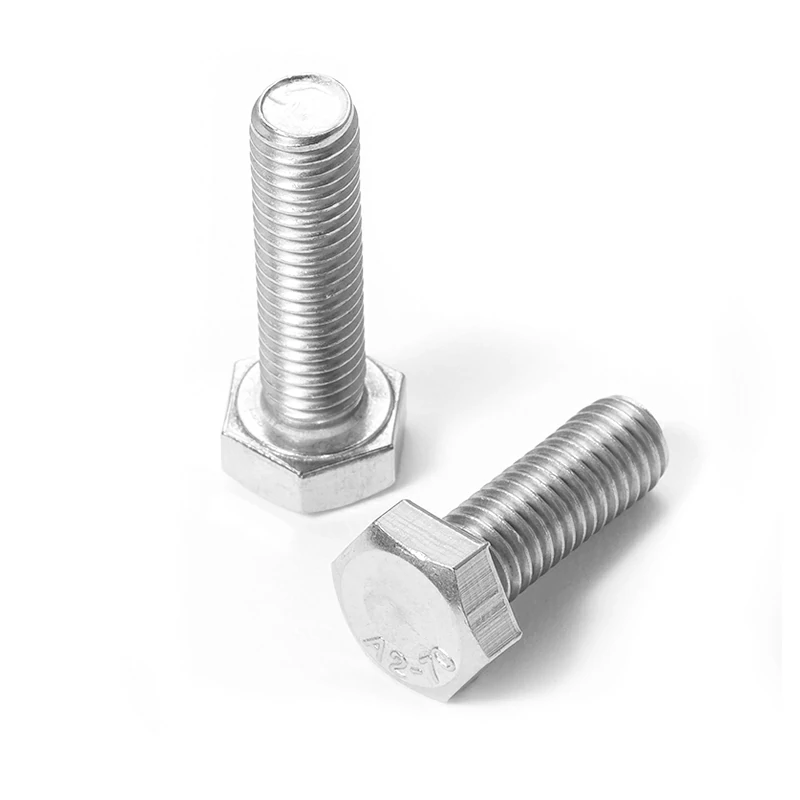
Achieving the correct stainless steel fastener torque is one of the most critical, yet often overlooked, aspects of industrial assembly. Applying the correct tightening force is essential for creating secure, reliable, and long-lasting connections. Unlike carbon steel, stainless steel has unique physical properties that make “hand-tightening” or over-torquing particularly dangerous. Over-tightening can damage threads and cause galling, while under-tightening may lead to joint failure.
Whether you are working on marine hardware or structural frameworks, following proper torque guidelines stainless is essential to prevent joint failure and the dreaded phenomenon of thread galling. This guide provides the necessary stainless steel bolt torque specs and best practices to ensure a secure connection.
Why Is Torque Critical for Stainless Steel?
Torque is the rotational force applied to a fastener to create “preload”—the tension that clamps a joint together. This force determines the clamping strength that holds components together.
Under-tightening: If the torque is too low, the joint may vibrate loose over time.
Over-tightening: If it is too high, you risk stripping the threads or breaking the bolt entirely.
For stainless steel, there is an added complication known as galling. Stainless steel relies on a microscopic chromium oxide layer for its corrosion resistance. During high-speed or high-pressure tightening, this layer can shear off, causing the bare metal surfaces to “cold weld” together. Once galling starts, the fastener can seize completely, often before the desired clamp load is reached. Utilizing the correct tightening torques for stainless steel bolts ensures both safety and durability in industrial applications.
Factors That Affect Stainless Steel Fastener Torque
There is no single torque value for all applications. Accurate stainless steel bolt torque settings depend on several key variables:
- Material Grade: Different grades, such as A2-70 (304) for general purposes or A4-80 (316) for high-corrosion environments, have different strength levels.
- Bolt Size and Thread Pitch: Larger diameters require higher torque, and fine threads may require different settings compared to coarse threads.
- Lubrication: Lubricated threads reduce friction and require lower torque, whereas dry threads increase friction and require higher torque.
- Surface Condition: Coatings, contamination, or rough surfaces can significantly affect torque accuracy.
Stainless Steel Bolt Torque Settings
When determining stainless steel bolt torque settings, you must distinguish between “Dry” and “Lubricated” (or Anti-Seize) conditions. Lubrication significantly reduces friction, meaning you need less torque to achieve the same clamping force.
Metric Torque Guidelines (A2-70 & A4-80)
Values are in Newton-meters (Nm)
Imperial Torque Guidelines (18-8 & 316)
| Thread Size | Dry Torque (Nm) | Lubricated / Anti-Seize (Nm) |
| M3 x 0.5 | 1.0 |
0.9 |
| M4 x 0.7 | 2.6 |
2.3 |
| M5 x 0.8 | 5.1 |
4.6 |
| M6 x 1.0 | 8.7 |
7.8 |
| M8 x 1.25 | 21.0 |
19.0 |
| M10 x 1.5 | 42.0 |
38.0 |
Values are in Inch-Pounds (in-lbs)
| Thread Size | 18-8 Stainless (in-lbs) | 316 Stainless (in-lbs) |
| 1/4-20 | 75.2 |
78.8 |
| 5/16-18 | 132.0 |
138.0 |
| 3/8-16 | 236.0 |
247.0 |
Best Practices for Tightening Stainless Steel
To ensure your torque guidelines stainless are effective and to prevent galling, follow these industrial best practices:
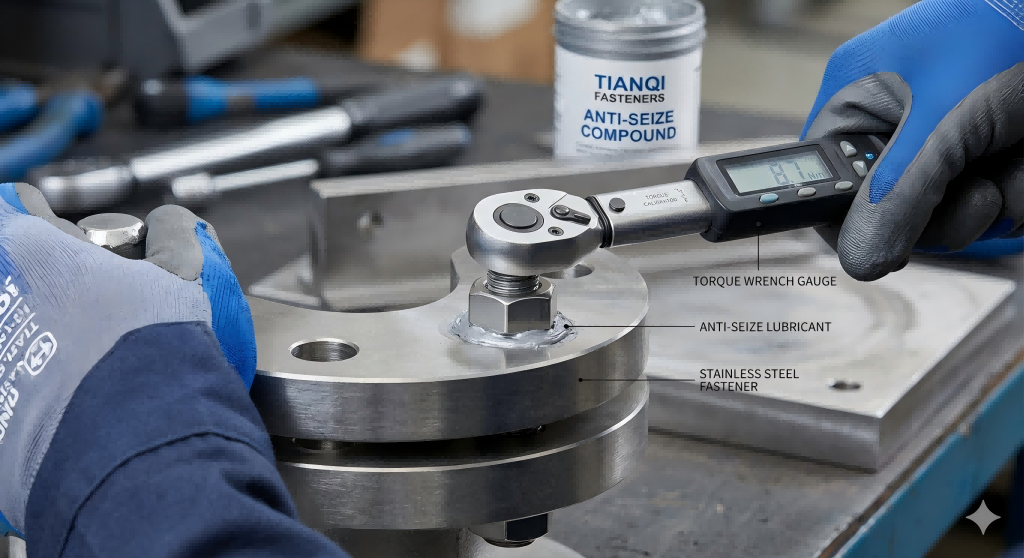
- Always Use Anti-Seize: Lubrication is your first line of defense. Applying a nickel-based or silver-based anti-seize compound prevents metal-to-metal contact, reduces friction, and ensures the torque is converted into clamping force rather than just overcoming resistance.
- Control Your Speed: Friction generates heat, which accelerates galling. Avoid using high-speed power tools for the final tightening phase. Use slower, steady rotation with hand tools, start with hand tightening, and increase torque incrementally.
- Use Calibrated Torque Wrenches: Never guess the tightness of a structural bolt. Use calibrated torque wrenches to ensure the fastener is tightened exactly to the stainless steel bolt torque specs. This prevents micro-cracks that could lead to stress corrosion cracking.
- Keep Threads Clean: Dirt or grit increases friction and can cause premature seizing. Ensure all threads are free of debris before assembly.
- Avoid Over-Tightening: Exceeding recommended stainless steel bolt torque settings can damage threads, reduce clamping efficiency, and cause premature failure.
Common Mistakes to Avoid
Avoiding these frequent errors ensures consistent and safe fastening performance:
- Using carbon steel torque values for stainless fasteners.
- Ignoring the effects of lubrication on required torque.
- Mixing different material grades in the same joint.
- Reusing damaged or worn fasteners.
- Over-reliance on impact tools, which can cause rapid heat buildup.
Applications Requiring Accurate Torque
Precise stainless steel bolt torque is essential in:
- Structural steel connections
- Industrial machinery assembly
- Marine and offshore systems
- Automotive components
- Pressure vessels and pipelines
In these applications, incorrect torque can lead to safety risks and costly failures.
Conclusion: Safety Through Precision
Applying the correct stainless steel fastener torque is essential for achieving secure and durable connections. Following these procedures is often the difference between a project that lasts decades and one that fails during installation. By using proper lubrication, controlling installation speed, and adhering to established stainless steel bolt torque specs, you protect both your hardware and your structural integrity.
Precision engineering requires precision hardware. At Tianqi Fasteners, we provide high-quality stainless steel bolts and nuts that meet rigorous international standards. Our technical team is ready to help you identify the right stainless steel bolt torque settings for your specific application to ensure maximum safety and performance.