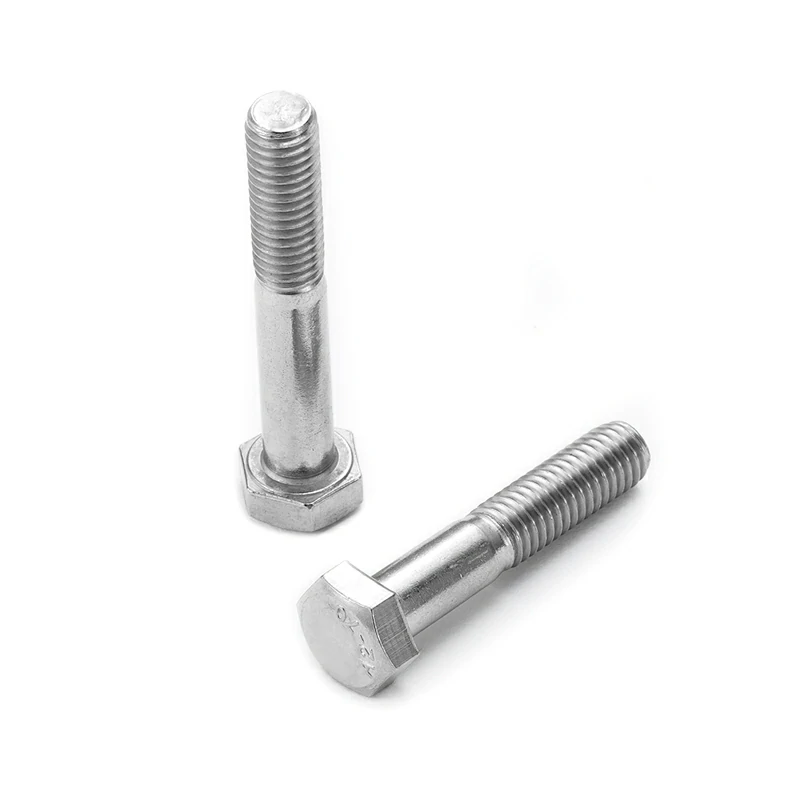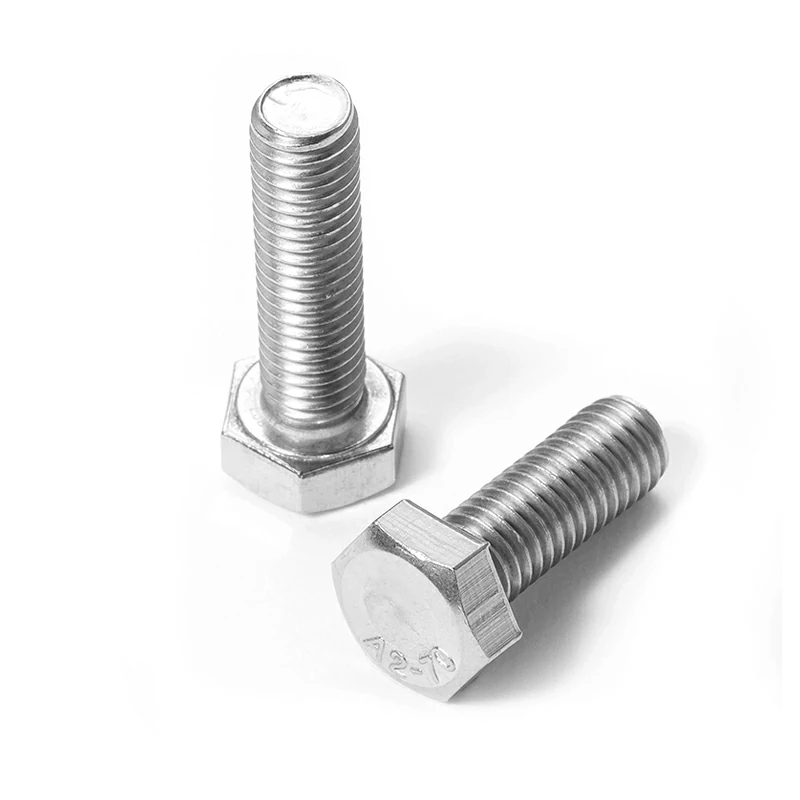
Solar energy systems are long-term infrastructure investments, typically designed to operate reliably for 25 years or more. While photovoltaic modules and inverters receive most of the engineering focus, system reliability ultimately depends on a critical but often overlooked component—stainless fasteners solar installations rely on. These fasteners secure panels, mounting systems, and structural connections, directly impacting safety, durability, and performance.
Using high-quality solar fasteners is essential to withstand wind loads, thermal expansion, and environmental corrosion throughout the system lifecycle.
Why Stainless Steel Fasteners Are Essential in Solar Systems
Solar installations operate under continuous exposure to harsh environmental conditions, including moisture, UV radiation, temperature fluctuations, and airborne contaminants. Standard carbon steel fasteners—especially those relying on coatings—are prone to degradation over time.
Stainless steel offers inherent corrosion resistance due to its chromium oxide passive layer, making it the preferred material for renewable energy fasteners.
Key Advantages
- Superior Corrosion Resistance: Ideal for outdoor and coastal environments.
- Long-Term Structural Integrity: Maintains mechanical strength over decades.
- Lower Lifecycle Cost: Reduces maintenance and replacement frequency.
- Sustainability Alignment: Supports long-lasting, low-impact solar infrastructure.
- Stainless Steel Grades and Lifespan Considerations.
Selecting the correct material grade is fundamental when specifying the best stainless fasteners solar projects require.
- 304 Stainless Steel (A2): Suitable for inland or mild environments; typical lifespan ranges from 10–30 years.
- 316 Stainless Steel (A4): Enhanced with molybdenum for superior resistance to chlorides; ideal for coastal areas with a lifespan exceeding 30–50 years.
- Duplex Stainless Steel: Designed for aggressive industrial environments, offering resistance to stress corrosion cracking.
- 410 Stainless Steel: Provides high strength for structural and load-bearing applications with moderate corrosion resistance.
Key Components of a Solar Panel Fastening System
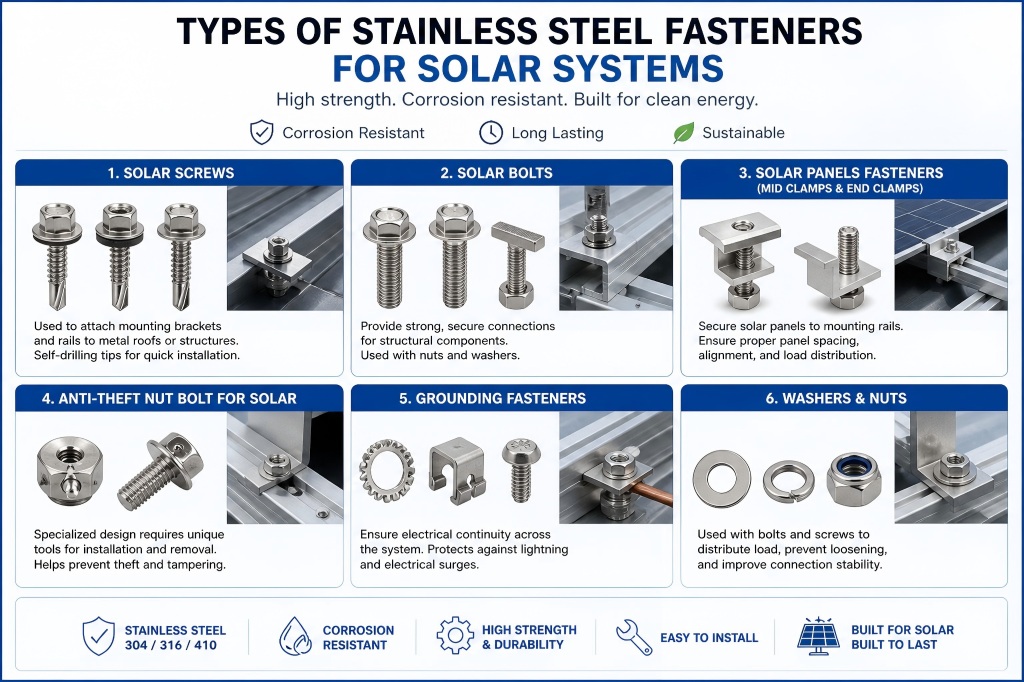
A complete solar panel fastening system integrates multiple types of fasteners, each engineered for specific structural and functional roles.
- Solar Screws: Often featuring self-drilling designs, these are used to attach mounting brackets to substrates like metal roofing.
- Solar Bolts: These provide high-strength connections for load-bearing structures and are available in hex, flange, and T-bolt configurations.
- Solar Panels Fasteners: Specifically designed mid-clamps and end-clamps ensure precise module positioning and even load distribution.
- Anti-Theft Nut Bolt for Solar: Remote solar farms are prime targets for theft; these fasteners require specialized tools for removal, protecting expensive photovoltaic modules.
- Grounding Fasteners: Serrated washers and grounding clips ensure electrical continuity across the array, protecting against lightning and surges.
Critical Selection Criteria for Solar Fasteners
- Environmental Exposure: Coastal and humid environments demand higher corrosion resistance. UV and temperature cycling require stable material properties.
- Mechanical Load Requirements: Fasteners must withstand wind uplift, snow loads, and vibration. Proper tensile and shear strength are essential for safety compliance.
- Material Compatibility: Prevent galvanic corrosion when pairing stainless steel with aluminum. Use compatible materials or isolation components.
- Installation Efficiency: Pre-assembled solar fasteners reduce labor time. Self-drilling solar screws improve installation speed.
The Role of Passivation in Solar Fastener Performance
Passivation is a critical post-manufacturing process for stainless steel fasteners. It removes embedded free iron particles that can lead to surface rust (“tea staining”) if left untreated.
This chemical treatment enhances the natural protective layer, ensuring long-term corrosion resistance and maintaining the integrity of stainless fasteners solar systems depend on.
Applications Across Solar Installations
Stainless steel solar fasteners are widely used across various system types:
- Residential rooftop solar systems.
- Commercial and industrial solar installations.
- Ground-mounted solar farms.
- Solar carports and canopy structures.
- Tracking and adjustable tilt systems.
Their importance extends to broader renewable energy fasteners applications, including wind and hybrid energy systems.
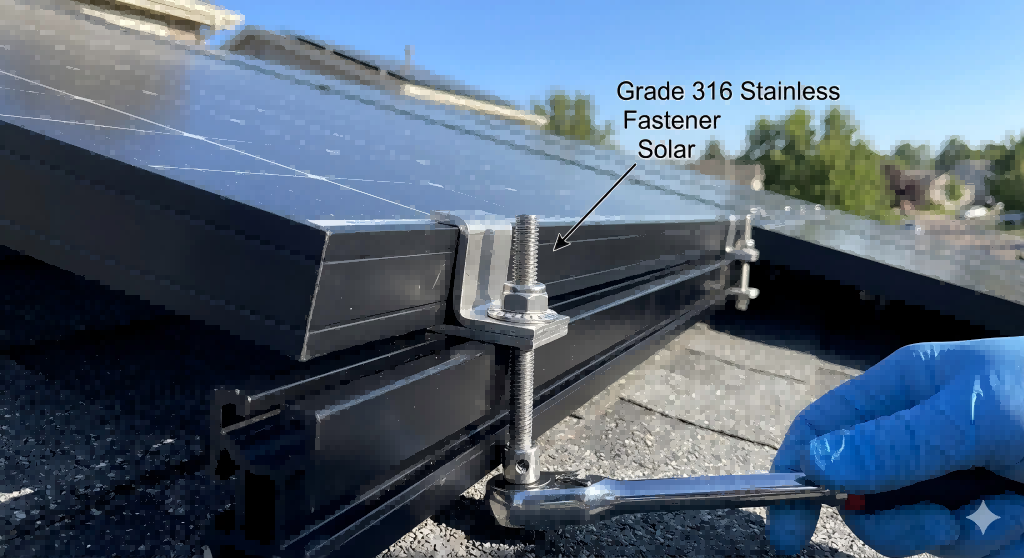
Best Practices for Installation
Proper installation is essential to ensure long-term reliability:
- Controlled Torque: Prevent over-tightening or thread damage.
- Anti-Seize Application: Avoid galling in stainless steel connections.
- Accurate Alignment: Ensure even load distribution across solar panels fasteners.
- Periodic Inspection: Identify wear or corrosion early.
- Avoid Dissimilar Metals: Use isolation washers to reduce galvanic corrosion risks.
How to Choose the Best Stainless Fasteners for Solar Projects
To support informed purchasing decisions:
- Verify compliance with ASTM, ISO, or equivalent standards
- Evaluate manufacturing precision and thread quality
- Choose suppliers experienced in solar panel fastening systems
- Match material grade to environmental conditions
The best stainless fasteners solar applications rely on combine corrosion resistance, mechanical strength, and installation efficiency to ensure long-term system performance.
Conclusion
Stainless steel fasteners are fundamental to the safety and longevity of solar installations. From solar screws and solar bolts to advanced anti-theft solutions, each component plays a critical role in maintaining structural integrity.
Selecting high-quality stainless fasteners solar systems require, combined with proper material selection and passivation, ensures that fasteners match the lifespan of the solar panels themselves. This approach safeguards infrastructure, reduces maintenance costs, and supports the long-term success of renewable energy investments.