Description
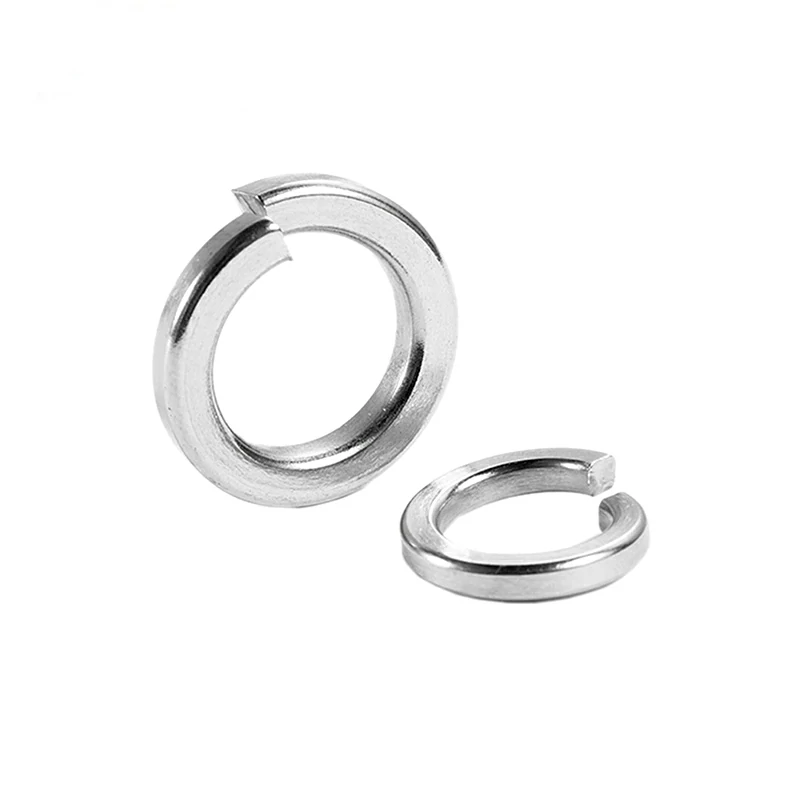
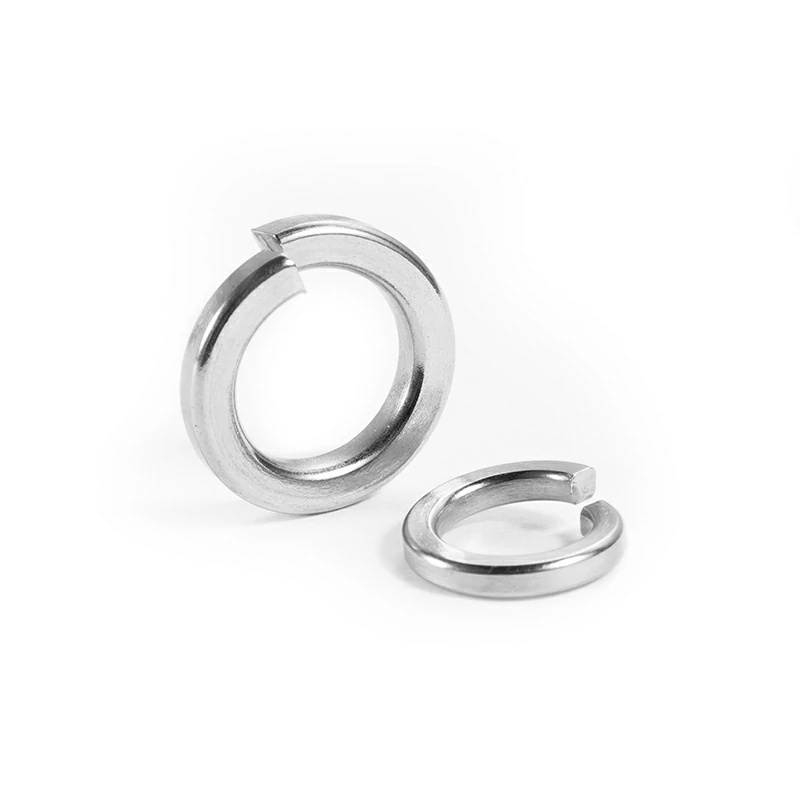
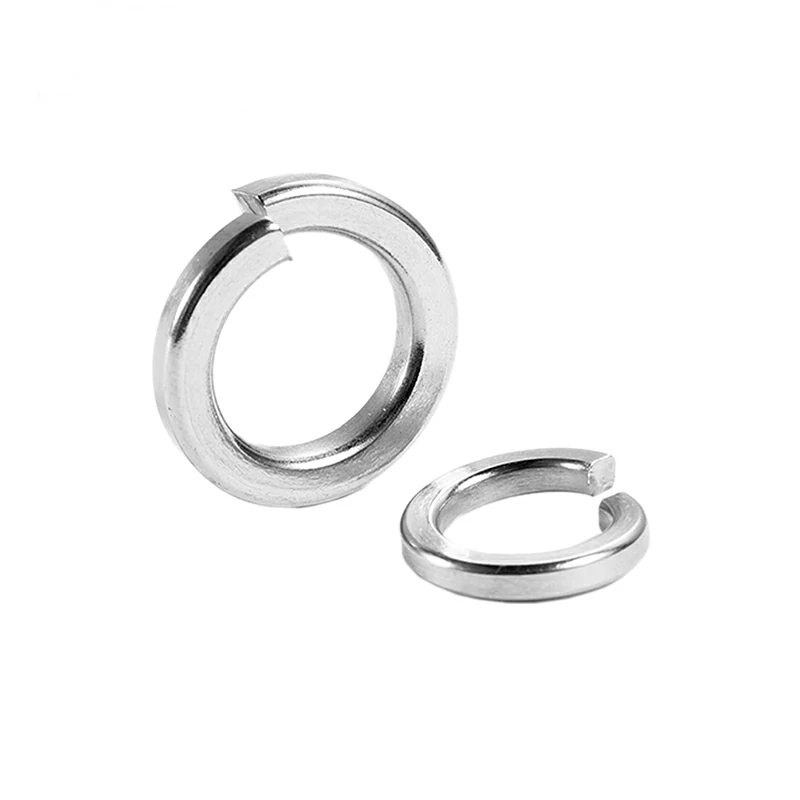
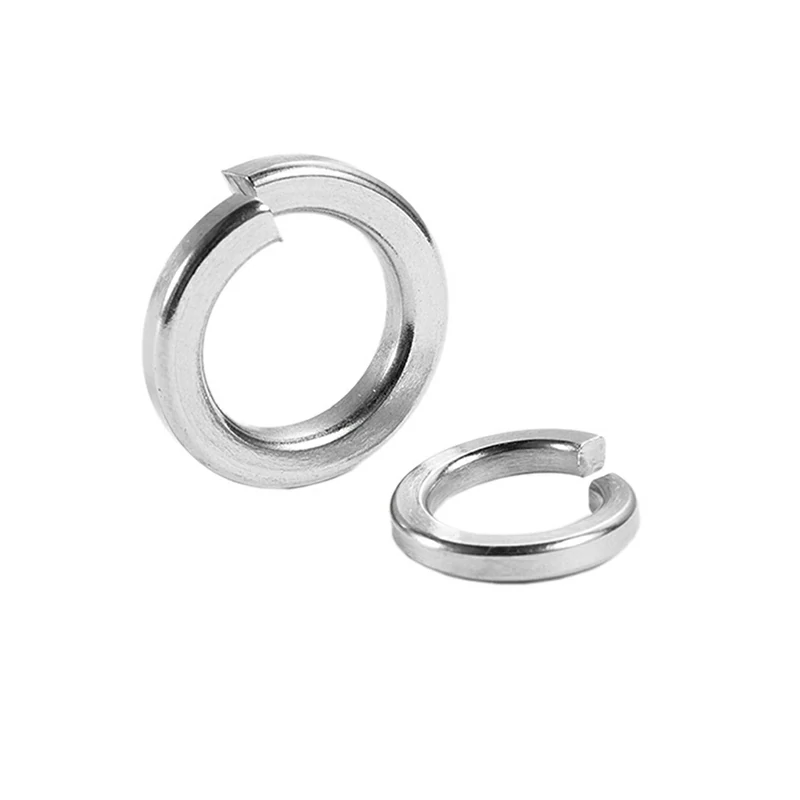
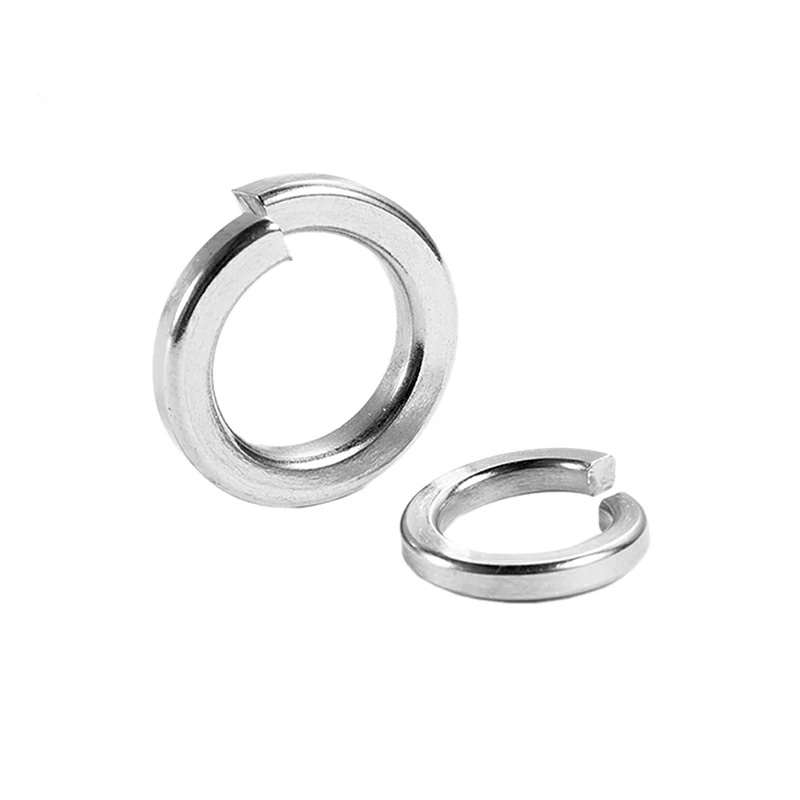
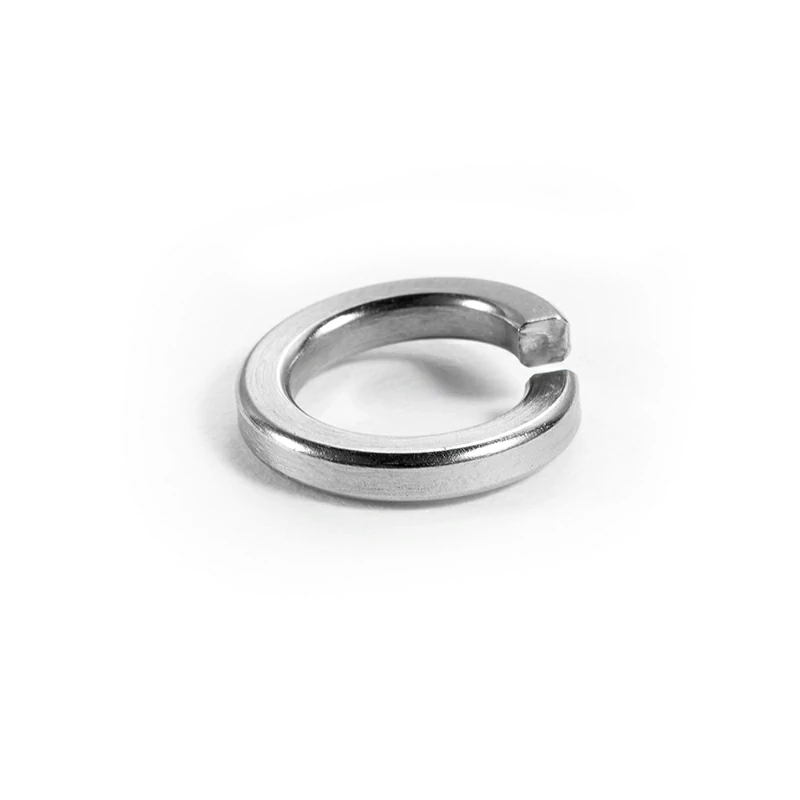
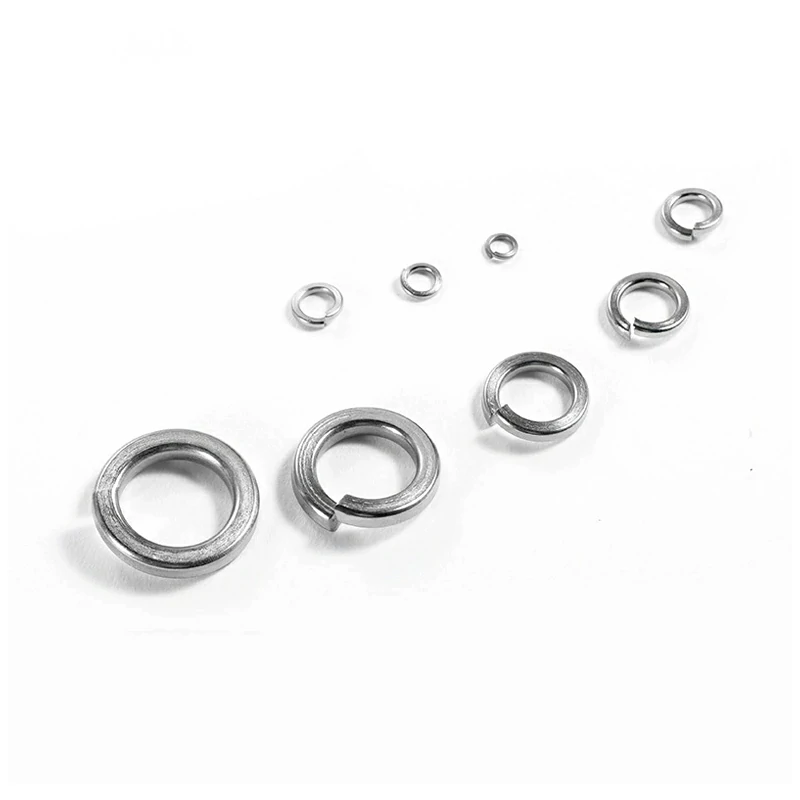
The Stainless Steel Spring Lock Washer, manufactured to the rigorous GB93 standard, is a premium mechanical fastener designed to eliminate the risks associated with joint relaxation. Whether your assembly faces intense vibration, high torque, or extreme thermal cycling, this helical split-ring washer provides the necessary axial tension to keep nuts and bolts securely in place.
What sets this series apart is the use of high-performance alloys. Moving beyond standard stainless steel, we offer this spring washer in specialized grades like 2205 Duplex, 2507 Super Duplex, 310S Heat-Resistant, and 321 Stabilized stainless steel. These materials are engineered for environments where failure isn't an option—ranging from offshore oil rigs and chemical reactors to high-heat aerospace exhaust systems.
Features & Benefits
- Elite Material Engineering: Duplex 2205/2507 provides nearly double the yield strength of 316 and unmatched resistance to stress corrosion cracking (SCC) and pitting in chloride-rich marine environments. 310S / 321is designed for extreme heat, these grades offer superior oxidation resistance. 321 is titanium-stabilized to prevent intergranular corrosion in weld zones.
- Active Anti-Loosening Action: The helical design functions as a spring, maintaining a constant vertical tension (preload). This actively resists the rotational forces that typically cause nuts and bolts to "back out" under dynamic loads.
- Exceptional Durability & Resilience: These fasteners are characterized by high hardness and spring-back memory. They resist permanent deformation (flattening) even under high-stress loads, ensuring the locking function remains effective for the life of the assembly.
- Precision Manufacturing: Each stainless steel washer features high concentricity, smooth burr-free edges, and a fine finish. This ensures a stable, uniform load distribution that protects the mating surface from uneven wear.
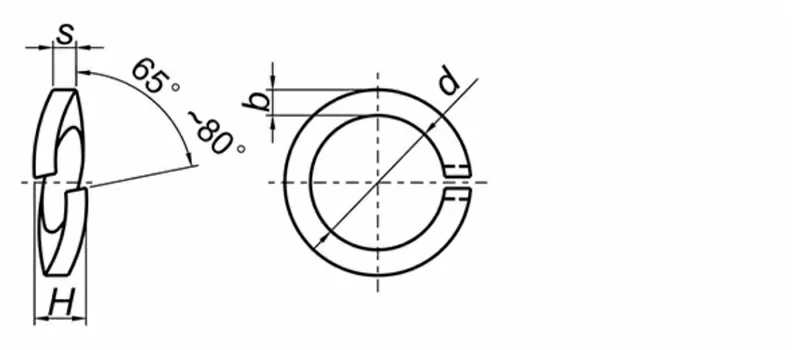
Specification
|
Specification (large diameter of thread) |
d1 |
s(b) |
h |
The weight of every 1000 steel products is ≈kg |
||||
|
min |
max |
nominal |
min |
max h |
min |
max h |
||
|
2 |
2.1 |
2.35 |
0.5 |
0.42 |
0.58 |
1 |
1.25 |
0.2 |
|
2.5 |
2.6 |
2.85 |
0.65 |
0.57 |
0.73 |
1.3 |
1.63 |
0.3 |
|
3 |
3.1 |
3.4 |
0.8 |
0.7 |
0.9 |
1.6 |
2 |
0.6 |
|
4 |
4.1 |
4.4 |
1.1 |
1 |
1.2 |
2.2 |
2.75 |
0.15 |
|
5 |
5.1 |
5.4 |
1.3 |
1.2 |
1.4 |
2.6 |
3.25 |
0.26 |
|
6 |
6.1 |
6.68 |
1.6 |
1.5 |
1.7 |
3.2 |
4 |
0.47 |
|
8 |
8.1 |
8.68 |
2.1 |
2 |
2.2 |
4.2 |
5.25 |
1.07 |
|
10 |
10.2 |
10.9 |
2.6 |
2.45 |
2.75 |
5.2 |
6.5 |
2.05 |
|
12 |
12.2 |
12.9 |
3.1 |
2.95 |
3.75 |
6.2 |
7.75 |
3.49 |
|
14 |
14.2 |
14.9 |
3.6 |
3.4 |
3.8 |
7.2 |
9 |
5.47 |
|
16 |
16.2 |
16.9 |
4.1 |
3.9 |
4.3 |
8.2 |
10.25 |
8.08 |
|
18 |
18.2 |
19.04 |
4.5 |
4.3 |
4.7 |
9 |
11.25 |
10.91 |
|
20 |
20.2 |
21.04 |
5 |
4.8 |
5.2 |
10 |
12.5 |
14.59 |
|
22 |
22.5 |
23.34 |
5.5 |
5.3 |
5.7 |
11 |
13.75 |
20.11 |
|
24 |
24.5 |
25.5 |
6 |
5.8 |
6.2 |
12 |
15 |
26.06 |
|
27 |
27.5 |
28.5 |
6.8 |
6.5 |
7.1 |
13.6 |
17 |
37.64 |
|
30 |
30.5 |
31.5 |
7.5 |
7.2 |
7.8 |
15 |
18.75 |
50.73 |
|
33 |
33.5 |
34.7 |
8.5 |
8.2 |
8.8 |
17 |
21.25 |
71.96 |
|
36 |
36.5 |
37.7 |
9 |
8.7 |
9.3 |
18 |
22.5 |
87.47 |
|
39 |
39.5 |
40.7 |
10 |
9.7 |
10.3 |
20 |
25 |
117.4 |
|
42 |
42.5 |
43.7 |
10.5 |
10.2 |
10.8 |
21 |
26.25 |
138.7 |
|
45 |
45.2 |
46.7 |
11 |
10.7 |
11.3 |
22 |
27.5 |
162.3 |
|
48 |
48.5 |
49.7 |
12 |
11.7 |
12.3 |
24 |
30 |
206.7 |
FAQ:
Q1: When should I choose 2507 Super Duplex over 2205?
A: Choose 2507 Super Duplex for "extreme" corrosion environments, such as deep-sea offshore equipment or highly concentrated chemical processing. It has a higher Pitting Resistance Equivalent Number (PREN) than 2205, making it the most durable choice for saltwater exposure.
Q2: Is the 310S grade necessary for all high-heat applications?
A: 310S is specifically for very high temperatures (up to 1035°C) where oxidation is the main threat. If your application is in the 400°C–800°C range and requires protection against intergranular corrosion (like exhaust manifolds), Grade 321 is often the more cost-effective and technically appropriate choice.
Q3: Does the GB93 standard differ significantly from DIN 127?
A: They are functionally very similar as both are helical split-ring lock washers. However, they may have slight variations in thickness and outer diameter tolerances. If your project is specified for Chinese industrial standards, GB93 is the required compliance.
Q4: Are these washers reusable?
A: While stainless steel has great memory, every time a spring washer is compressed and released, the "biting" edges and spring tension can slightly degrade. For critical structural or safety-related joints, we always recommend using a new washer during reassembly.
Q5: How does the spring washer create locking action?
A: The split-ring structure compresses during tightening, generating elastic preload tension that increases friction and resists rotational loosening.