Description
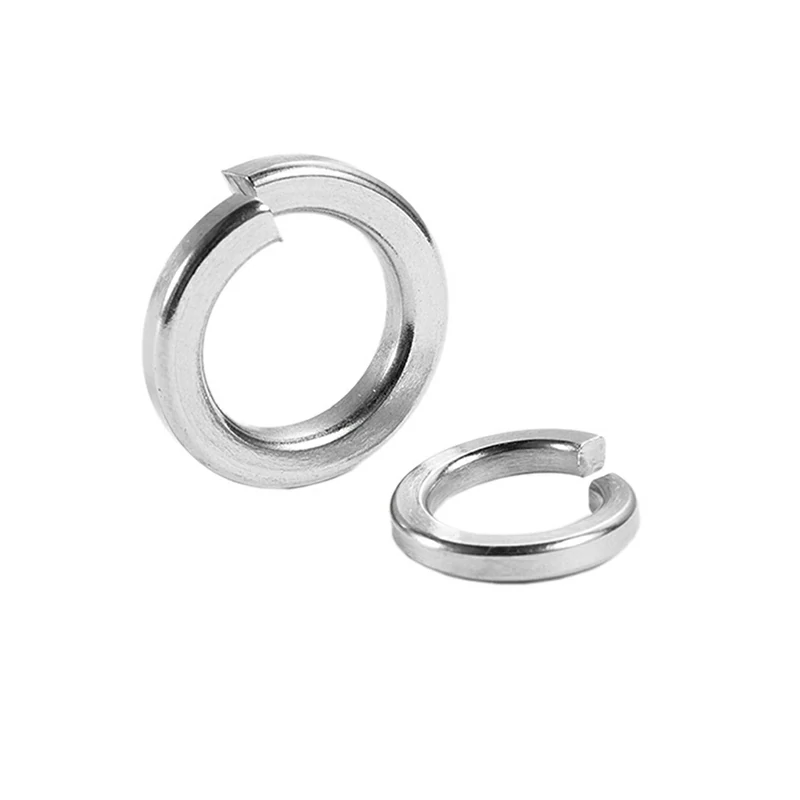
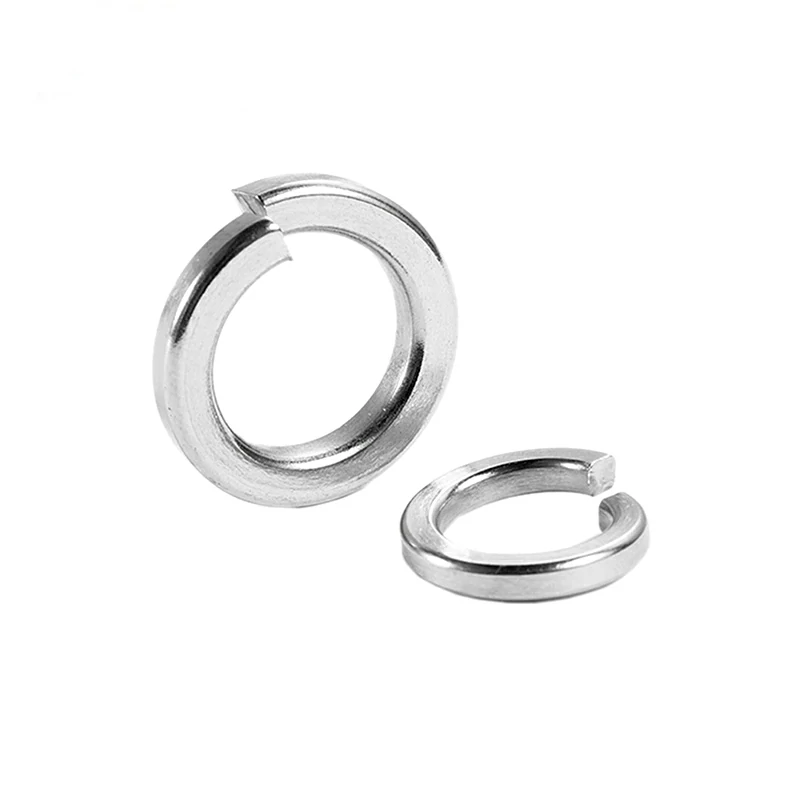
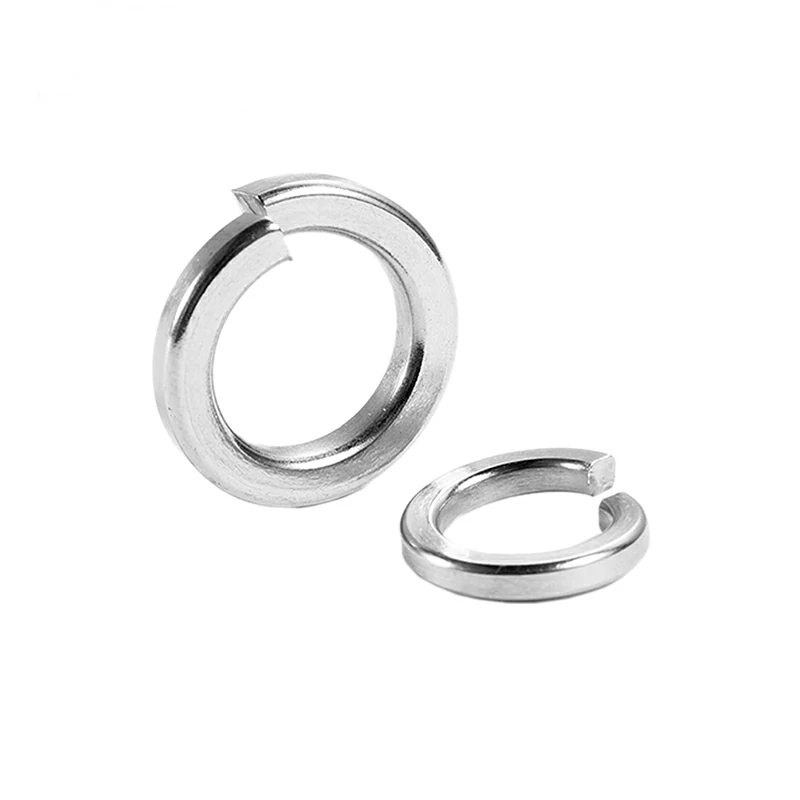
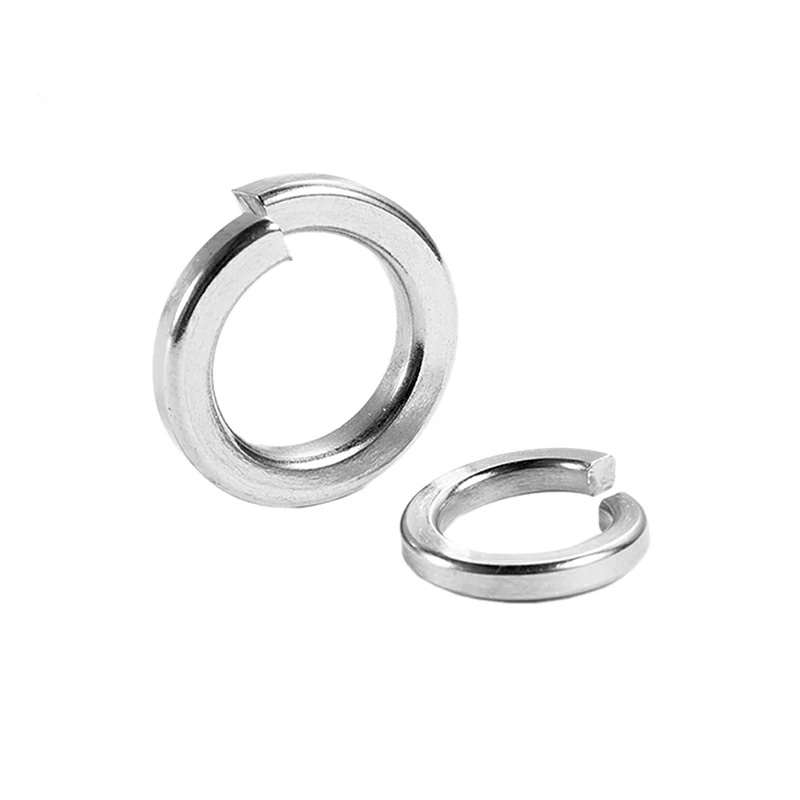
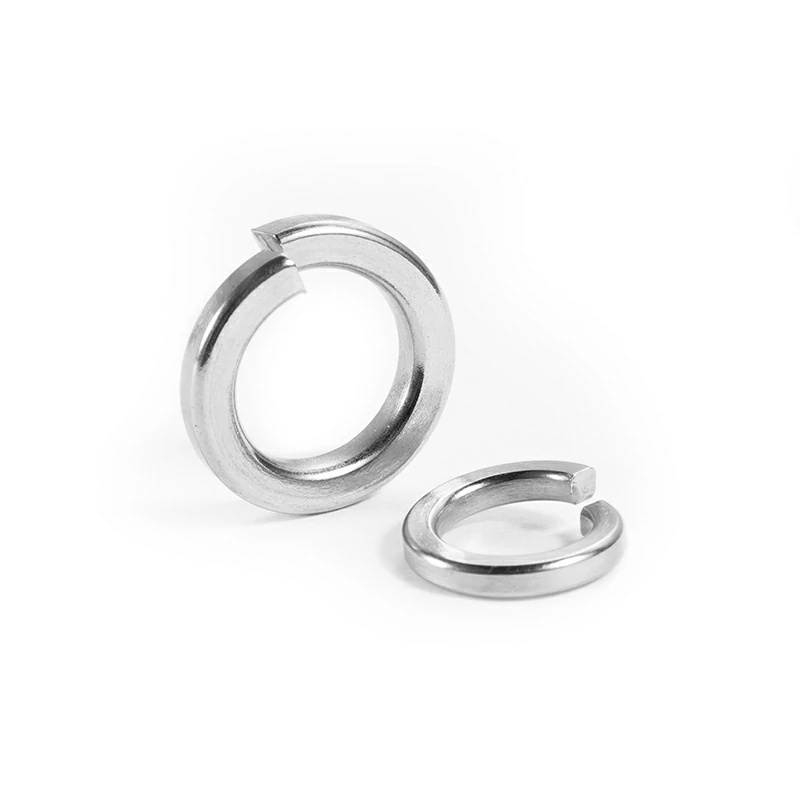
The JIS B 1251 Spring Washer is a precision-engineered helical lock washer designed to prevent loosening in bolted assemblies subjected to vibration or dynamic loads. Manufactured in accordance with the Japanese Industrial Standard (JIS B 1251), this spring washer ensures accurate dimensions, consistent mechanical performance, and reliable fastening security.
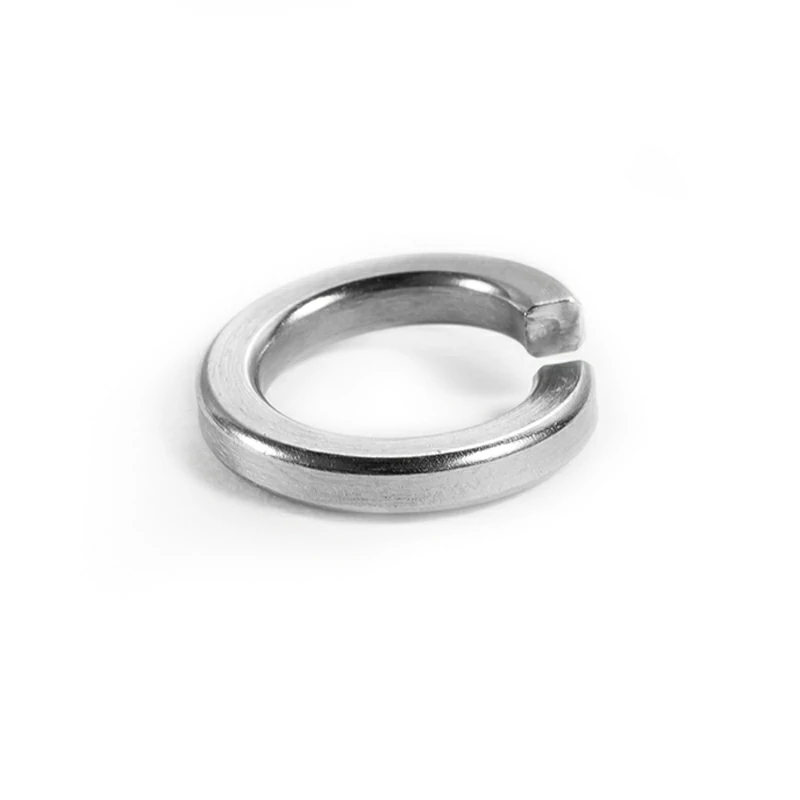
Made from high-quality 304 stainless steel, this stainless steel washer offers excellent corrosion resistance, oxidation resistance, and long-term durability. Its split-ring, helical design provides elastic tension that increases friction between mating surfaces, helping maintain clamping force and prevent fastener loosening.
Widely used in machinery, construction equipment, automotive assemblies, and outdoor installations, the JIS B 1251 Spring Washer delivers dependable anti-loosening performance in demanding industrial environments.
Features & Benefits
- Helical Split-Ring Locking Mechanism: The unique helical design creates vertical tension and sharp edges that "bite" into the fastener head and the mounting surface. This provides a strong, reliable locking force that significantly reduces the risk of loosening in high-vibration environments.
- Superior 304 Stainless Steel Protection: Forged from high-grade 304 stainless steel, these fasteners provide excellent wear and corrosion resistance. They remain rust-free even in humid or mildly corrosive industrial environments, ensuring the longevity of the joint.
- High Resilience and Hardness: Advanced manufacturing processes ensure that the JIS B 1251 Spring Washer maintains its shape and spring tension under heavy loads. The material is resistant to deformation, allowing the washer to provide consistent pressure throughout its service life.
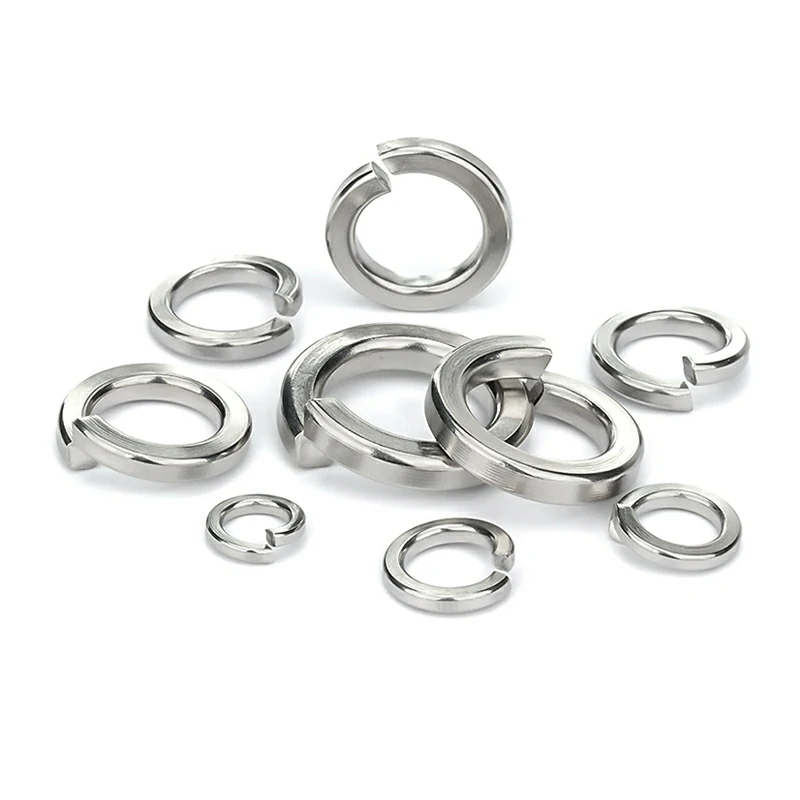
- Standardized Precision Fit: Featuring standard concentricity and a smooth, burr-free surface, these washers ensure a fine fit with standard bolts. The uniform load application protects the mating surface from damage while providing a stable bearing area.
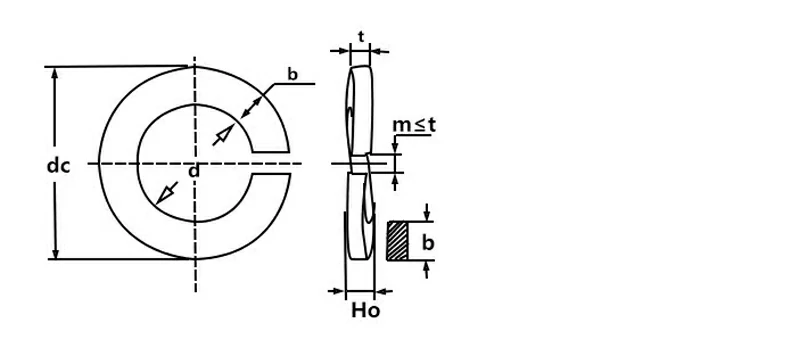
Specification
|
Nominal diameter |
d |
b |
t |
dc |
ho |
|||||
|
min= nominal |
max |
nominal |
max |
min |
nominal |
max |
min |
max |
(≈1.5t) |
|
|
Φ2.5 |
2.6 |
2.9 |
1 |
1.1 |
0.9 |
0.6 |
0.7 |
0.5 |
5.2 |
0.9 |
|
Φ3 |
3.1 |
3.4 |
1.3 |
1.4 |
1.2 |
0.7 |
0.8 |
0.6 |
6.3 |
1.05 |
|
Φ3.5 |
3.6 |
3.9 |
1.3 |
1.4 |
1.2 |
0.7 |
0.8 |
0.6 |
6.8 |
1.05 |
|
Φ4 |
4.1 |
4.4 |
1.5 |
1.6 |
1.4 |
0.8 |
0.9 |
0.7 |
1.7 |
1.2 |
|
Φ5 |
5.1 |
5.4 |
1.8 |
1.9 |
1.7 |
1 |
1.1 |
0.9 |
9.4 |
1.5 |
|
Φ6 |
6.1 |
6.5 |
2.5 |
2.65 |
2.35 |
1.2 |
1.3 |
1.1 |
11.9 |
1.8 |
|
Φ8 |
8.2 |
8.6 |
3 |
3.15 |
2.85 |
1.6 |
1.7 |
1.5 |
15 |
2.4 |
|
Φ10 |
10.2 |
10.8 |
3.5 |
3.7 |
3.3 |
1.8 |
1.95 |
1.65 |
18.4 |
2.7 |
|
Φ12 |
12.2 |
13 |
4 |
4.2 |
3.8 |
2.1 |
2.25 |
1.95 |
21.6 |
3.15 |
|
Φ14 |
14.2 |
15 |
4.5 |
4.7 |
4.3 |
2.4 |
2.55 |
2.25 |
24.6 |
3.6 |
|
Φ16 |
16.2 |
17.2 |
5 |
5.2 |
4.8 |
2.8 |
3 |
2.6 |
27.8 |
4.2 |
|
Φ18 |
18.2 |
19.2 |
5.5 |
5.7 |
5.3 |
3 |
3.2 |
2.8 |
30.6 |
4.5 |
|
Φ20 |
20.2 |
21.4 |
6 |
6.2 |
5.8 |
3.2 |
3.4 |
3 |
33.8 |
4.8 |
|
Φ22 |
22.5 |
23.7 |
6.5 |
6.7 |
6.3 |
3.5 |
3.7 |
3.3 |
37.1 |
5.3 |
|
Φ24 |
24.5 |
25.7 |
7 |
7.25 |
6.75 |
3.8 |
4.05 |
3.55 |
40.2 |
5.7 |
|
Φ27 |
27.5 |
28.7 |
7 |
7.25 |
6.75 |
4 |
4.25 |
3.75 |
43 |
6 |
FAQ:
Q1: What is a JIS B 1251 Spring Washer used for?
A: It is used to prevent nuts and bolts from loosening under vibration by maintaining tension and increasing friction in the joint.
Q2: What makes the JIS B 1251 standard different from other spring washer standards?
A: The JIS B 1251 Spring Washer follows specific Japanese dimensional and material hardness requirements which are often required for Japanese-manufactured machinery and electronics. While similar to DIN 127, it is important to check the specific outer diameter (OD) and thickness (t) requirements of your assembly to ensure compliance with the JIS standard.
Q3: How does a "spring" washer actually prevent loosening?
A: When the bolt is tightened, the split-ring is flattened, creating a "spring" force (axial load). This force increases the friction between the mating threads. Additionally, the split ends of the washer act as small "teeth" that resist the counter-clockwise rotation of the bolt.
Q4: Is it possible to reuse a JIS B 1251 Spring Washer?
A: While they can technically be reused, we generally recommend replacing the spring washer once it has been fully compressed and removed. Over time, the "spring" tension can decrease, and the biting edges may wear down, reducing its effectiveness as a locking device.
Q5: Do spring washers completely prevent loosening?
A: Spring washers reduce the risk of loosening under vibration, but for critical applications, additional locking methods (such as thread lockers or lock nuts) may be recommended.