Description
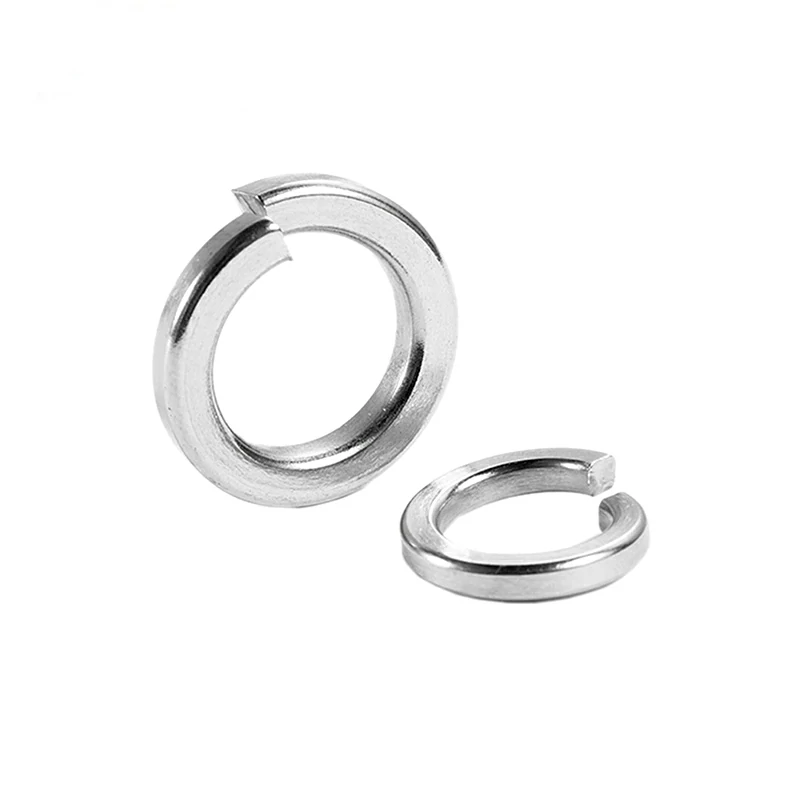
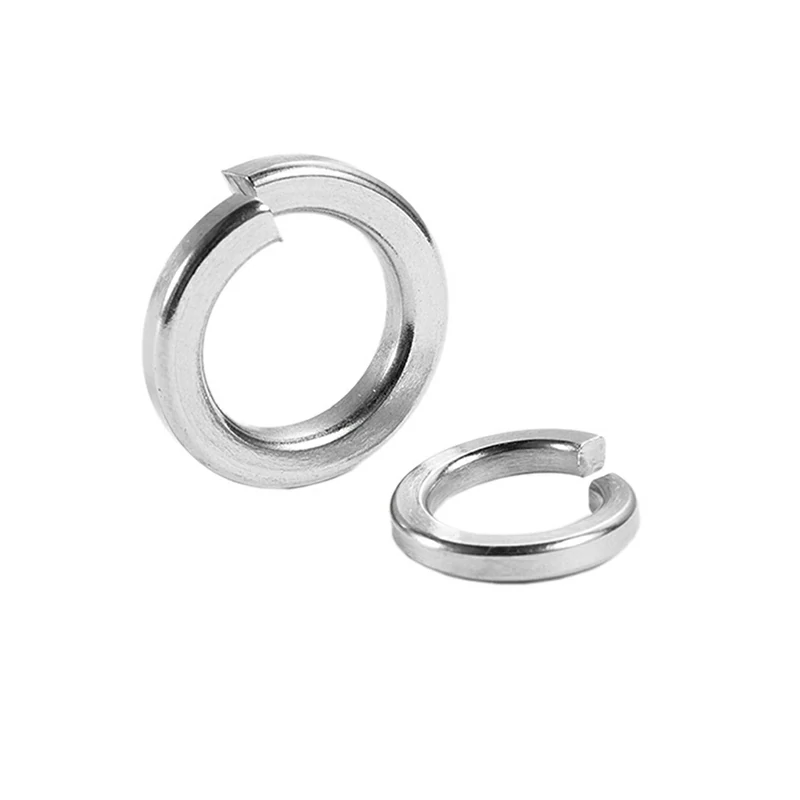
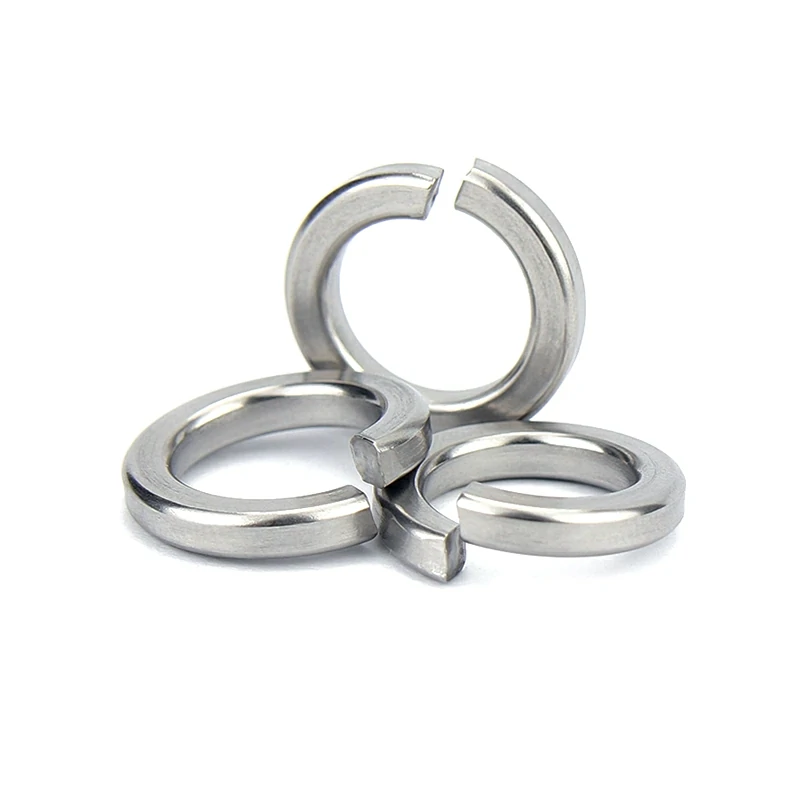
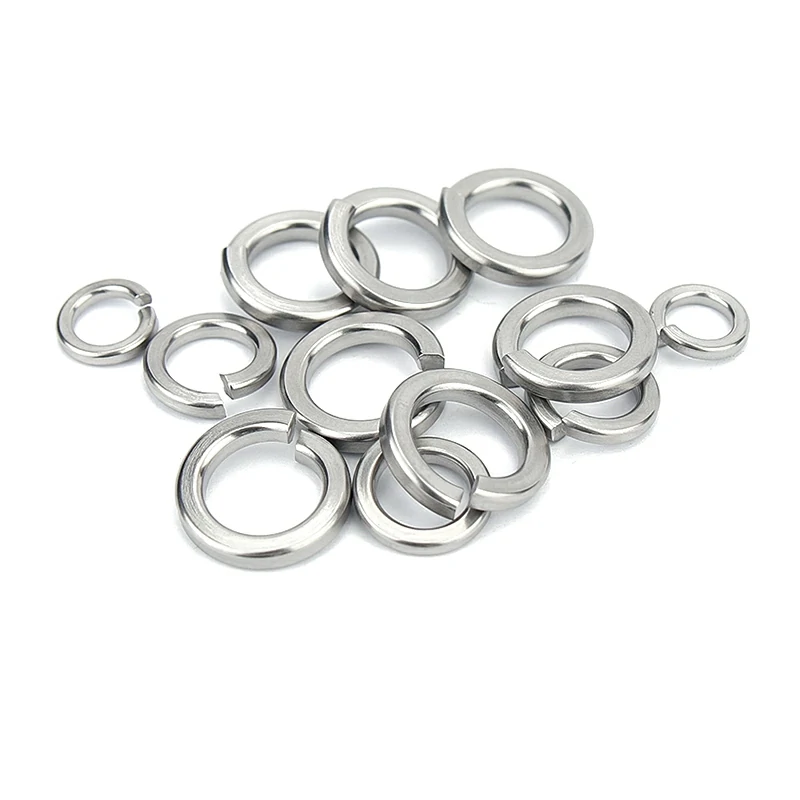
The DIN 127 Spring Washer is an essential, split-ring fastener engineered to maintain the integrity of bolted joints subject to vibration, thermal cycling, and joint relaxation. Adhering to the widely recognized German Industrial Standard (DIN) 127, this spring washer provides a reliable mechanical locking effect that is critical for safety and performance in industrial assemblies.
Available in high-grade 304 or 316 stainless steel, these washers combine precision geometry with exceptional material strength. By acting as a spring, the DIN 127 washer creates a constant axial tension that increases friction between the threads of the bolt and the mating part, effectively preventing accidental loosening in machinery, automotive systems, and structural steel applications.
Features & Benefits
- Superior Corrosion Resistance: Manufactured from 304 or 316 stainless steel, these washers provide long-term protection against rust and oxidation. Grade 316 is specifically recommended for marine and chemical environments where exposure to chlorides is frequent.
- Effective Helical Split-Ring Design: The unique helical shape and split end-faces are designed to "bite" into the mating surfaces and the fastener head when compressed. This mechanical lock increases vertical tension, ensuring a firmer, more secure assembly.
- High Hardness & Resilience: These fasteners are engineered to maintain their shape and spring tension even under high-stress conditions. This resistance to permanent deformation ensures that the locking force remains active throughout the service life of the joint.
- Standard Concentricity & Smooth Finish: Strict adherence to DIN 127 tolerances ensures standard concentricity and uniform load application. This protects the mating surfaces from uneven wear and ensures optimal joint strength across all metric assemblies.
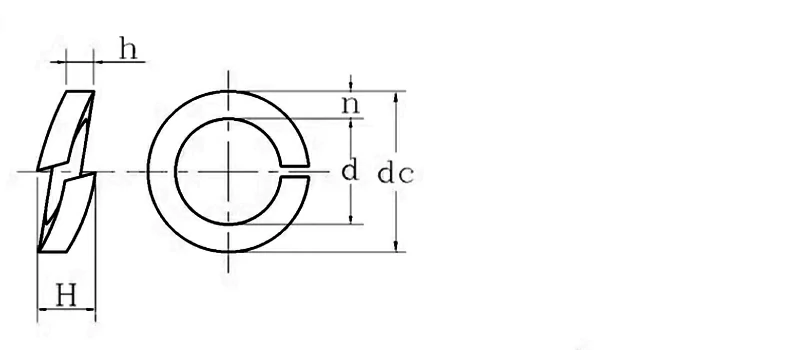
Specification
|
Thread specification |
d |
n |
h |
H |
Kilo weight (steel) ≈kg |
||||||
|
d |
min |
max |
nominal |
max |
min |
nominal |
max |
min |
min |
max |
|
|
Φ3 |
3.1 |
3.4 |
1.3 |
1.4 |
1.2 |
0.8 |
0.9 |
0.7 |
1.6 |
1.9 |
0.11 |
|
Φ4 |
4.1 |
4.4 |
1.5 |
1.6 |
1.4 |
0.9 |
1 |
0.8 |
1.8 |
2.1 |
0.18 |
|
Φ5 |
5.1 |
5.4 |
1.8 |
1.9 |
1.7 |
1.2 |
1.3 |
1.1 |
2.4 |
2.8 |
0.36 |
|
Φ6 |
6.1 |
6.5 |
2.5 |
2.65 |
2.35 |
1.6 |
1.7 |
1.5 |
3.2 |
3.8 |
0.83 |
|
Φ8 |
8.1 |
8.5 |
3 |
3.15 |
2.85 |
2 |
2.1 |
1.9 |
4 |
4.7 |
1.6 |
|
Φ10 |
10.2 |
10.7 |
3.5 |
3.7 |
3.3 |
2.2 |
2.35 |
2.05 |
4.4 |
5.2 |
2.53 |
|
Φ12 |
12.2 |
12.7 |
4 |
4.2 |
3.8 |
2.5 |
2.65 |
2.35 |
5 |
5.9 |
3.82 |
|
Φ14 |
14.2 |
14.7 |
4.5 |
4.7 |
4.3 |
3 |
3.15 |
2.85 |
6 |
7.1 |
6.01 |
|
Φ16 |
16.2 |
17 |
5 |
5.2 |
4.8 |
3.5 |
3.7 |
3.3 |
7 |
8.3 |
8.91 |
|
Φ18 |
18.2 |
19 |
5 |
5.2 |
4.8 |
3.5 |
3.7 |
3.3 |
7 |
8.3 |
9.73 |
|
Φ20 |
20.2 |
21.2 |
6 |
6.2 |
5.8 |
4 |
4.2 |
3.8 |
8 |
9.4 |
15.2 |
|
Φ22 |
22.5 |
23.5 |
6 |
6.2 |
5.8 |
4 |
4.2 |
3.8 |
8 |
9.4 |
16.5 |
|
Φ24 |
24.5 |
25.5 |
7 |
7.25 |
6.75 |
5 |
5.2 |
4.8 |
10 |
11.8 |
26.2 |
|
Φ27 |
27.5 |
28.5 |
7 |
7.25 |
6.75 |
5 |
5.2 |
4.8 |
10 |
11.8 |
28.7 |
|
Φ30 |
30.5 |
31.7 |
8 |
8.25 |
7.75 |
6 |
6.2 |
5.8 |
12 |
14.2 |
44.3 |
|
Φ36 |
36.5 |
37.7 |
10 |
10.25 |
9.75 |
6 |
6.2 |
5.8 |
12 |
14.2 |
67.3 |
|
Φ39 |
39.5 |
40.7 |
10 |
10.25 |
9.75 |
6 |
6.2 |
5.8 |
12 |
14.2 |
71.7 |
|
Φ42 |
42.5 |
43.7 |
12 |
12.25 |
11.75 |
7 |
7.25 |
6.75 |
14 |
16.5 |
111 |
FAQ:
Q1: Can these metric washers be used with ANSI B18.21.1 fasteners?
A: While both are helical spring washers, DIN 127 is a metric standard measured in millimeters, whereas ANSI B18.21.1 is an American standard measured in inches. They are generally not interchangeable due to differences in inner diameter and thickness tolerances.
Q2: Why use a 316 Stainless Steel washer instead of 304?
A: While both resist rust, 316 stainless steel contains molybdenum, which significantly enhances resistance to "pitting" in saltwater and chemical environments. For offshore or coastal projects, 316 is the professional choice for a stainless steel washer.
Q3: Does a spring washer prevent loosening as well as a nylon lock nut?
A: Spring washers provide a different type of protection by maintaining tension. In many high-vibration applications, engineers use a combination of a Stainless Steel Flat Washer for load distribution and a DIN 127 Spring Washer for vibration resistance to ensure the assembly remains intact.
Q4: How does a spring washer prevent loosening?
A: The split-ring design generates elastic tension and friction between the fastener and mating surface, helping maintain clamp load under vibration.
Q5: Are these washers suitable for high-vibration applications?
A: Yes. Spring washers are specifically designed to reduce loosening caused by vibration and dynamic stress, making them ideal for such environments.