Description
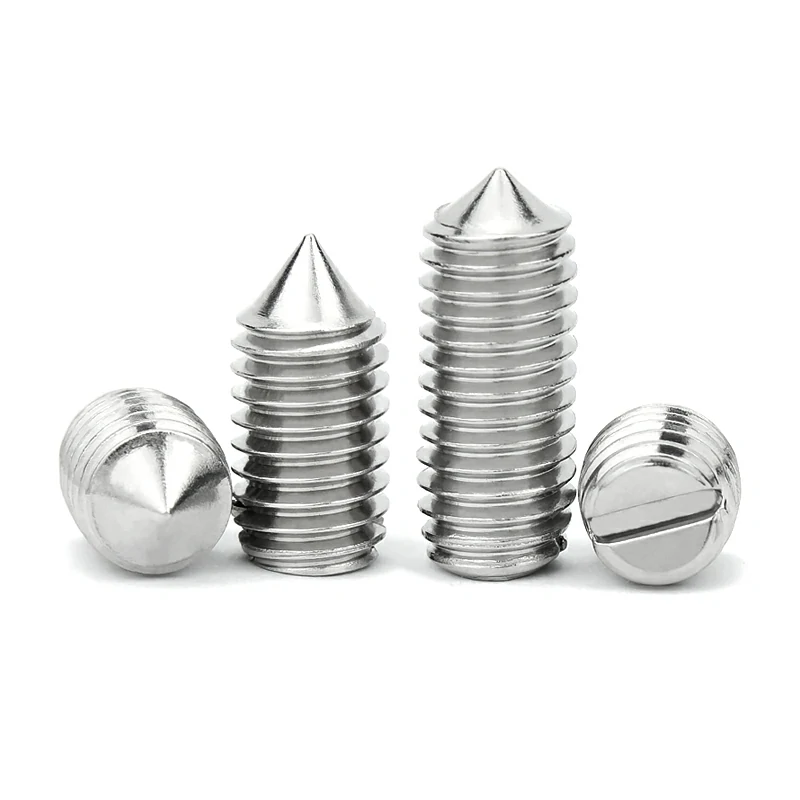
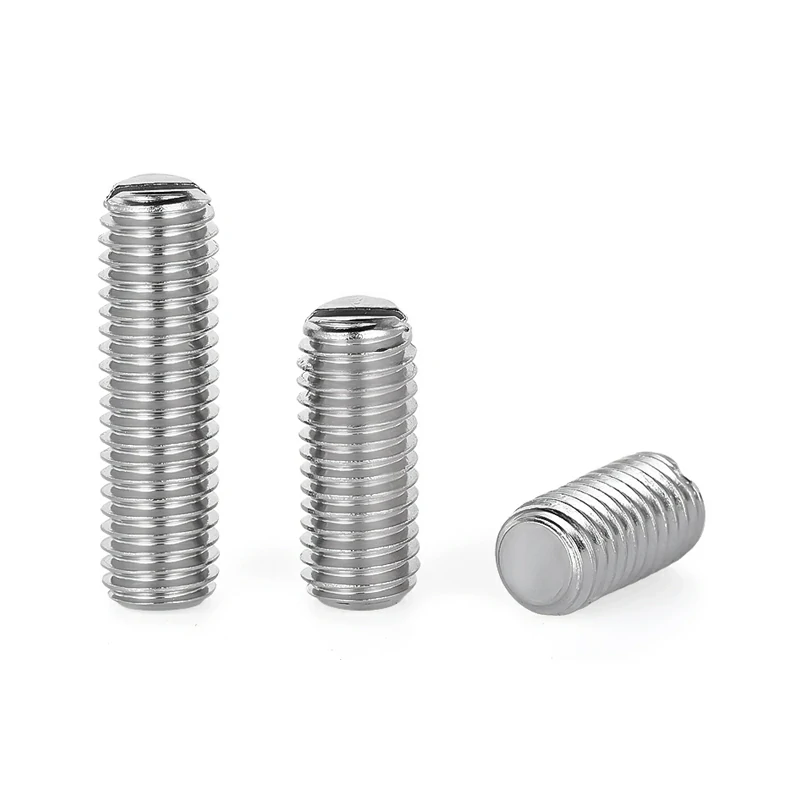
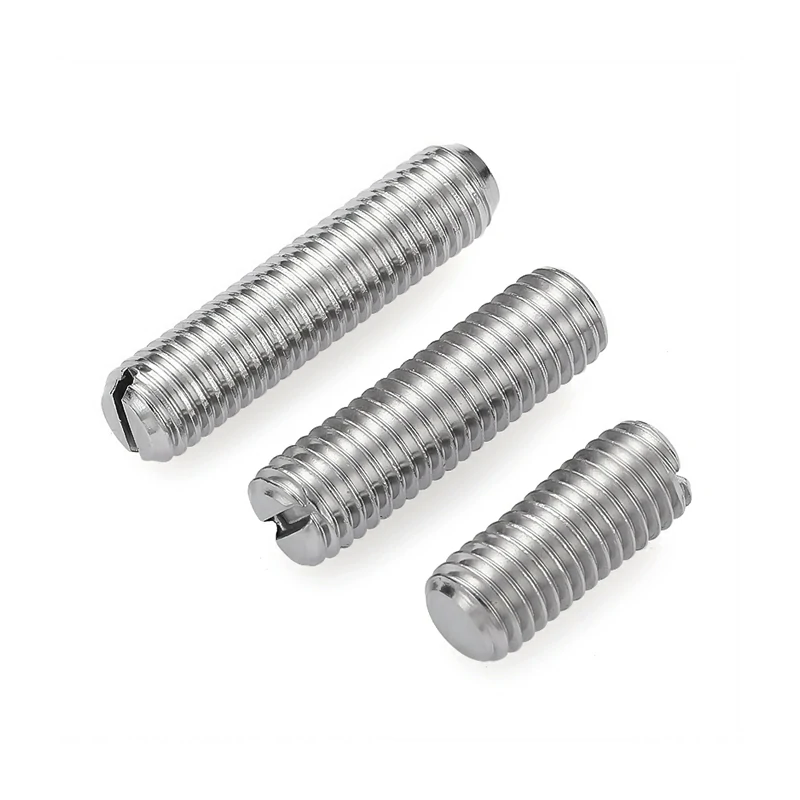
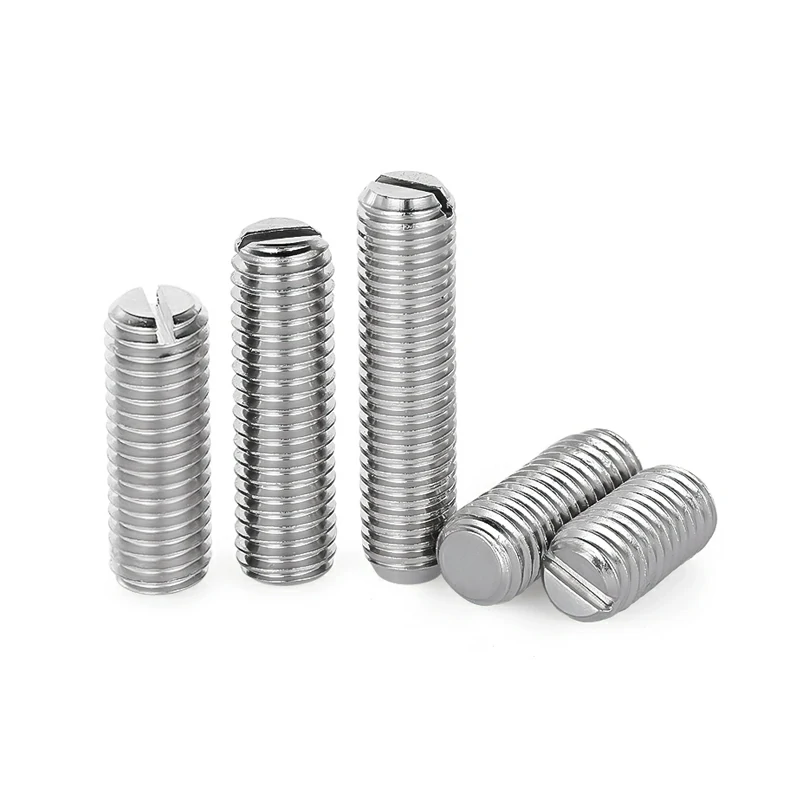
The Slotted Head Set Screw (Flat End) is a premium, headless hardware solution designed for applications where a flush surface and component protection are paramount. Precision-machined from 304 stainless steel, this set screw is engineered to secure pulleys, gears, or collars to shafts without the protruding head of a standard bolt.
The defining feature of this stainless steel screw is its "Flat End", which provides a broad, even contact surface. Unlike cup or cone points, the flat end is designed to press against a mating part without marring, scratching, or deforming the material, making it the ideal choice for high-precision machinery and assemblies that require frequent adjustment. Featuring a slotted head drive, this stainless steel set screw allows easy installation, adjustment, and removal using a standard flat-blade screwdriver.
Features & Benefits
- Premium 304 Stainless Steel Durability: These fasteners offer exceptional resistance to oxidation and rust. Whether used in humid factory environments or outdoor equipment, the 304-grade material ensures the screw remains easy to adjust and remove over long-term service.
- Non-Marring Flat End Design: The precision-ground flat tip distributes pressure evenly across the contact point. This protects your shafts and mating surfaces from indentations, preserving the structural integrity of your mechanical components.
- High-Stability Precision Threading: Featuring deep, uniform threads, this Slotted Head Set Screw provides superior grip and consistent torque. The tight thread tolerance ensures the screw stays locked in place even under consistent vibration.
- Universal Slotted Drive Access: The simple single-slot design allows for rapid installation and fine-tuning with a standard flat-head screwdriver. This eliminates the need for specialized hex keys or proprietary tools during field maintenance.
Specification
|
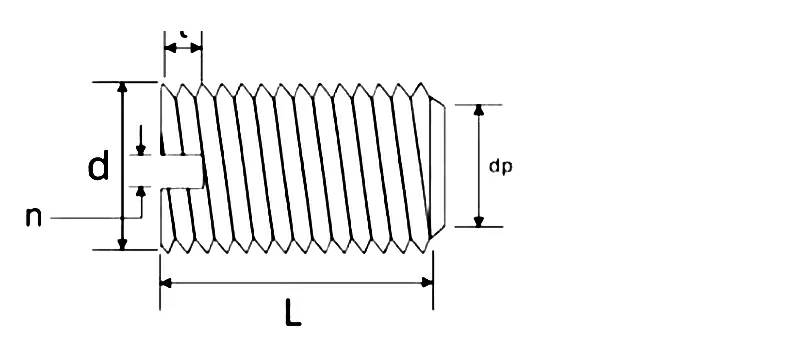
Nominal diameter -d |
M1.2 |
M1.6 |
M2 |
M2.5 |
M3 |
M4 |
M5 |
M6 |
M8 |
M10 |
M12 |
|
|
Pitch -p |
0.25 |
0.35 |
0.4 |
0.45 |
0.5 |
0.7 |
0.8 |
1 |
1.25 |
1.5 |
1.75 |
|
|
dp |
max |
0.6 |
0.8 |
1 |
1.5 |
2 |
2.5 |
3.5 |
4 |
5.5 |
7 |
8.5 |
|
min |
0.35 |
0.55 |
0.75 |
1.25 |
1.75 |
2.25 |
3.2 |
3.7 |
5.2 |
6.64 |
8.14 |
|
|
n |
nominal |
0.2 |
0.25 |
0.25 |
0.4 |
0.4 |
0.6 |
0.8 |
1 |
1.2 |
1.6 |
2 |
|
max |
0.4 |
0.45 |
0.45 |
0.6 |
0.6 |
0.8 |
1 |
1.31 |
1.51 |
1.91 |
2.31 |
|
|
min |
0.26 |
0.31 |
0.31 |
0.46 |
0.46 |
0.66 |
0.86 |
1.06 |
1.26 |
1.66 |
2.06 |
|
|
t |
max |
0.52 |
0.74 |
0.84 |
0.95 |
1.05 |
1.42 |
1.63 |
2 |
2.5 |
3 |
3.6 |
|
min |
0.4 |
0.56 |
0.64 |
0.72 |
0.8 |
1.12 |
1.28 |
1.6 |
2 |
2.4 |
2.8 |
|
FAQ:
Q1: What is a slotted head set screw used for?
A: It is used to secure components in place without a protruding head, commonly in machinery, shafts, and mechanical assemblies.
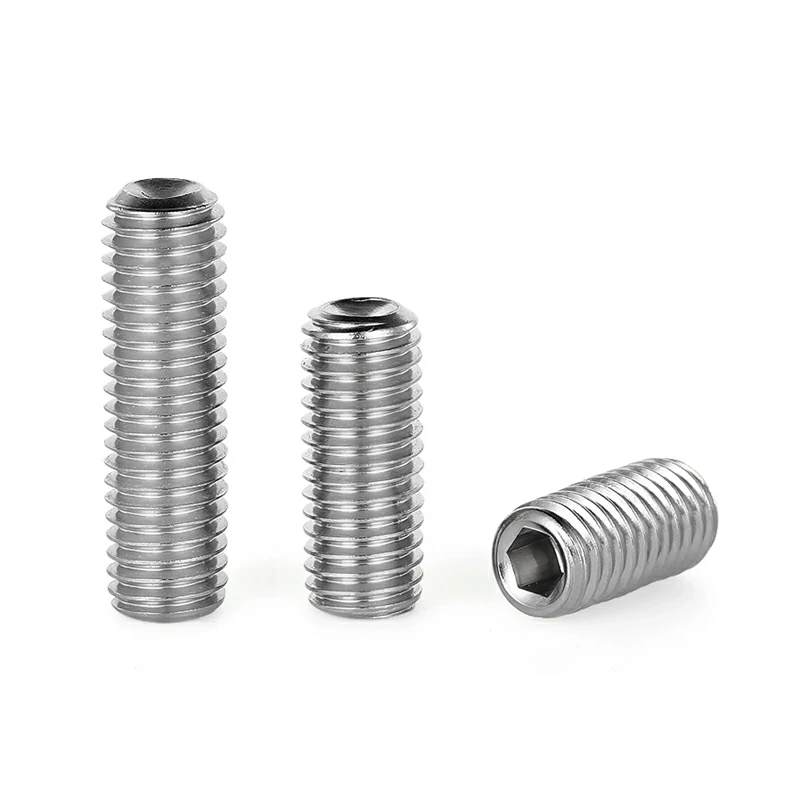
Q2: Why use a Slotted Head Set Screw instead of a Hex Socket (Grub) screw?
A: While hex sockets are common, a Slotted Head Set Screw is often preferred for legacy machinery or environments where a standard flat-head screwdriver is the most accessible tool. It provides a classic look and ensures that maintenance can be performed without a full set of Allen wrenches.
Q3: What is the main advantage of the "Flat End"?
A: The flat end is specifically designed for "non-destructive" fastening. If you are securing a component to a shaft that needs to remain smooth for future disassembly or repositioning, the flat end prevents the screw from digging a hole into the metal.
Q4: Can these screws be used in marine applications?
A: 304 Stainless Steel is highly resistant to corrosion in most environments. However, for direct saltwater exposure, we recommend our 316-grade fasteners to prevent "tea staining" or surface pitting over time.
Q5: Does the headless design affect the torque capacity?
A: Because the screw sits entirely within the threaded hole, the torque is distributed along the full length of the threads. While you should not over-tighten slotted drives to avoid "cam-out," these screws provide more than enough holding power for most mechanical positioning tasks.