Description
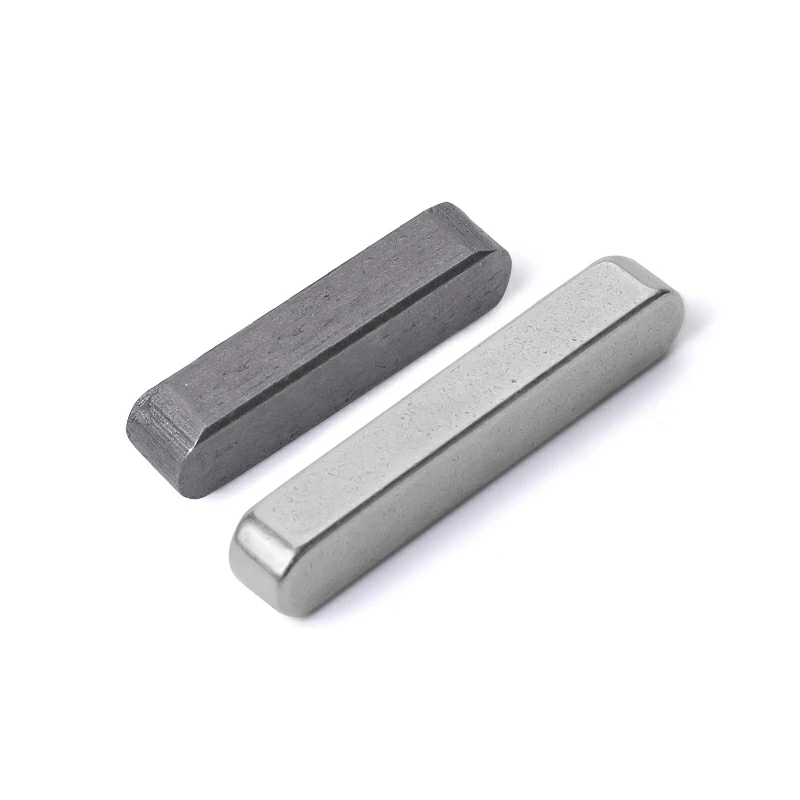
The Flat Key Pin is a precision mechanical fastener used to transmit torque between a rotating shaft and a connected component such as a gear, pulley, or coupling. Installed within matching keyways on the shaft and hub, the Stainless Steel Flat Key forms a secure mechanical connection that prevents relative rotation while ensuring stable power transmission.
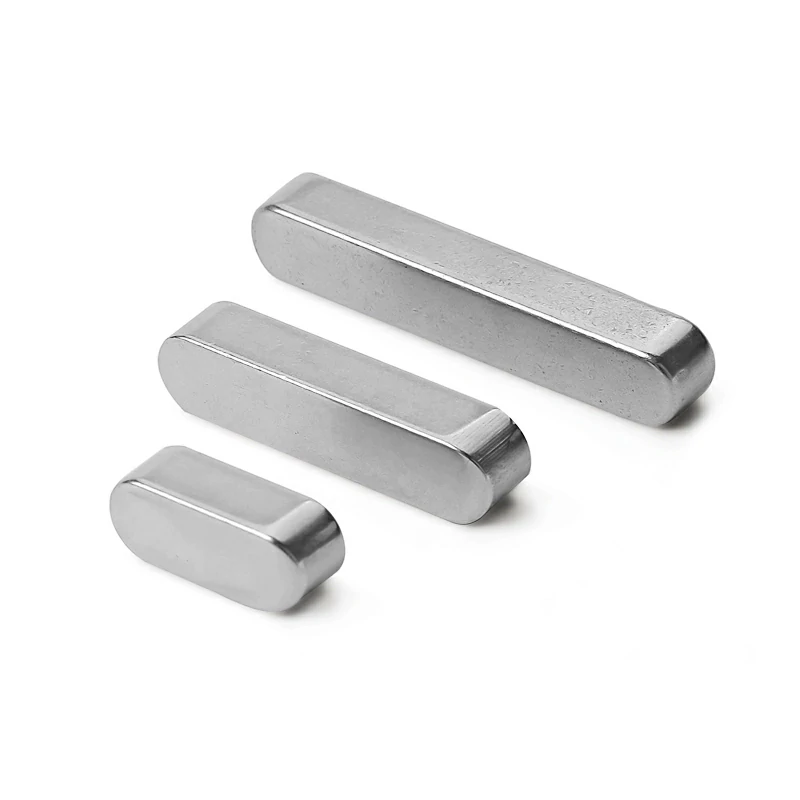
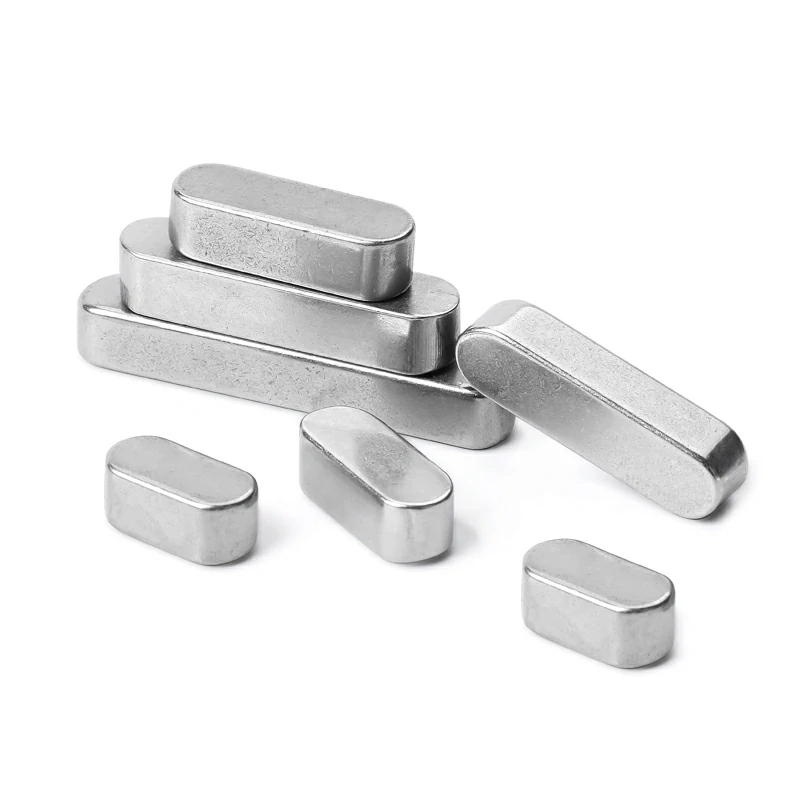
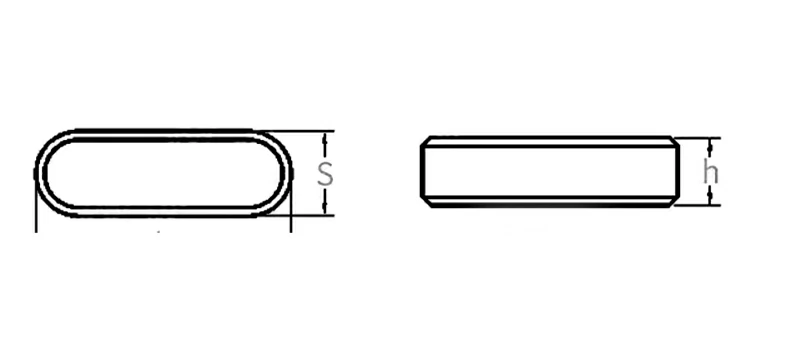
This Flat Key Pin conforms to the GB1096 standard and features a Rounded A end design, which allows smooth installation into the keyway and helps reduce stress concentration during operation. The rounded profile improves load distribution and enhances the fatigue resistance of both the shaft and hub assembly.
Manufactured from premium 304 stainless steel, this Square Key offers excellent corrosion resistance, strength, and durability in demanding environments. Its solid rectangular structure ensures reliable torque transfer and long-term stability in mechanical systems exposed to humidity, heavy loads, or continuous operation.
Because of its reliable performance and standardized dimensions, the Flat Key Pin is widely used in motors, pumps, gearboxes, conveyors, and industrial machinery where consistent torque transmission and mechanical stability are required.
Features & Benefits
- Reliable Torque Transmission: The solid, precision-machined profile provides a positive mechanical drive. This prevents any relative rotation or slip between the shaft and the rotating hub, ensuring efficient power transfer.
- Superior Corrosion Resistance: Utilizing 304 stainless steel ensures the Flat Key remains rust-free in humid environments. This material provides long-lasting durability and requires minimal maintenance compared to plated steel options.
- Reduced Stress Concentration (Rounded A Ends): Built to the GB1096 standard, the rounded profile aligns perfectly with specific keyway designs. This geometry disperses mechanical stress points, improving the overall fatigue life and joint integrity of the assembly.
- High Strength & Wear Resistance: The inherent hardness of the 304 alloy prevents deformation and "shearing" under high torque loads. This stability ensures that the fastener maintains a firm fit throughout its service life.
Specification
|
Width -S |
Height -h |
Width -S |
Height -h |
||||
|
Nominal |
Tolerance (h9) |
Nominal |
Tolerance (h11) |
Nominal |
Tolerance (h9) |
Nominal |
Tolerance (h11) |
|
2 |
0-0.25 |
2 |
0-0.06 |
25 |
0-0.025 |
14 |
0-0.11 |
|
3 |
3 |
28 |
16 |
||||
|
4 |
0-0.03 |
4 |
0-0.075 |
32 |
0-0.036 |
18 |
|
|
5 |
5 |
36 |
20 |
0-0.13 |
|||
|
6 |
6 |
40 |
22 |
||||
|
8 |
0-0.036 |
7 |
0-0.13 |
45 |
25 |
||
|
10 |
8 |
50 |
28 |
||||
|
12 |
0-0.043 |
8 |
56 |
0-0.043 |
32 |
0-0.16 |
|
|
14 |
9 |
63 |
32 |
||||
|
16 |
10 |
70 |
36 |
||||
|
18 |
11 |
0-0.11 |
80 |
40 |
|||
|
20 |
0-0.052 |
12 |
90 |
0-0.052 |
45 |
||
|
22 |
14 |
100 |
50 |
||||
FAQ:
Q1: What is the function of a Flat Key Pin?
A Flat Key Pin locks a rotating component (like a gear or pulley) to a shaft, preventing slippage and enabling torque transmission.
Q2: What is the difference between a Square Key and a Flat Key?
A: While both are parallel keys, a Square Key has equal width and height (a 1:1 ratio), whereas a Flat Key is typically wider than it is tall. Both are designed to transmit torque, but flat keys are often used on larger shafts where a shallower keyway is preferred to maintain shaft strength.
Q3: Why are the ends of the key rounded?
A: The "Type A" rounded ends facilitate a "drop-in" fit during assembly, making installation faster and more efficient. Mechanically, the rounded ends also help distribute loads more evenly across the keyway, preventing the sharp stress risers associated with square-ended keys.
Q4: How should I maintain these keys in high-vibration applications?
A: For dynamic outdoor conditions, ensure the key is seated firmly in the keyway with no "play." To further secure the joint, consider using secondary Locking Fasteners, such as spring washers or lock nuts, to maintain preload on the assembly.
Q5: Can you provide custom sizes or materials?
A: Yes. We support OEM production with custom dimensions, materials (e.g., 316 SS, carbon steel), and surface finishes.