This guide provides a clear and practical overview of Stainless Steel Fasteners, explaining what they are, the main material grades, the types of stainless steel fasteners, and the most common stainless fastener uses across industries.
What Are Stainless Steel Fasteners?
Stainless Steel Fasteners are mechanical components – such as bolts, screws, nuts, washers, studs, and threaded rods – manufactured from corrosion-resistant stainless steel alloys. The defining feature of stainless steel is its chromium content, which forms a self-healing oxide layer on the surface. This layer protects the fastener from rust, staining, and chemical attack.
Compared with carbon steel fasteners, stainless steel fasteners deliver longer service life, reduced maintenance, and better performance in demanding environments. They are widely used in construction, manufacturing, marine, automotive, energy, and architectural projects where reliability and durability are essential.
Key Characteristics of Stainless Steel Fasteners
- Excellent corrosion resistance from chromium-rich alloy composition
- High durability and mechanical reliability under load and vibration
- Clean, professional appearance for exposed or decorative installations
- Low maintenance requirements, with no need for galvanizing or painting
- Strong performance in harsh environments, including moisture and chemicals
These advantages explain why stainless steel fasteners are often specified for long-term or safety-critical applications.
Understanding Stainless Steel Grades
Not all stainless steel is created equal. The “grade” refers to the specific chemical composition of the alloy, which dictates its strength and corrosion resistance.
Grade 304 (A2 Stainless)
- The Standard: This is the most popular grade, often called “18-8” (18% chromium, 8% nickel).
- Characteristics: Non-magnetic with excellent corrosion resistance in normal environments.
- Best For: Furniture, car trim, kitchen appliances, and general outdoor construction where salt exposure is minimal.
Grade 316 (A4 Stainless)
- The Marine Grade: Contains added molybdenum, which drastically increases resistance to chlorides and industrial solvents.
- Characteristics: Non-magnetic with superior corrosion resistance compared to Grade 304.
- Best For: Marine environments, coastal construction (within 5 miles of the ocean), and chemical processing plants.
Grade 410
- The Hardened Grade: A martensitic stainless steel containing no nickel.
- Characteristics: Magnetic, very hard, and heat-treatable, though less corrosion-resistant than the 300 series.
- Best For: Self-tapping screws and roofing screws where high strength is required and the environment is dry.
Types of Stainless Steel Fasteners
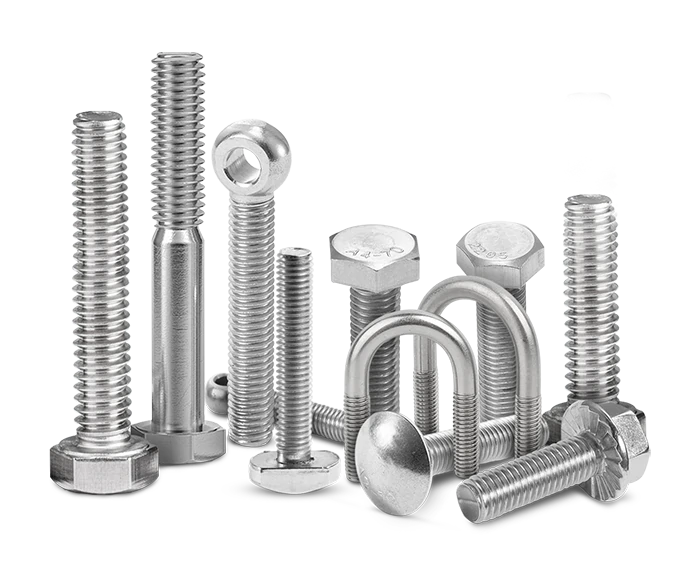
There are thousands of types of stainless steel fasteners available to suit specific mechanical needs. Here are the essential categories:
Bolts
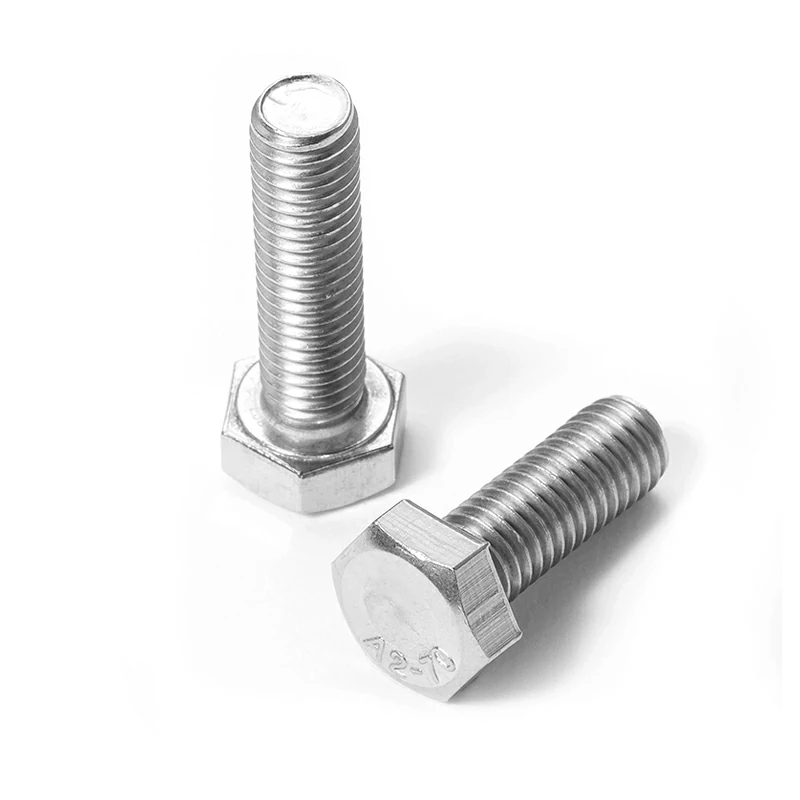
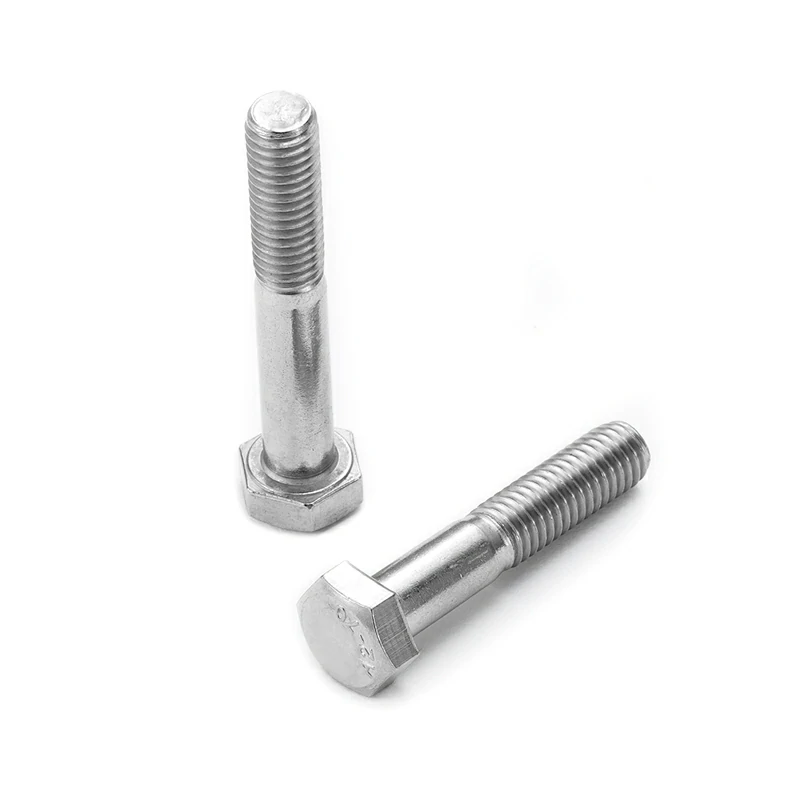
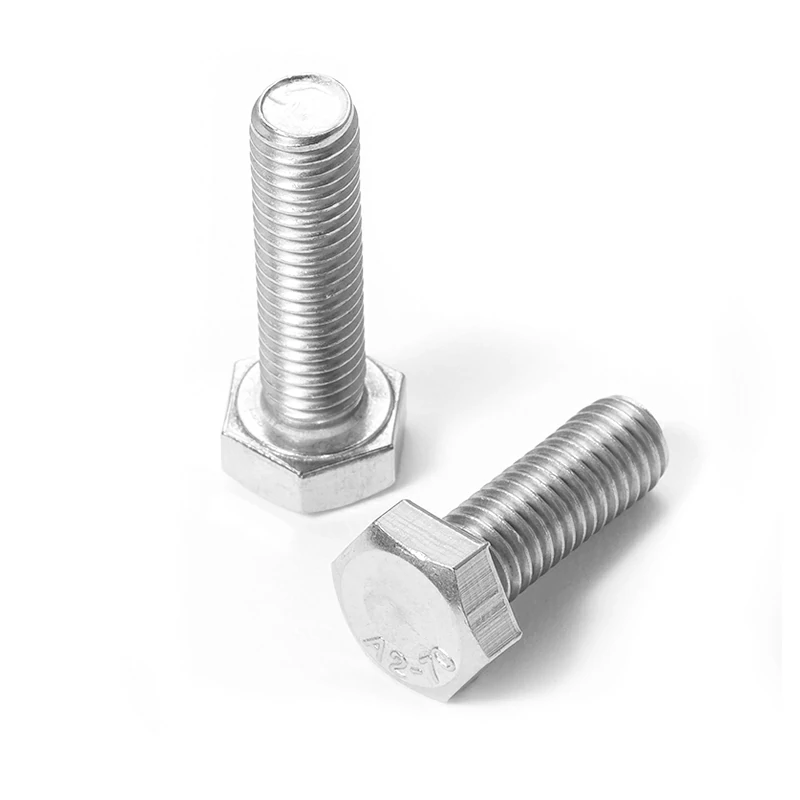
- Hex Bolts: Standard fasteners with hexagonal heads for heavy-duty structural connections.
- Carriage Bolts: Feature a smooth, domed head to prevent spinning during tightening, commonly used in wood construction.
- Eye Bolts: Designed with a looped head for rigging, lifting, and securing cables (e.g., Stainless Steel Loose Ring Eye Bolts).
- Expansion Bolts: Engineered for anchoring heavy loads into concrete, brick, or stone (e.g., GB22795 Expansion Bolts).
Screws
- Wood Screws: Tapered shanks with sharp threads designed to bite securely into wood.
- Machine Screws: Blunt-ended screws used to fasten metal parts, usually into a tapped hole or with a nut.
- Self-Tapping/Tek Screws: Feature a drill-bit tip that cuts its own hole in metal or plastic.
Nuts & Washers
- Hex Nuts & Nyloc Nuts: Standard nuts for bolts, or locking nuts with nylon collars to prevent loosening from vibration.
- Flat & Lock Washers: Spread the load to prevent surface damage or act as a spring to maintain tension.
Common Stainless Fastener Uses
The versatility of these components leads to broad stainless fastener uses across various industries:
- Marine & Coastal: Essential for boat building, docks, and offshore platforms due to resistance to saltwater corrosion.
- Construction & Architecture: Used in glass railings, bridges, and exterior fixtures for both structural integrity and aesthetic appeal.
- Industrial Manufacturing: Critical for machinery assembly, power generation, and petrochemical plants where durability is paramount.
- Food & Medical: Ideal for food processing equipment and pharmaceutical facilities because the material is easy to sanitize and does not react with food acids.
How to Choose the Right Stainless Steel Fastener
When selecting Stainless Steel Fasteners, consider:
- Installation environment (indoor, outdoor, marine, chemical exposure)
- Load and mechanical requirements
- Required level of corrosion resistance
- Visual appearance for exposed applications
Choosing the correct fastener type and grade ensures safety, longevity, and cost efficiency.
Summary
Stainless steel fasteners are essential components for modern construction and industrial applications. By understanding the different grades and types of stainless steel fasteners, you can ensure your project withstands the elements and mechanical stress. Choosing the appropriate fastener is key to achieving long-term performance and structural integrity.
Looking for High-Quality Fasteners?
Contact Tianqi Fasteners today to explore our extensive range of reliable stainless steel bolts, screws, and anchors tailored for your industry.